




Tuscany - 7 days Itinerary
Tuscany is one of those places that really lives up to the hype. Picture rolling hills, olive groves, medieval towns perched on hilltops, and some seriously good wine—and yes, it’s every bit as lovely as it sounds.
We’ve lived here for three years and travelled around the region a few times now, and every trip still surprises us. Whether it’s wandering through the quiet backstreets of Siena, catching sunset in Val d’Orcia, or stumbling across a tiny village osteria that serves the best pasta of your life—there’s always something that sticks with you.
Now, Tuscany isn’t huge, but there’s a lot to see. Ideally, you’d spend a couple of weeks soaking it all in. But we get it—sometimes you’ve only got a week. So we’ve put together this 7-day itinerary to help you dive straight into the good stuff: the iconic towns, the scenic drives, and those off-the-beaten-track moments that make a trip extra special.
Table of contents
How to Move Around Tuscany
Tuscany is made for road trips. Sure, trains are great between Florence, Pisa, and Siena, but if you want to explore hilltop villages, countryside wineries, and the little gems in between—you’ll definitely need a car.
Now, Fede is from around here, so for him, driving in Italy is second nature. Me? I had a bit of a learning curve 😅 But after a few trips (and a few missed turns), I’ve picked up what you really need to know before hitting the road in Tuscany.
Renting a Car in italy
🔹 Book early, especially in summer—smaller cars go fast and prices shoot up.
🔹 Pick up and drop off at the same place if you can—it’s often cheaper. Florence Airport is a good starting point.
🔹 Go for a smaller car if possible—easier for parking and navigating narrow streets.
🔹 Manual transmission is more common in Italy. Automatics are available but limited so book in advance if you prefer this type of car.
🔹 Insurance – Definitely go for full coverage. Tiny scratches are common and get expensive fast.
ZTL Zones – What You Really Need to Know 🚫
ZTL stands for Zona a Traffico Limitato, or limited traffic zone. Most historic towns and city centres have these restricted areas, and driving into them without permission = automatic fine (sometimes mailed to you months later!).
There are cameras everywhere, and even locals forget sometimes.
Here’s what to keep in mind:
🔹 Always look for signs like “ZTL Attiva” (ZTL Active) or “ZTL Non Attiva” (ZTL Not Active).
🔹 The majorities of zones are only active during the day, others are 24/7.
🔹 If your hotel is inside a ZTL, ask them in advance—they can usually register your number plate with the local police.
🔹 Don’t follow locals! Italians know when they’re allowed in and out—you might not. 😅
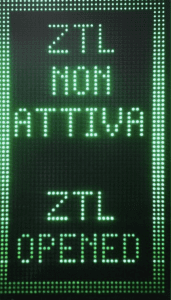
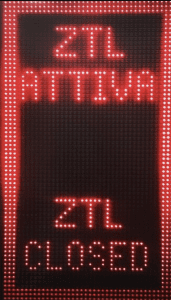
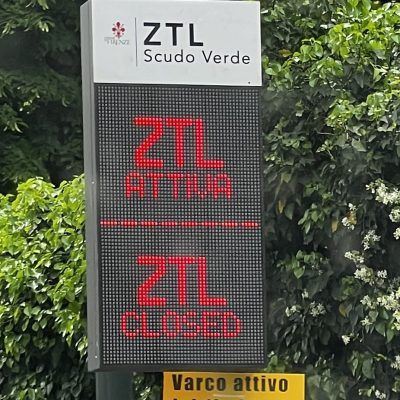
From the 1st of June 2025, in Florence will be active the Green Shield (Scudo verde), to target high-emission vehicles. This means that the following are not allowed to enter the city:
– Two-stroke mopeds and motorcycles classified as Euro 0 and Euro 1
– Diesel and petrol cars classified as Euro 0 (registered before 1992) and Euro 1 (registered before 1996)
Most rental vehicles are Euro 6 compliant and should not face restrictions.
Below is how the Green Shield is displayed, so you don’t confuse it with the ZTL (Limited Traffic Zone).
A Few Things to Know About Driving in Italy 🇮🇹
A lot of people get nervous about driving in Italy, but honestly—it’s not as chaotic as you might think. Sure, it might feel a bit different at first (especially if you’re coming from somewhere with more strict driving etiquette), but with a bit of attention and patience, you’ll get the hang of it quickly.
➤ Italian drivers can be a bit more… assertive—they don’t always stick to the rules the same way you might be used to.
➤ Lane discipline is more of a suggestion, and indicators? Optional 😅
➤ Don’t panic if someone drives close behind you —they’re just being… Italian 😉
As long as you stay calm, drive carefully, and keep your eyes on the road, you’ll be absolutely fine.
Parking Tips
When it comes to parking in Tuscany, there are a few simple rules to remember—though Florence has its own little twist.
➤ White lines: In most towns, this means free parking.
➤ Blue lines: You’ll need to pay for these spots. The easiest way is to use an app like EasyPark. These apps make it super easy to pay from your phone (no need to fiddle with coins).
➤ Yellow lines: Reserved for residents only. Florence is the big exception here—white lines in Florence actually mean residents-only parking, so don’t risk it there!
For popular spots like San Gimignano or Pienza, try to arrive early before the tour buses start rolling in. You’ll have an easier time finding parking and a much more peaceful visit.
One last tip—bring a little cash with you. Some parking machines only take coins, and you don’t want to find yourself scrambling for change!
day 1: florence
Florence, a city straight out of a Renaissance dream! What better way to start your Tuscan adventure than with the region’s vibrant capital?

These first two days in Florence can either be done at the beginning or the end of your itinerary. If you choose to do them at the beginning, hold off on renting your car—you won’t need it while exploring the city. If you decide to visit Florence at the end, simply drop off your car as Florence is easily reachable by train or tram. Either way, you’ll save on two days of car rental!
The Duomo & its Piazza
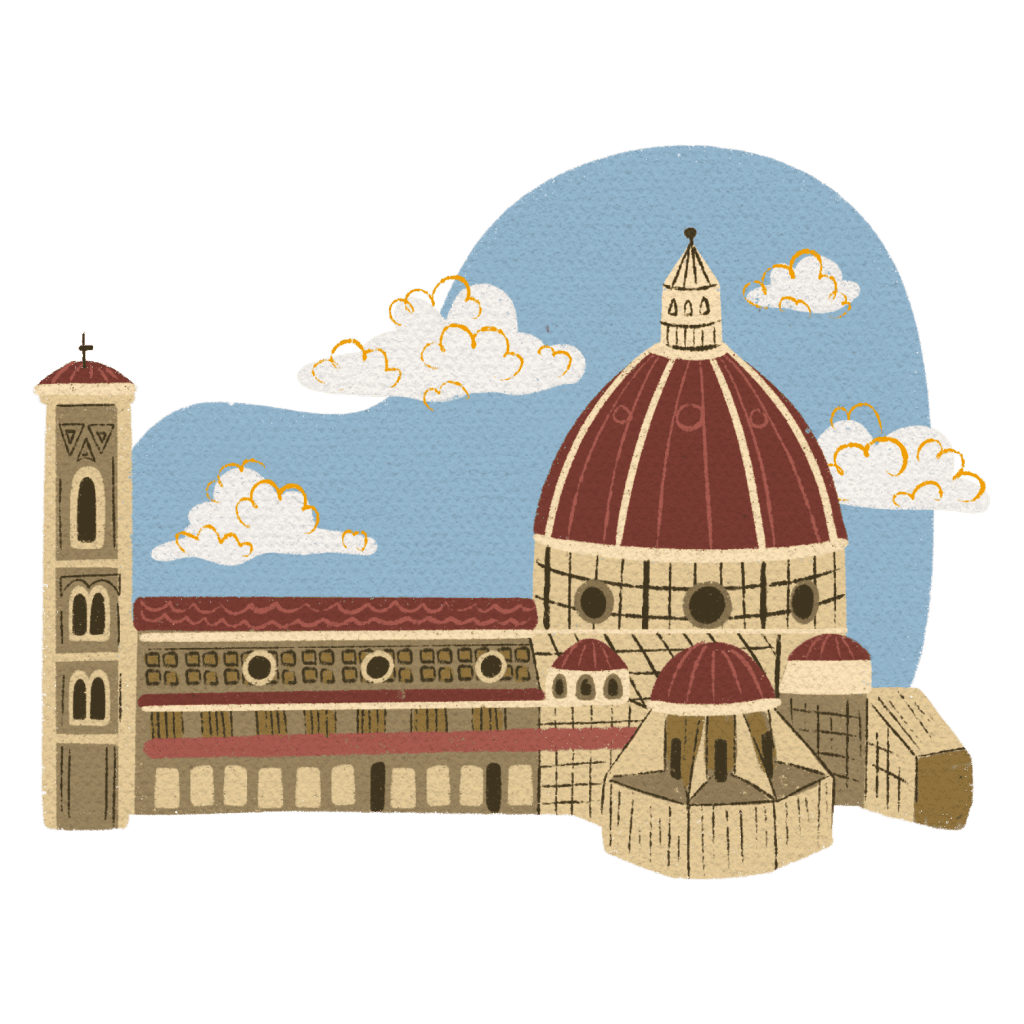
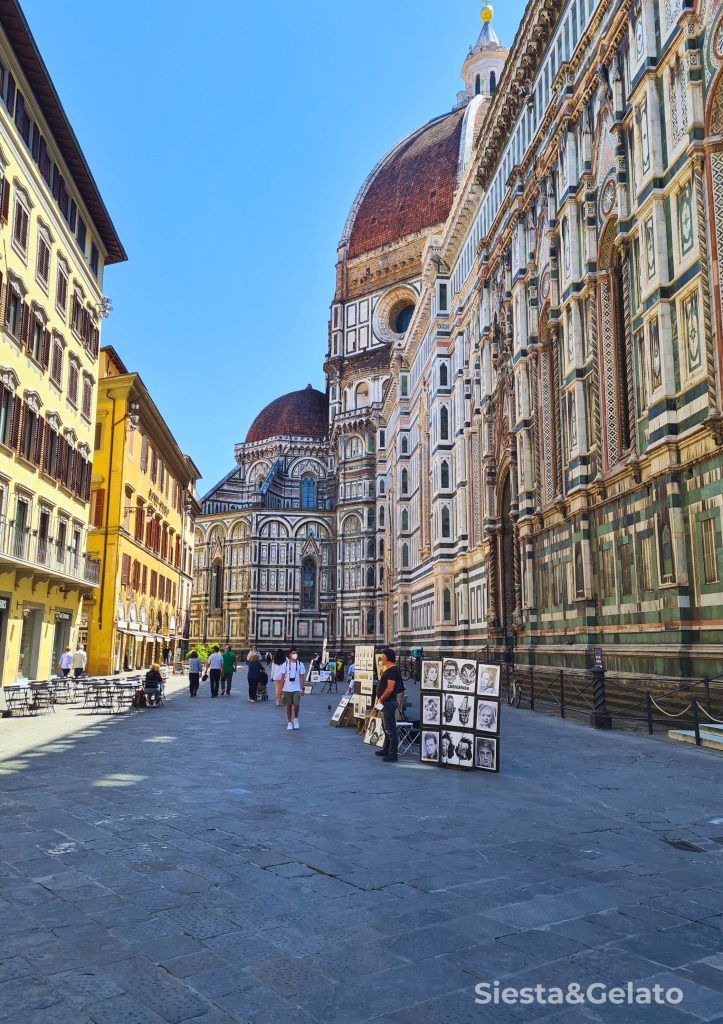
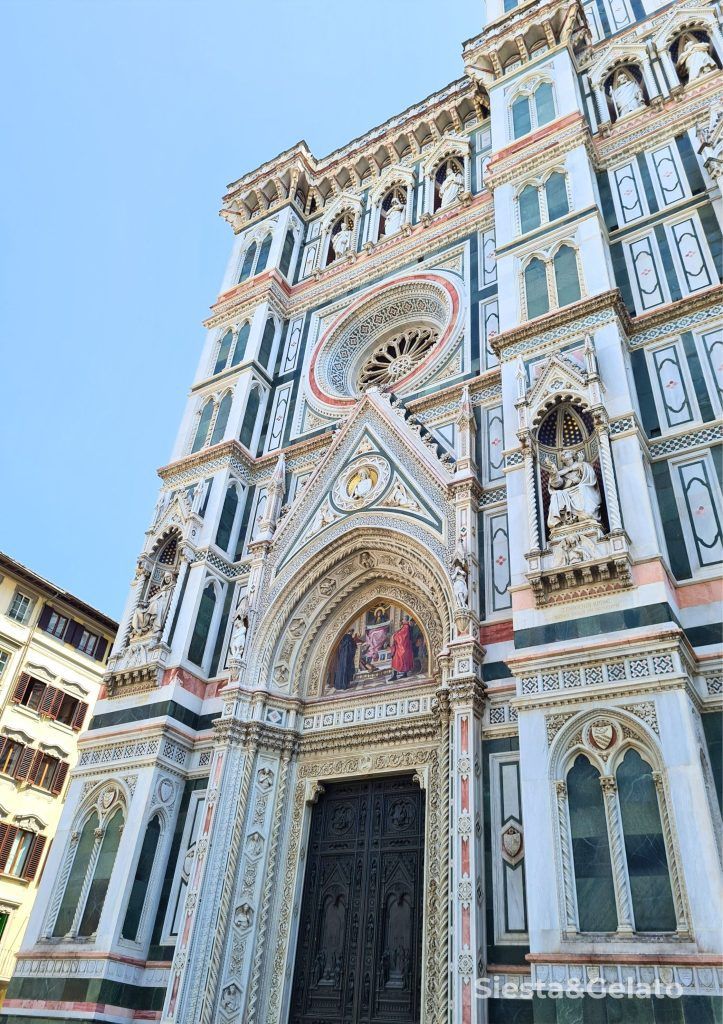
Start your day with a visit to the stunning Duomo and Piazza del Duomo—the heart of Florence. After soaking in the beauty of the cathedral and its surroundings, grab a coffee at the historic Café La Scuderia, just a short walk away. For more details on tickets and what to see at the Duomo and beyond, check out our 12 Best Things to Do in Florence article.
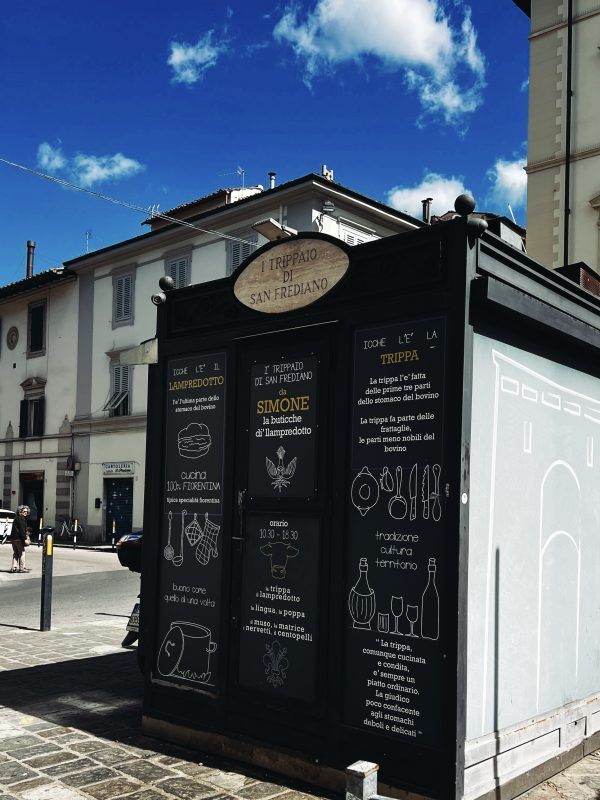
Time for a lunch break! Head over to Mercato Centrale in San Lorenzo neighbourhood. Start downstairs —explore the stalls and watch Florentines buy bistecca alla fiorentina for their lunch, or stop by Bambi, one of the oldest lampredotto kiosks in the city (yes, that’s cow’s stomach!).
You can also head upstairs to the second floor, where you’ll find a wide variety of food stalls serving all kinds of Tuscan specialties—trippa (again, stomach), truffle pasta, wood-fired pizza, local wine… It’s the perfect place to sit down for a rest and have a taste of the local specialties.
A Bite of Florence: Lampredotto Explained
Lampredotto is the most iconic street food in Florence—and while it might not be for everyone, Florentines absolutely love it. It’s made from the fourth stomach of the cow (the abomasum), slow-cooked in a flavourful broth until tender, then served in a crusty bun with a spoonful of salsa verde (a zesty parsley sauce). You’ll spot locals lining up for it at kiosks all over the city—especially at places like Bambi. If you’re feeling adventurous, give it a go!
The Medici's Chapels
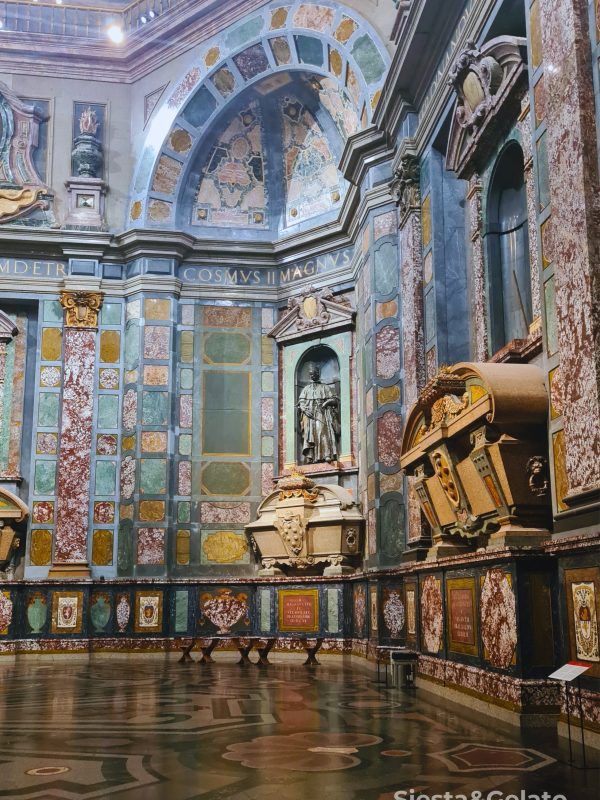
After lunch, make sure to check out one of Florence’s hidden gems: the Medici Chapels. It’s not always included in every itinerary, but we always recommend it. These beautiful chapels are home to the tombs of the influential Medici family and showcase stunning sculptures by Michelangelo.
Galleria della Accademia & Piazza della SS Annunziata
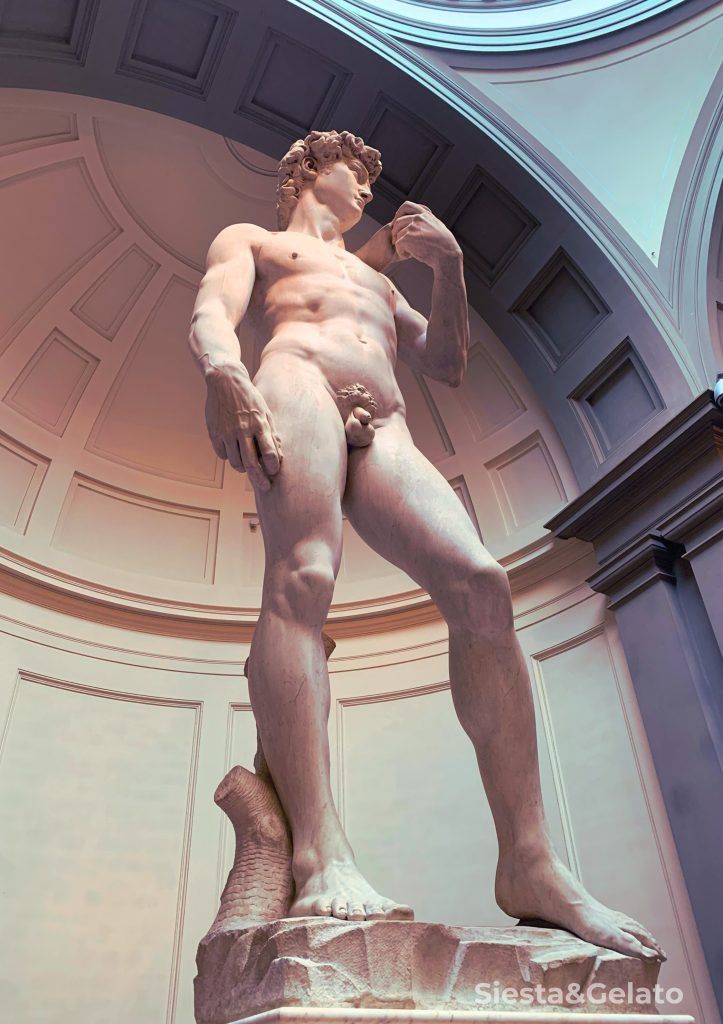
Afterwards, head to the Galleria dell’Accademia to admire Michelangelo’s David—a true Florence icon.
Then take a break: either relax with a coffee at Caffè del Verone in the Museo degli Innocenti, where you’ll get rooftop views of the Duomo, or sip a spritz at Un Caffè Bistrot, overlooking the quieter, lesser known and more local Piazza della SS Annunziata (top choice for people watching).

Read More: 12 Best Things to Do in Florence
Want more details on these spots? Check our full best things to do in Florence article for more tips :)
Day 2: Florence
Sant'Ambrogio market
For your second day in Florence, we suggest starting with another market!
Food is at the heart of Italian culture—and let’s be honest, it’s probably one of the main reasons you came, right? While pizza and pasta are found everywhere, each region has its own local flavours and traditions.
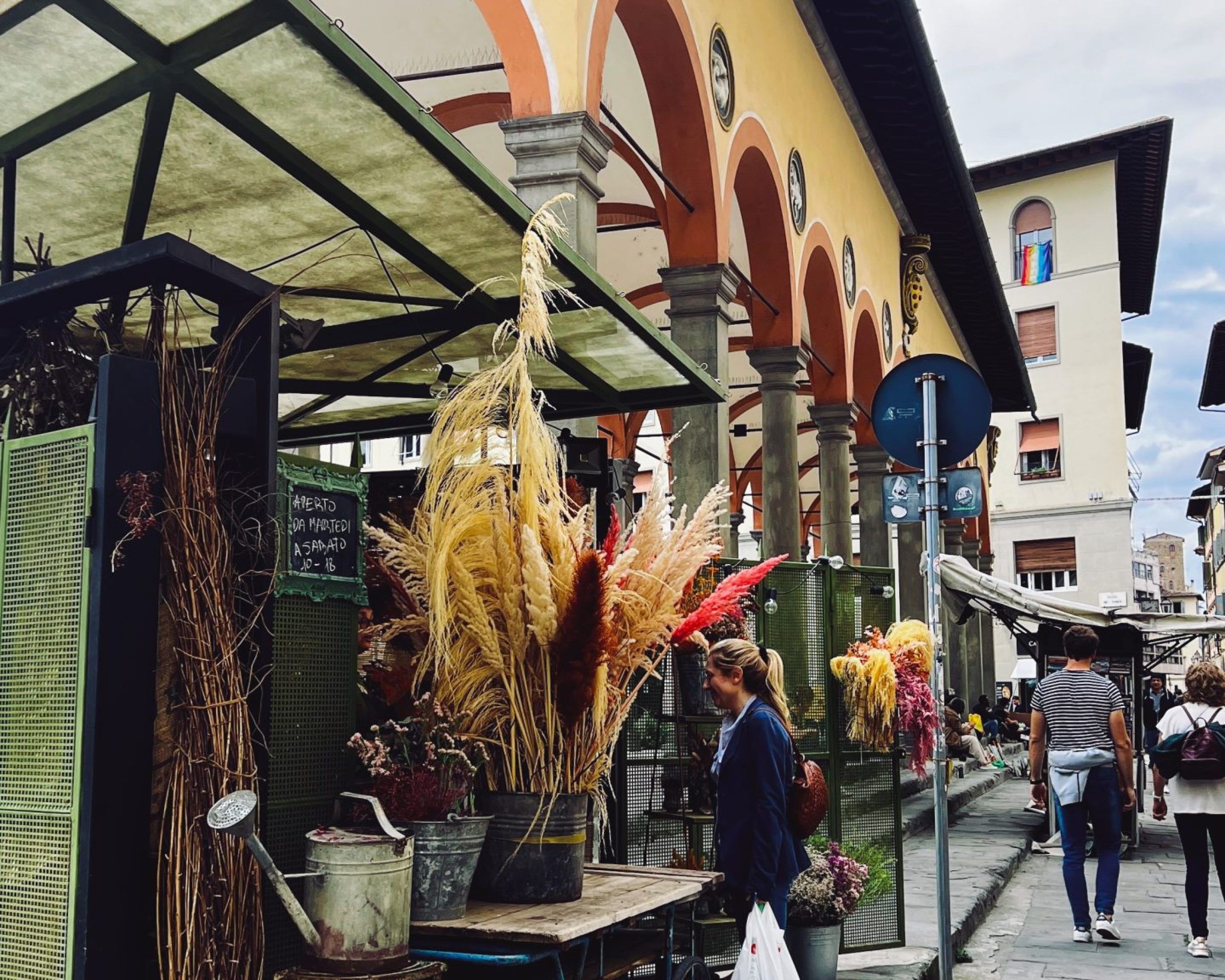
Begin your morning in the more local neighbourhood of Sant’Ambrogio. At Mercato di Sant’Ambrogio, you can sample regional cheeses, wines, and freshly fried fritti. Wander through the stalls of seasonal produce, meats, and seafood—don’t be surprised if you spot a whole swordfish on display!
It’s a more laid-back, authentic slice of Florentine life compared with Mercato Centrale that’s well worth exploring.
Basilica Di Santa Croce
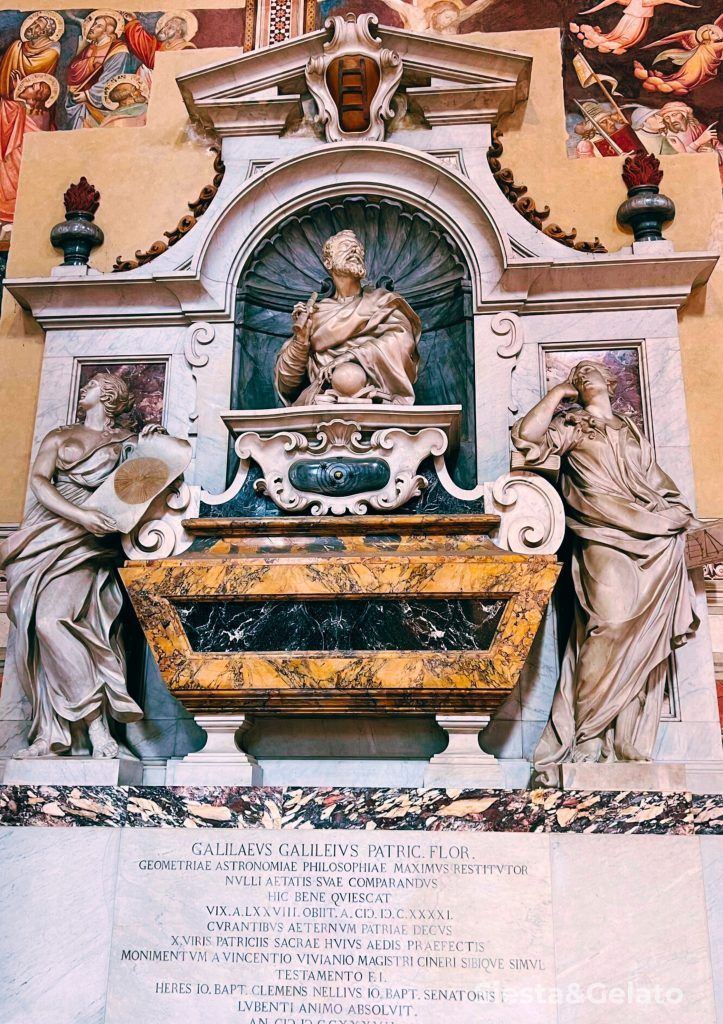
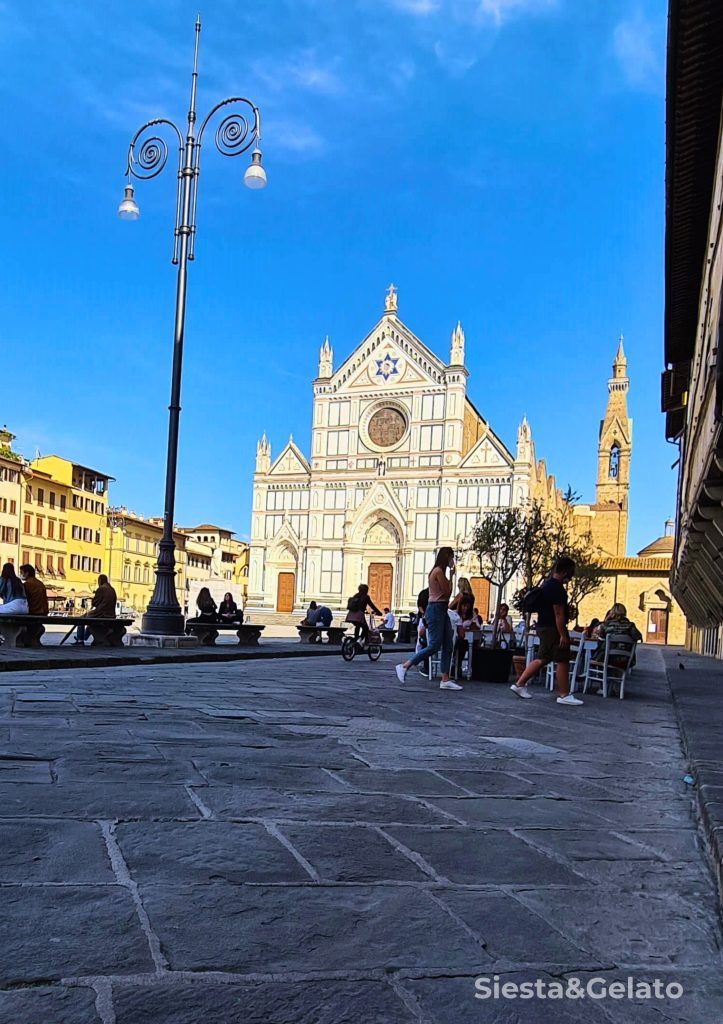
Make your way to Piazza Santacroce to explore the Basilica di Santa Croce. Here you can find and encounter the resting place of iconic figures such as Michelangelo, Galileo, and Machiavelli. This area can also be quite lively at night!
Getting hungry? This is the perfect time to try Florence’s most famous schiacciata from L’Antico Vinaio. Their stuffed sandwiches are generous, affordable, and seriously tasty.
There’s often a queue, but don’t let it put you off—it moves fast, and they actually have a few spots just around the corner, all serving the same delicious panini. If you’re nearby, you can also check out their other locations by Santa Maria Novella station or next to the Galleria dell’Accademia (they usually have half the wait).
Piazza Della Signoria
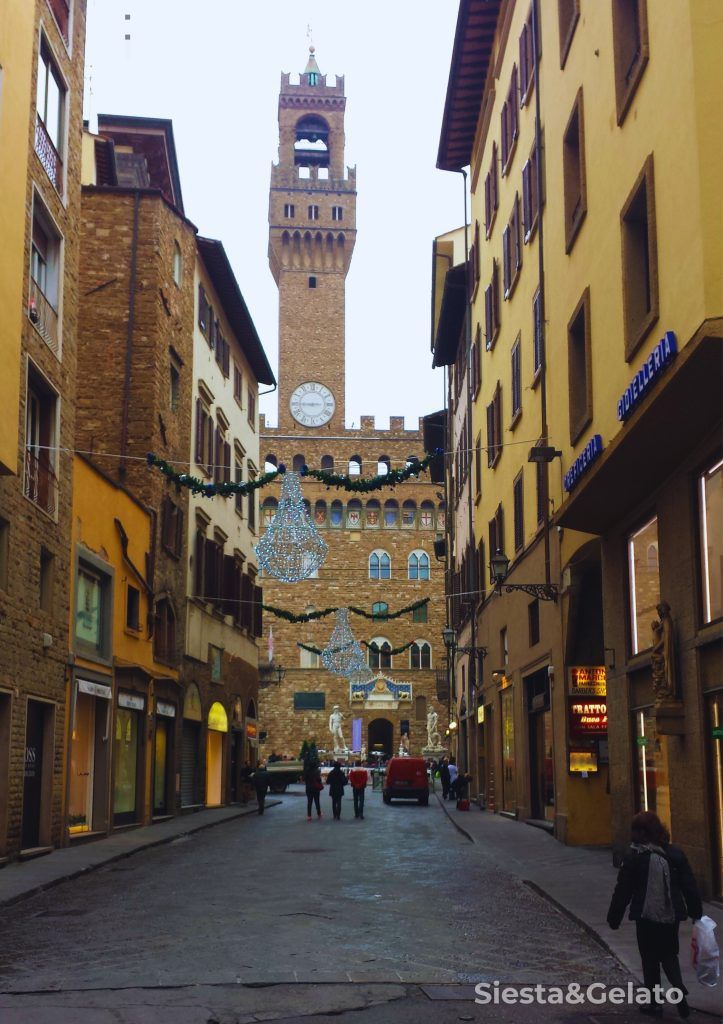
With your belly full, head over to Piazza della Signoria, Florence’s most iconic square.
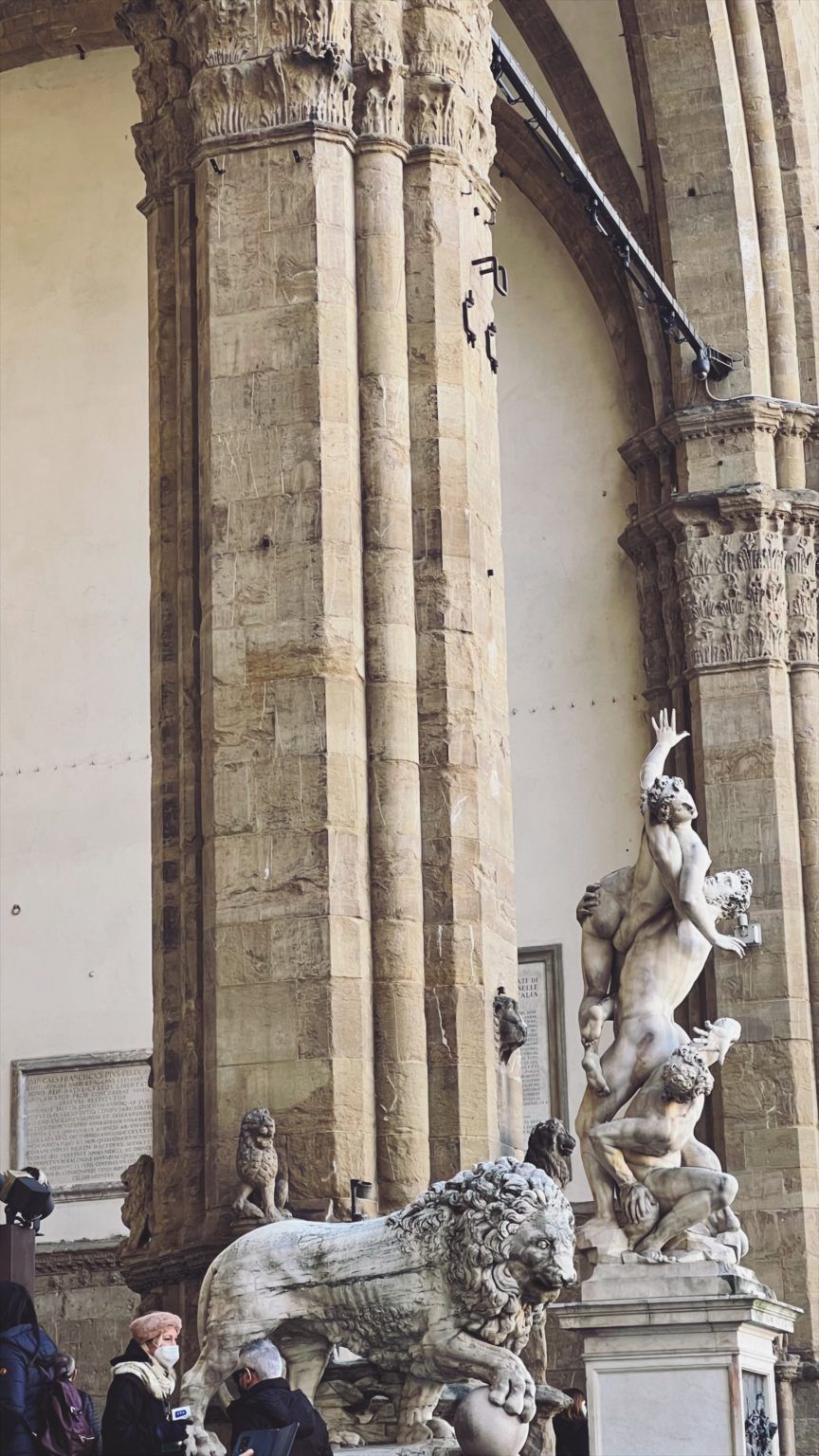
Don’t miss the open-air Loggia dei Lanzi. It’s home to remarkable sculptures, including Perseus with the Head of Medusa by Benvenuto Cellini.

Palazzo Vecchio
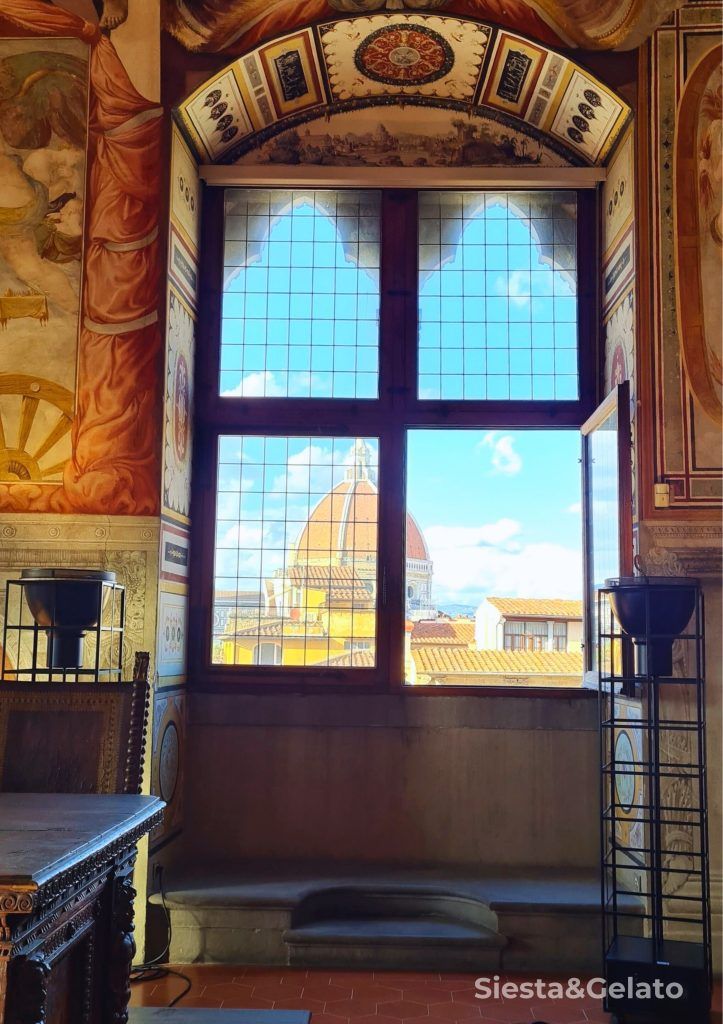
We highly recommend taking the Secret Passage tour, where you’ll get to explore hidden passageways in Palazzo Vecchio and access areas that were historically off-limits to the public, like medieval stairways and narrow corridors concealed behind hidden doors.
Read More: 12 Best Things to Do in Florence
Want more details on these spots? Check our full best things to do in Florence article for more tips :)
The Uffizzi
Still in the mood for more art? Head to the Uffizi Gallery, one of the most iconic art museums in the world. You’ll find masterpieces by Botticelli, Leonardo da Vinci, Michelangelo, Raphael… the list goes on.
If you’re not an art expert, we’d recommend joining a guided tour as it can be a bit overwhelming otherwise.
Ponte Vecchio & Piazzale Michelangelo
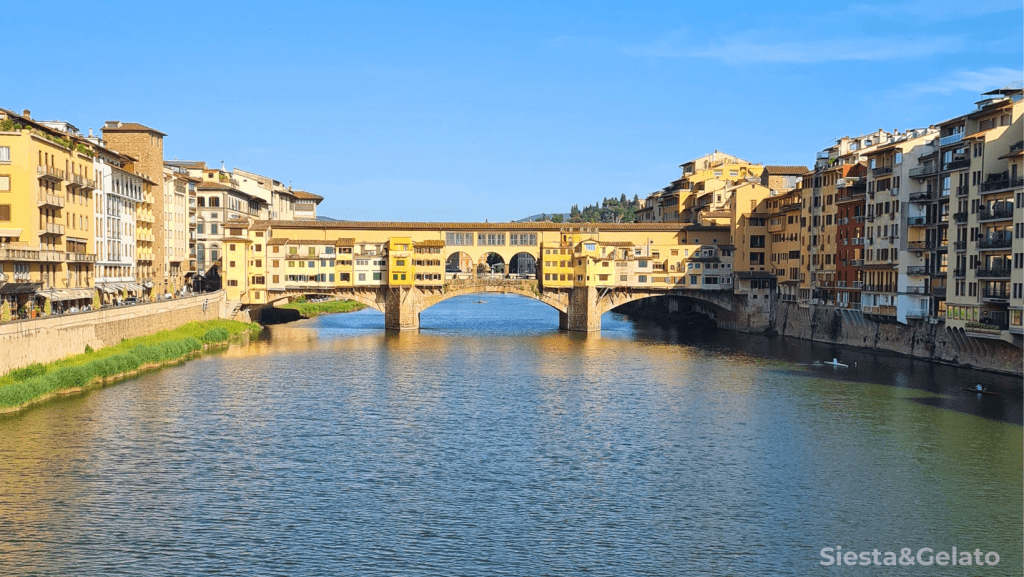
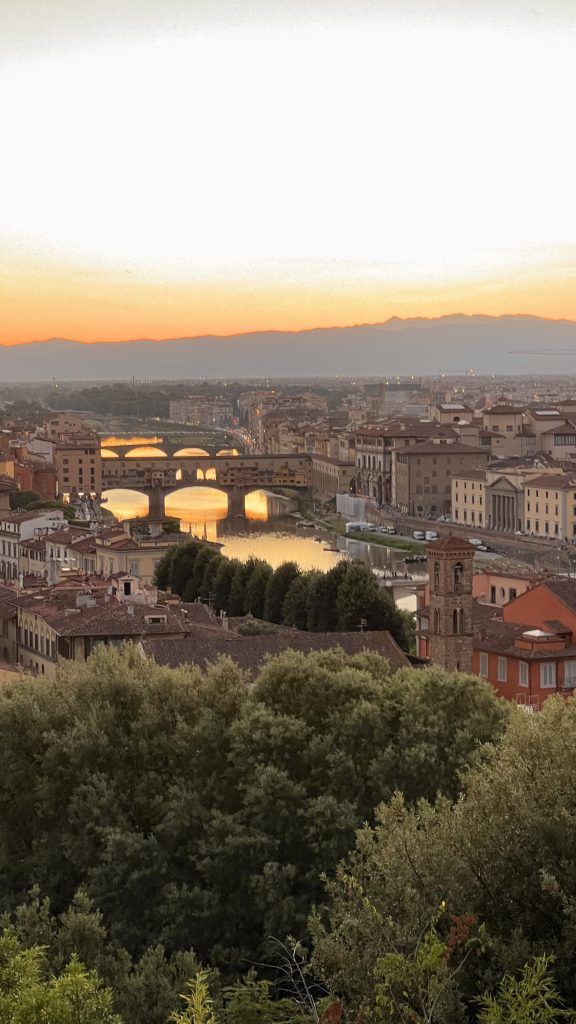
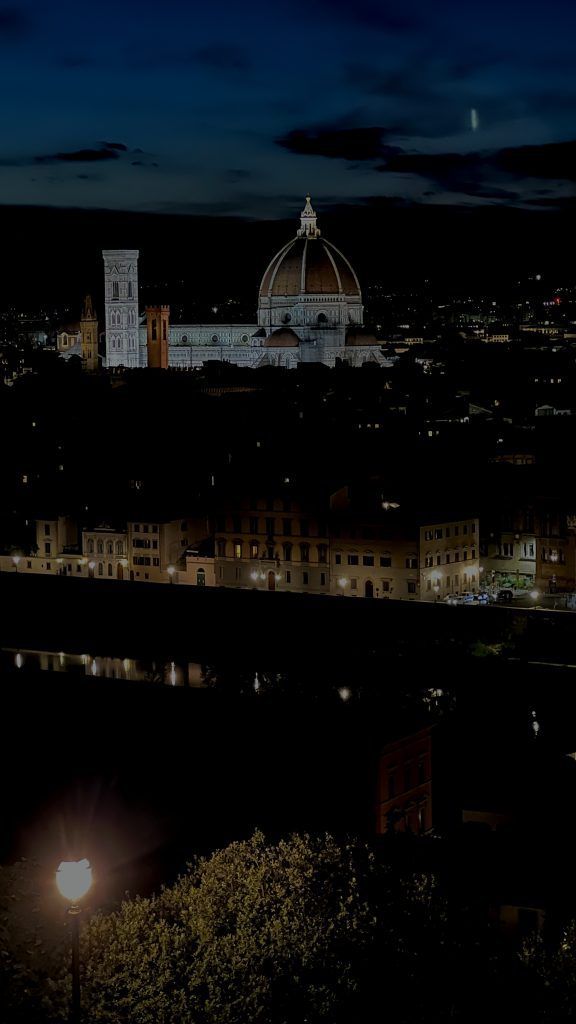
From Piazza della Signoria, head towards the iconic Ponte Vecchio. As you stroll along, you’ll pass by the jewellery shops that, centuries ago, were actually butcher shops! Cross over into the Oltrarno district, where Florentines themselves often spend more time, enjoying the true local atmosphere. From here, you can either walk or rent a Movi bike to ride up to Piazzale Michelangelo for a breathtaking sunset view. It’s quite touristy, but the vibrant atmosphere is always worth experiencing.
day 3: chianti region
When you think of Chianti, you think of wine—one of the treasures Tuscany has to offer. Start your day by visiting one of the most famous wineries in Tuscany, Cantine Antinori.
Cantine Antinori
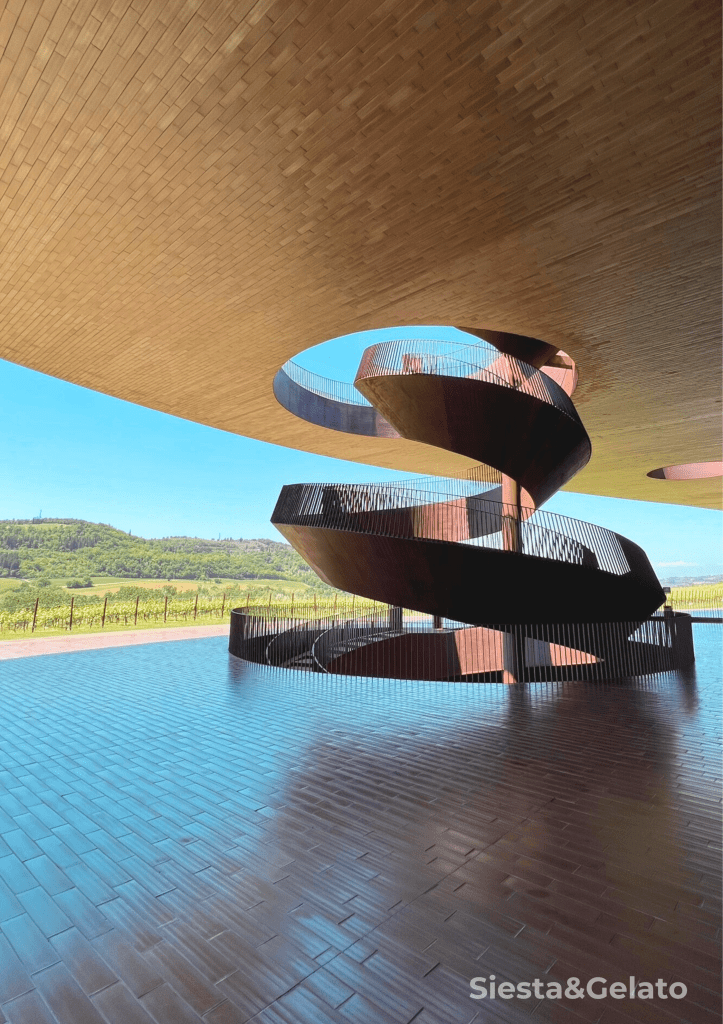
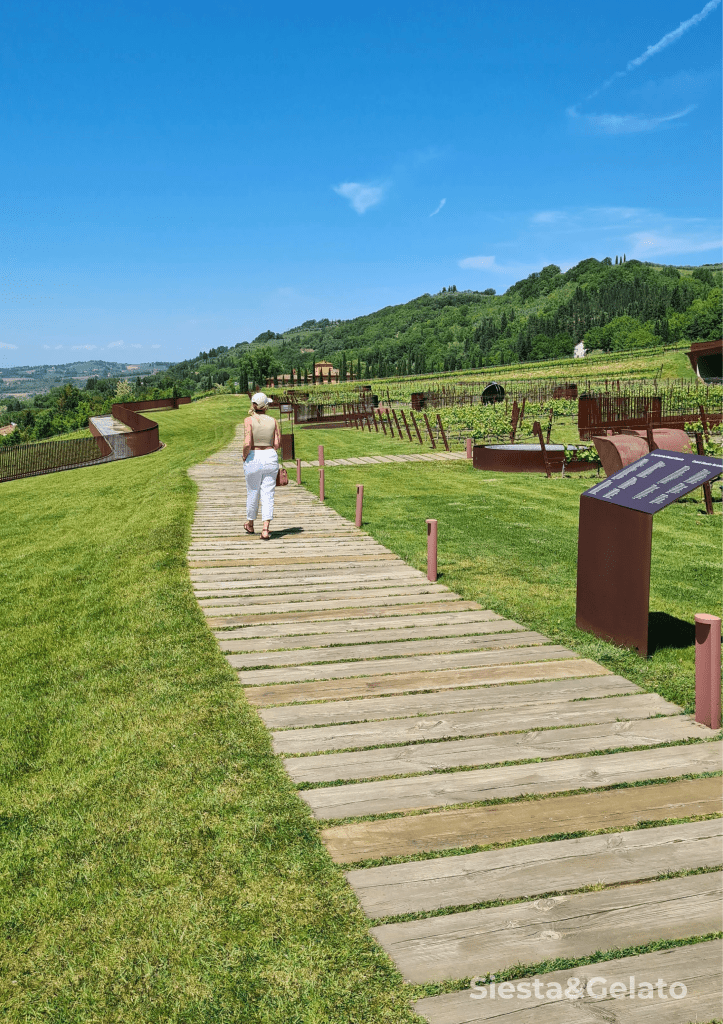
Cantine Antinori is one of Tuscany’s most prestigious wineries, with a winemaking tradition that dates back to 1385. Located in the heart of Chianti, it beautifully blends modern design with a rich historical heritage.
Even if you’re not a fan of wine, the architecture alone makes this place worth a visit.
You can head up to the top, where you’ll find a restaurant and a bar, and enjoy the view for free. If you want to book a full winery tour, just click here.

Parking Tip
Normally, you can drive straight into the winery, but on weekends, when it gets busier, you’ll need to park in the main car park and take a shuttle up. If you can, try to visit on a weekday and park inside—entering the winery feels like something out of a James Bond movie!
Badia a Passignano
Next up is a hidden gem in the heart of Tuscany that most people drive right past.
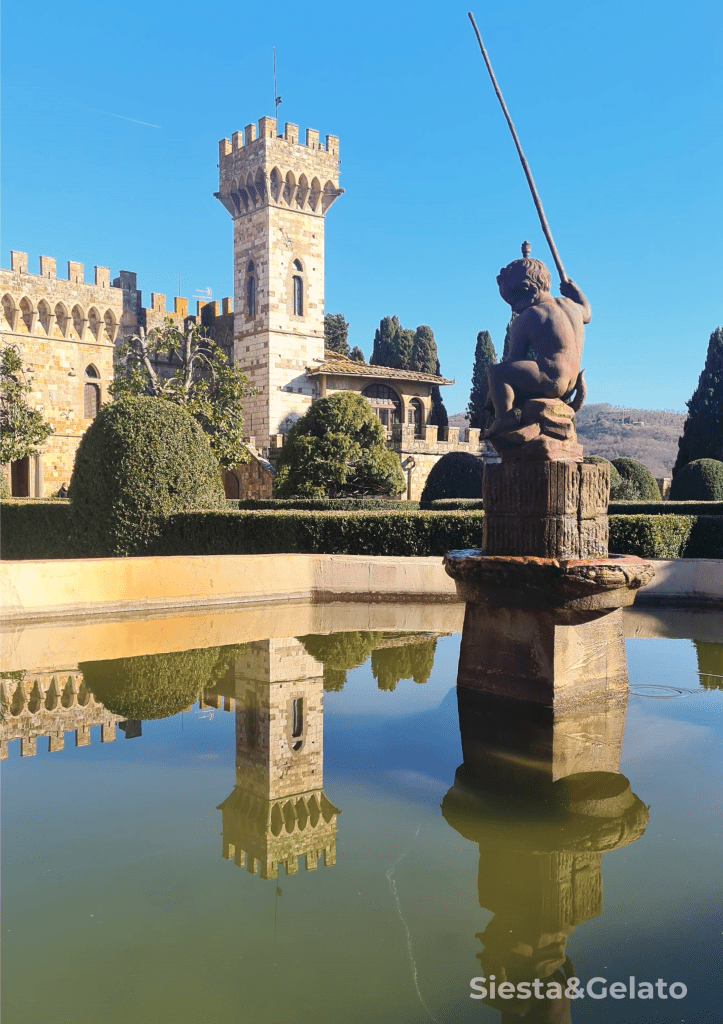
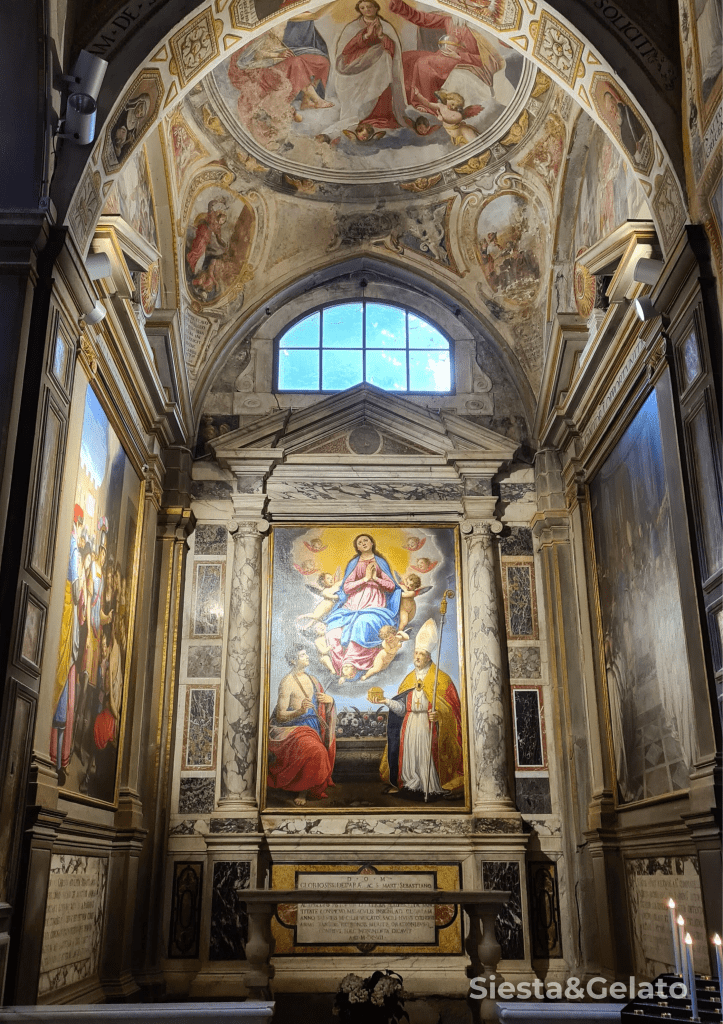
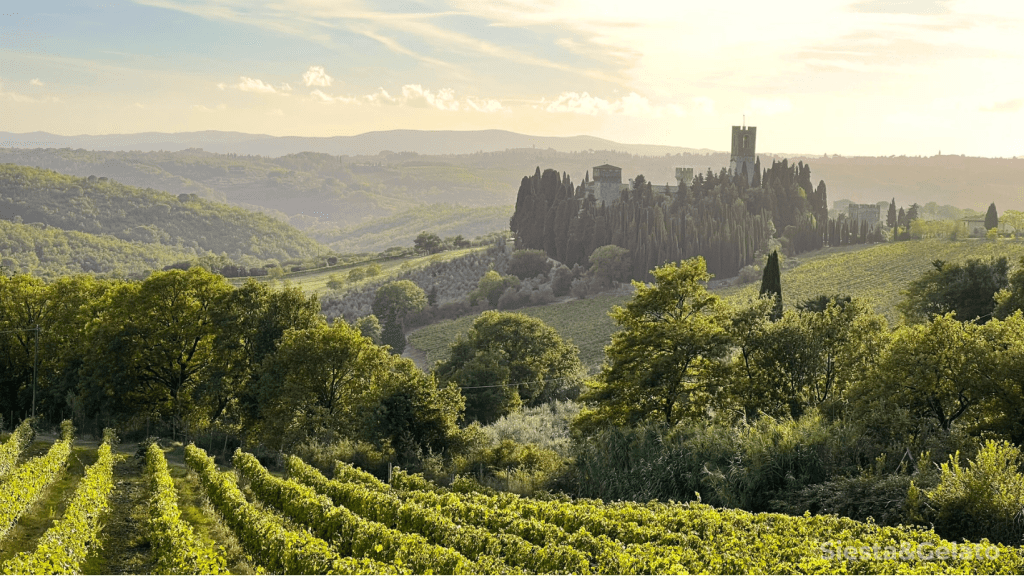
Badia a Passignano is a quiet little village tucked among vineyards and olive groves in the Chianti region. It’s home to a medieval abbey with centuries of history and beautiful frescoes by Ghirlandaio. The best part? Monks still live here, and they’ll be the ones showing you around.
You don’t need to book in advance to visit the abbey—just ring the bell when the tour is about to start and someone will let you in. If you want to be sure, you can send them an email ahead of time.
Joining the tour is free, they’ll simply ask for a tip at the end.
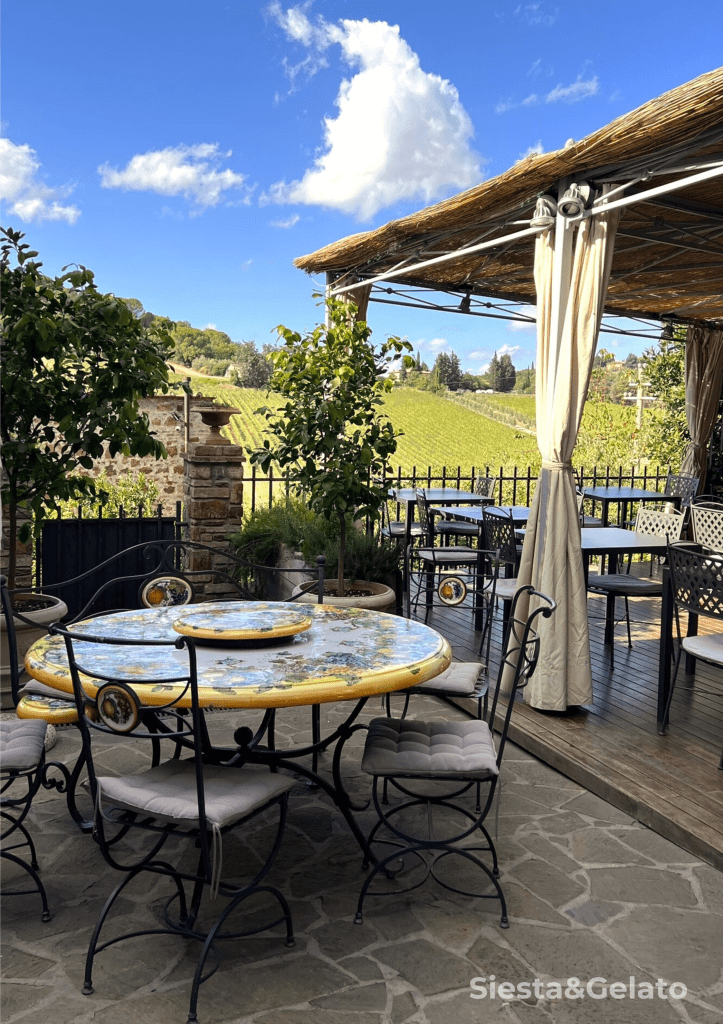
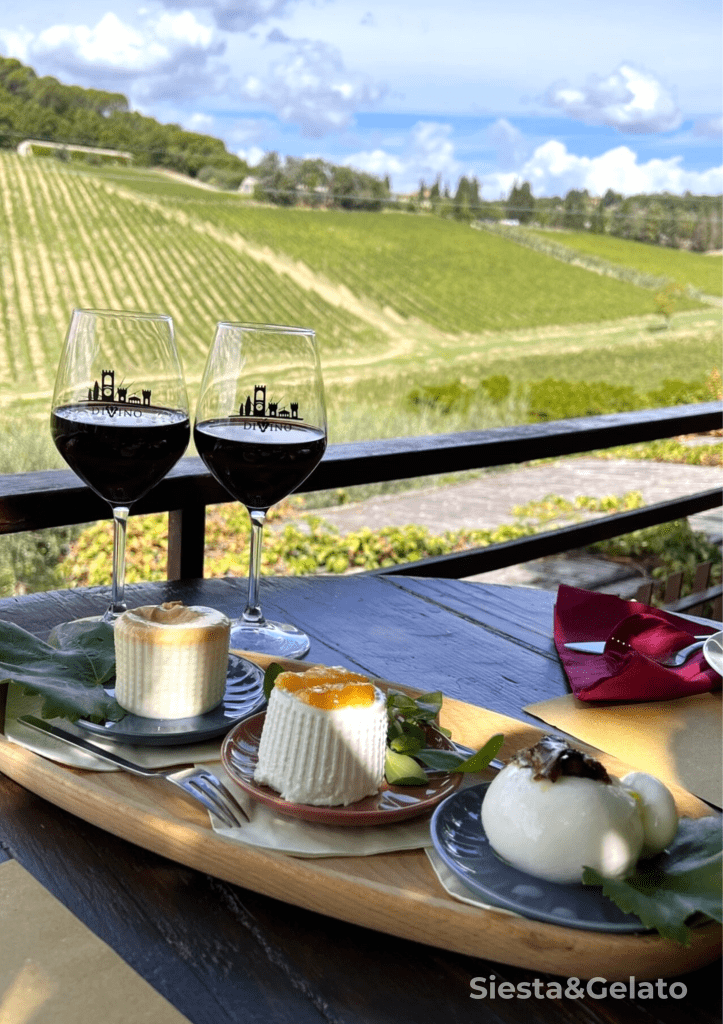
After visiting the monastery, take a break at DiVino Terrace on Chianti—a great spot to enjoy a glass of wine or try some Tuscan dishes, all with a beautiful view.
If you’re after more options, there’s La Scuderia nearby, or, if you don’t mind a 5–10 minute drive, head to Cantinetta di Rignana—our favourite pick for food and setting!
Day 4: siena
A day in Siena is certainly not enough to experience the city in all of its many sides, nor to visit all of its treasures, however, with a bit of organization, you’ll be able to see the main attractions and appreciate the charm of this lovely medieval town, probably leaving with the desire to return as soon as possible to visit Tuscany again.
Piazza del campo
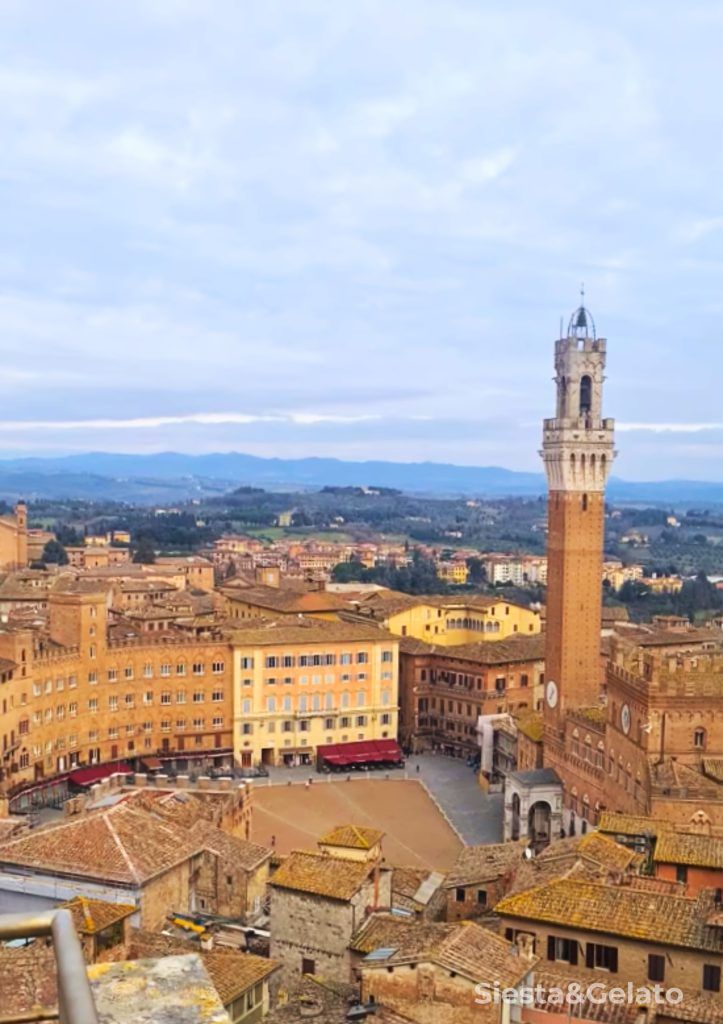
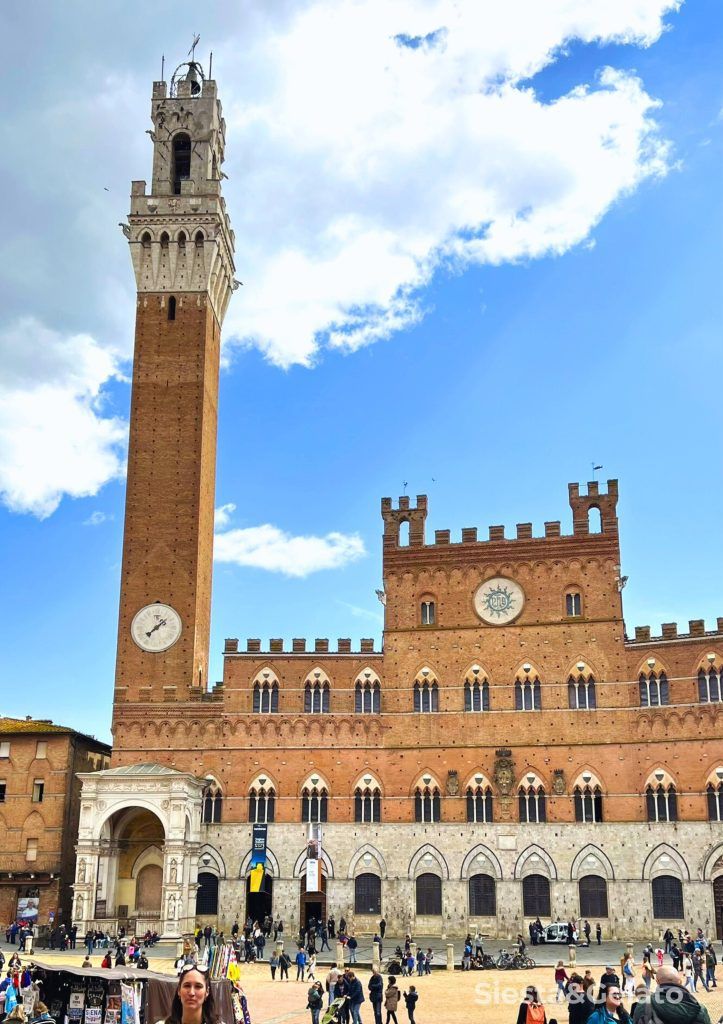
We headed straight into the beautiful Piazza del Campo!
This truly unique square with its shell shape, brick pavement, and elegant buildings if you stand at its center feels like being wrapped in a warm embrace.
Twice a year, on July 2nd and August 16th, it hosts the Palio di Siena, the city’s most thrilling event. Here, you can admire Fonte Gaia, Siena’s largest fountain, originally sculpted by Jacopo della Quercia.
The current version, made of durable Carrara marble, replaces the original, which is now preserved in the Santa Maria della Scala museum.
Piazza del Duomo
Next, we went to the stunning Piazza del Duomo, a real gem in Siena, there’s so much to see here that you could easily spend the whole day exploring!
The best things to see are definitely the Cathedral, the Crypt, and the gorgeous Piccolomini Library.
The duomo (Cathedral of Santa Maria Assunta)
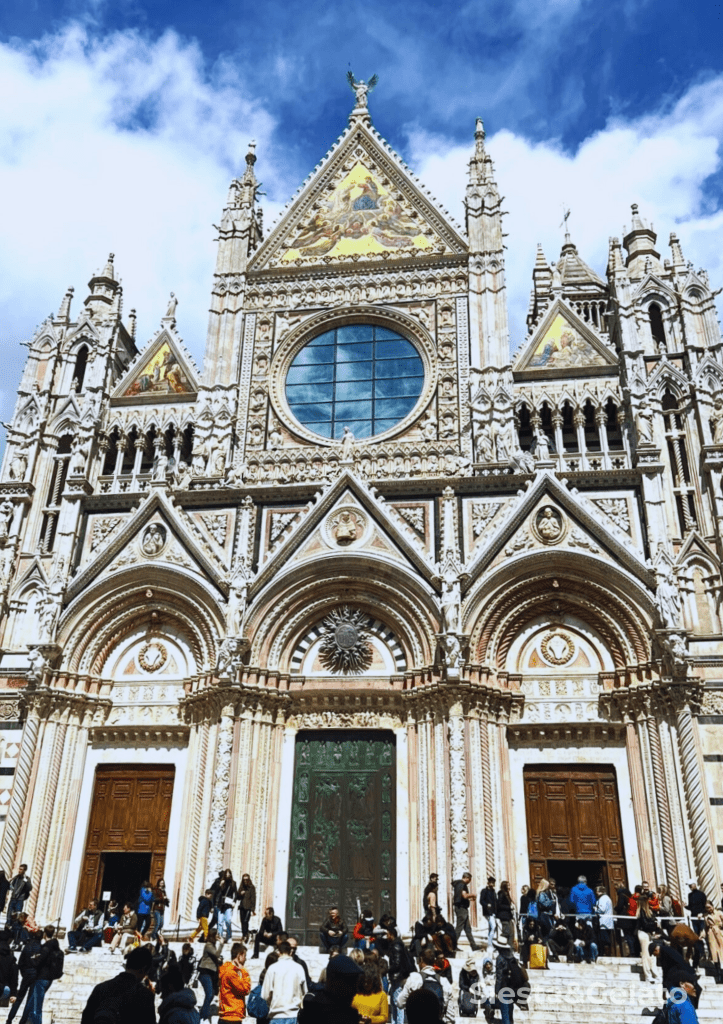
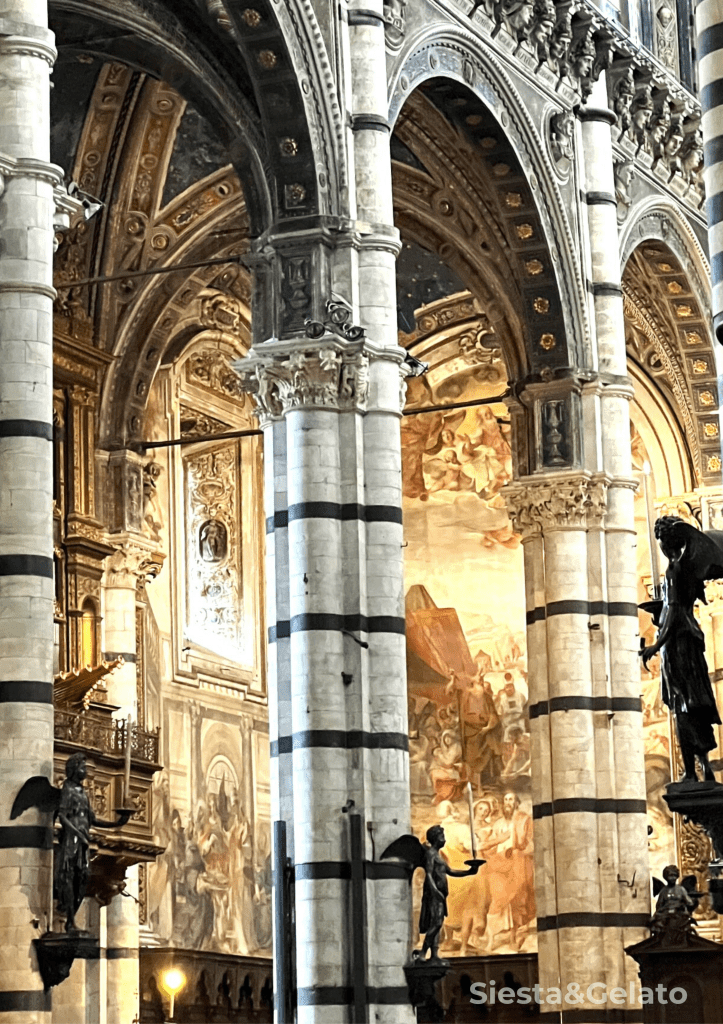
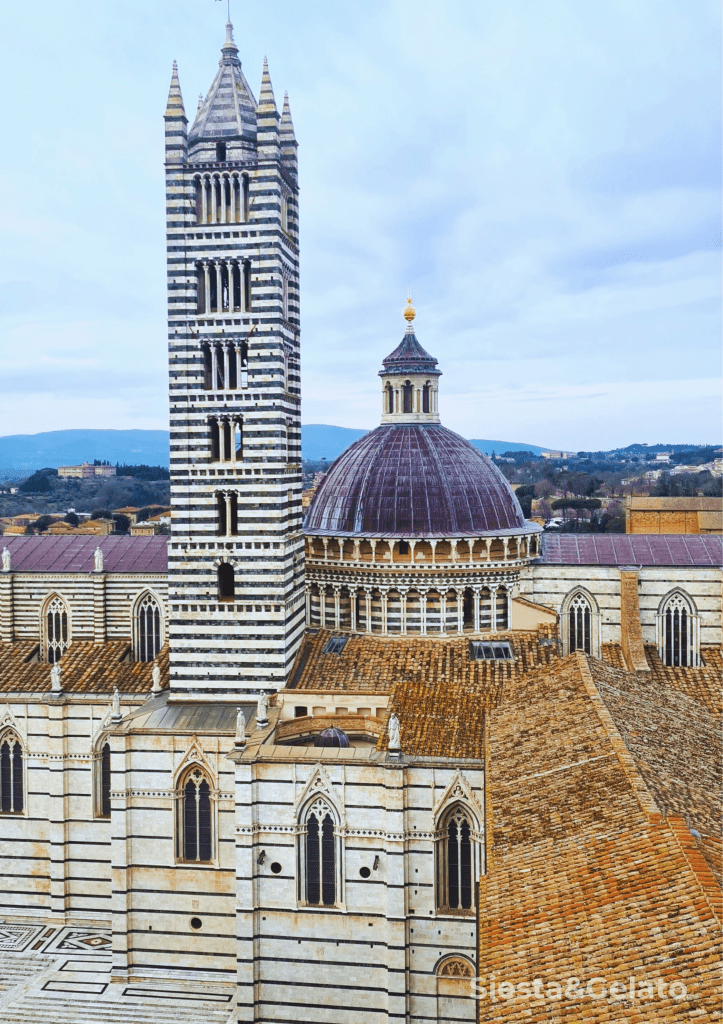
Siena’s Duomo, or Cathedral of Santa Maria Assunta, is a stunning example of Romanesque-Gothic architecture. Its white marble facade is breathtaking. The interior is equally impressive, featuring works by Donatello, Michelangelo, and Pinturicchio. The black-and-white marble design reflects Siena’s colors. However, the real masterpiece is the intricate marble floor, made up of 56 detailed scenes.
piccolomini library
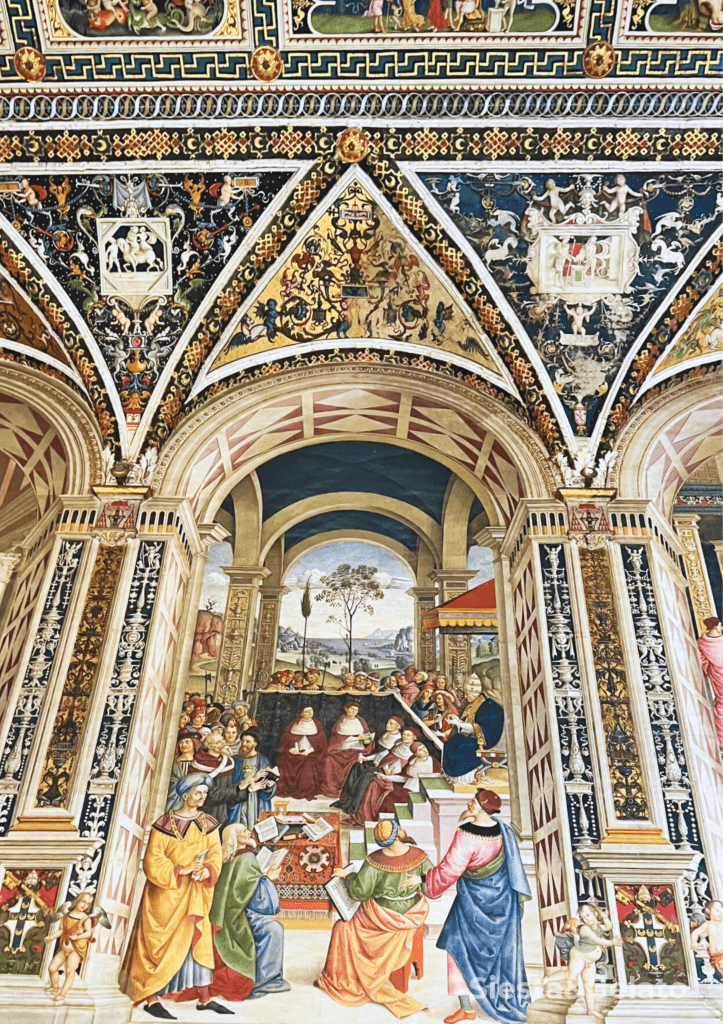
The Piccolomini Library is a real gem, dedicated to Pope Pius II, it’s packed with stunning frescoes by Pinturicchio and even Raphael, the ceiling shines with gold, making the whole place feel magical.
Definitely worth a visit!

top of the torre del mangia
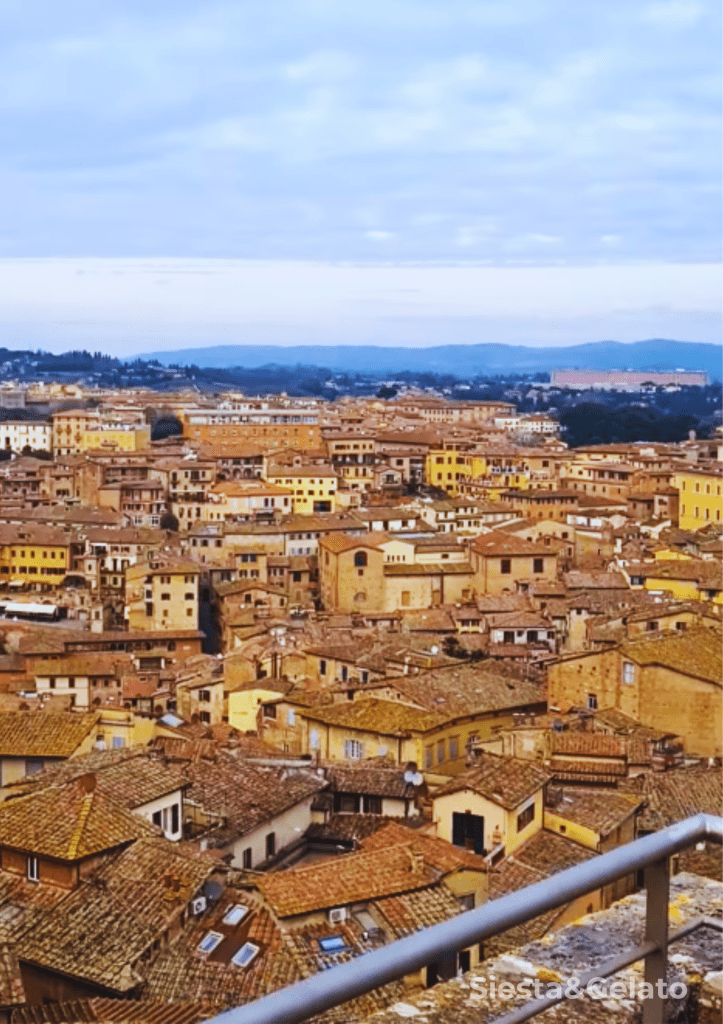
The Torre del Mangia stands tall at 87 meters and offers one of the best views in Siena. The climb isn’t easy, over 400 narrow, steep steps, but once you reach the top, the panoramic view makes it totally worth it!
If you’re planning to visit both the tower and the Civic Museum, grab the combined ticket for €13 (available only at the tower’s ticket office).
day 5: Valdorcia
Val d’Orcia, is a stunning mix of history, culture, and natural beauty, the winding river flows through rolling hills, lined with iconic cypress trees, and dotted with charming villages, ancient churches, and castles.
This magical region blends peaceful landscapes, old white roads, and flavors that take you back in time. It’s a place where legends were made, and every visit feels like stepping into a timeless story.
Bagno vignoni
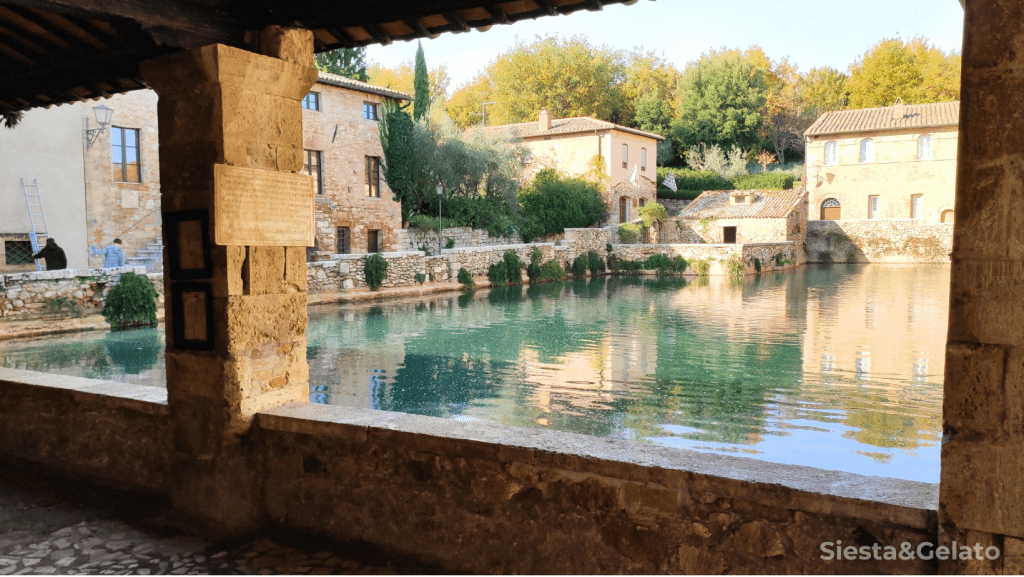
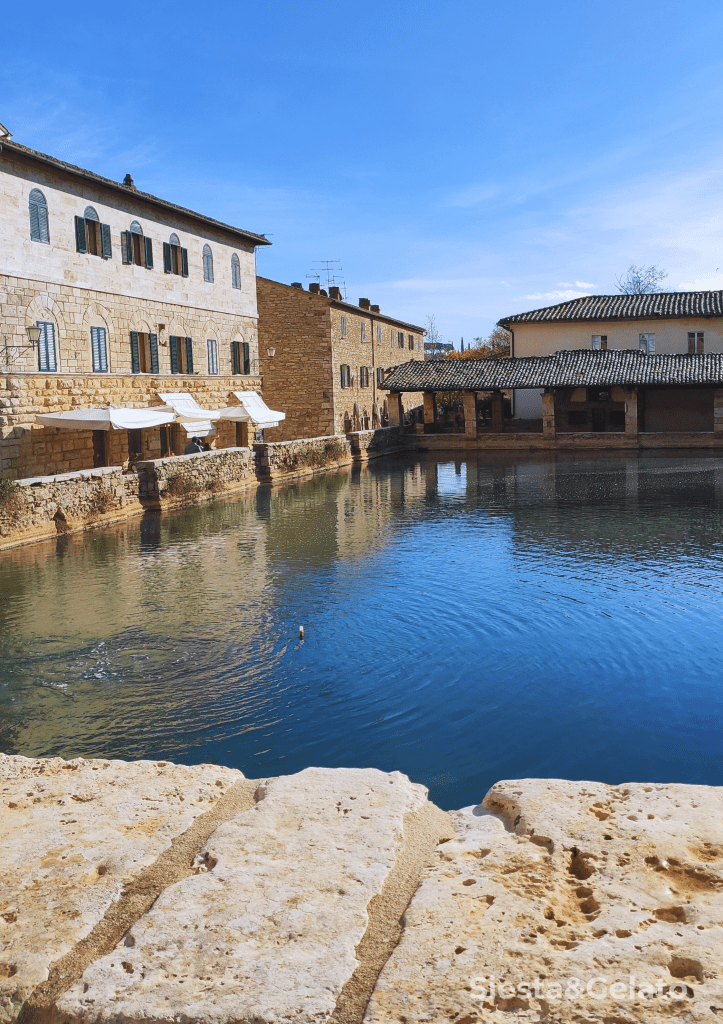
Our firts stop of the day is bagno vignoni, Unlike other villages, its main square is a giant thermal pool (49 meters long and 29 wide) with hot springs bubbling up since ancient times.
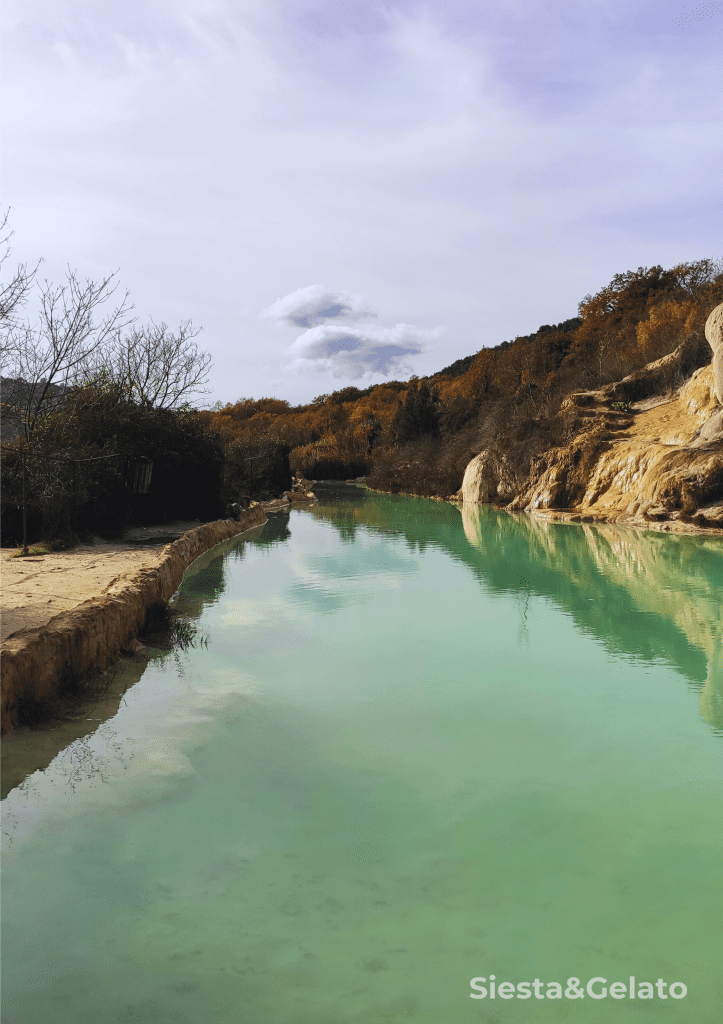
You can’t swim there, but bring an old swimsuit and head to Parco dei Mulini for a free soak in natural hot springs.
pienza
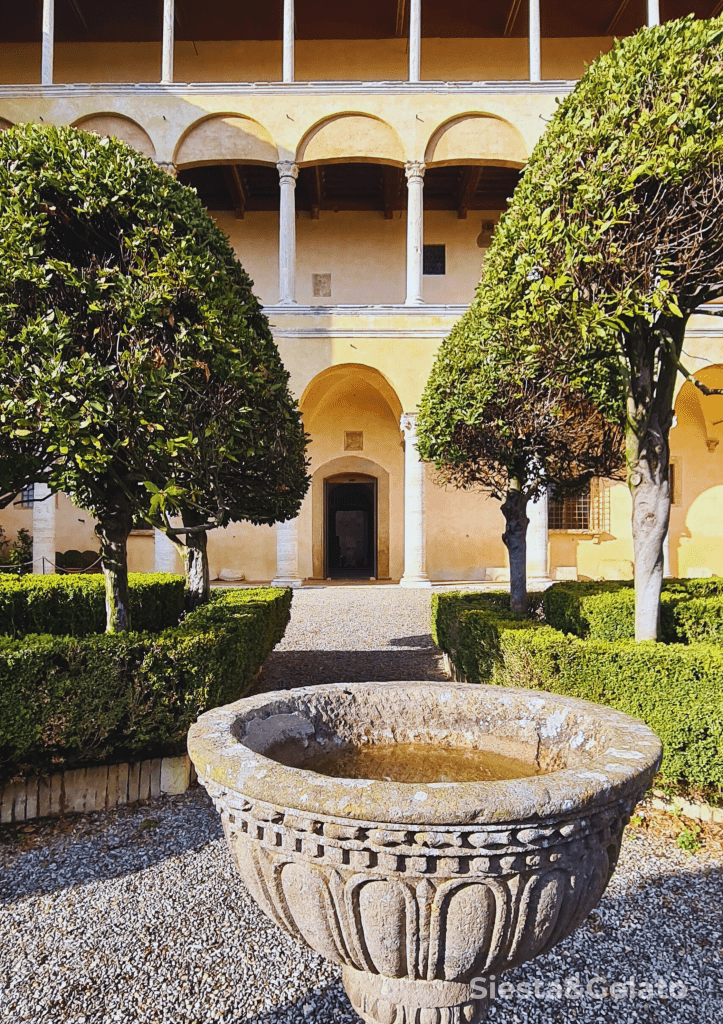
Nestled in the Val d’Orcia, Pienza is a UNESCO World Heritage Site, famous for its dreamy views over the Val d’Orcia and its delicious Pecorino cheese.
Designed in the 15th century as the “perfect Renaissance town,” it’s packed with charming streets, historic buildings, and cozy cafés, you must visit Piazza Pio II, the beautiful Duomo, and the stunning Palazzo Piccolomini.
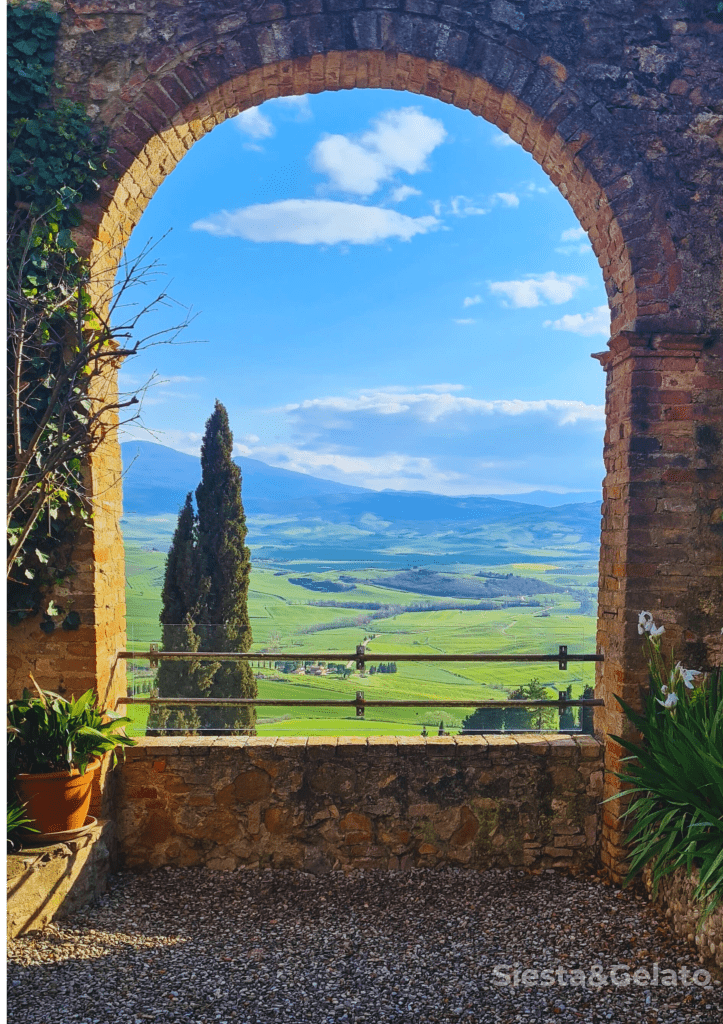
cypress in val d'orcia
While we are in Val d’Orcia, why not pay homage to the symbol of Tuscany, the cypress trees! They make every view look straight out of a postcard, some of the most famous spots?
The road to La Foce and the little cypress ring near San Quirico d’Orcia.


day 6: San Gimignano
Today, we decided to have a slower day after driving around yesterday, and we opted to visit the medieval city of San Gimignano.
Listed as a UNESCO World Heritage Site since 1990, San Gimignano has preserved the charm of a 14th-century town and stands as one of the best examples of medieval urban planning. Its unmistakable towers rise over a breathtaking landscape that deserves more than just a quick visit to truly appreciate.
What to visit in San gimignano
We started at Piazza del Duomo, once the city’s religious and political heart, and we visit the Duomo, with its simple facade hiding stunning 14th-century frescoes.
No visit to San Gimignano is complete without admiring its iconic towers.
Start with the Torre del Diavolo, this tower gained fame thanks to the video game Assassin’s Creed.
Another highlight is the Torre Grossa, the tallest in the city at 54 meters, unlike most towers, you can climb this one for an amazing panoramic view of San Gimignano and the surrounding hills.
Lastly Torre Rognosa the city’s oldest tower, once part of the town hall.
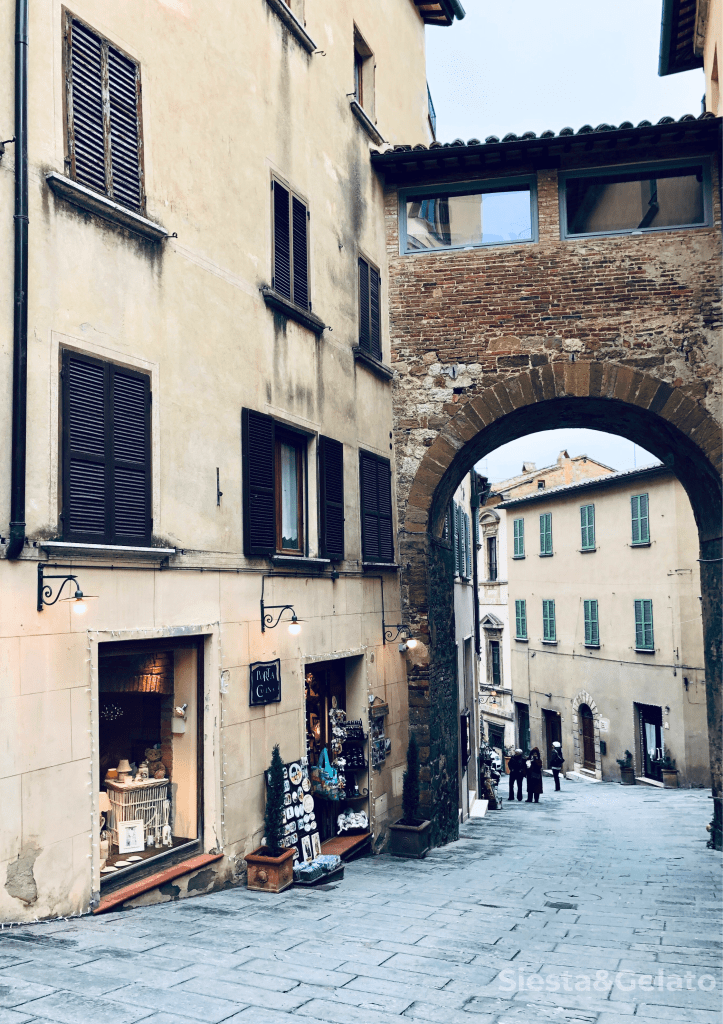
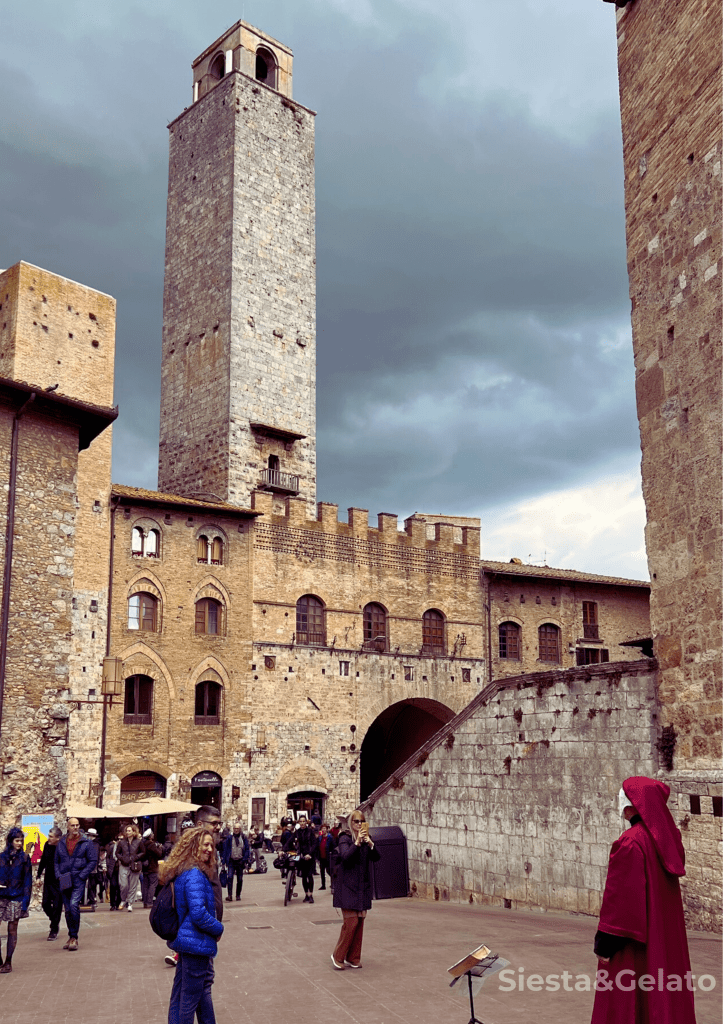
Finally, head to Piazza della Cisterna, a historic marketplace and one of Tuscany’s most beautiful squares, here you can try a super tasty gelato at gelateria Dondoli.
day 7: Pisa
On our last day, we went to visit Pisa on of the most famous city in Tuscany. The city is fairly small and its main attraction is Piazza dei Miracoli.
We decided to visit Pisa on our last day, as spending the morning there was enough time to see the main attractions, amd our flight later in the day departeded from the Pisa airport, which is just 9 minutes away from Piazza dei Miracoli.
Piazza dei miracoli
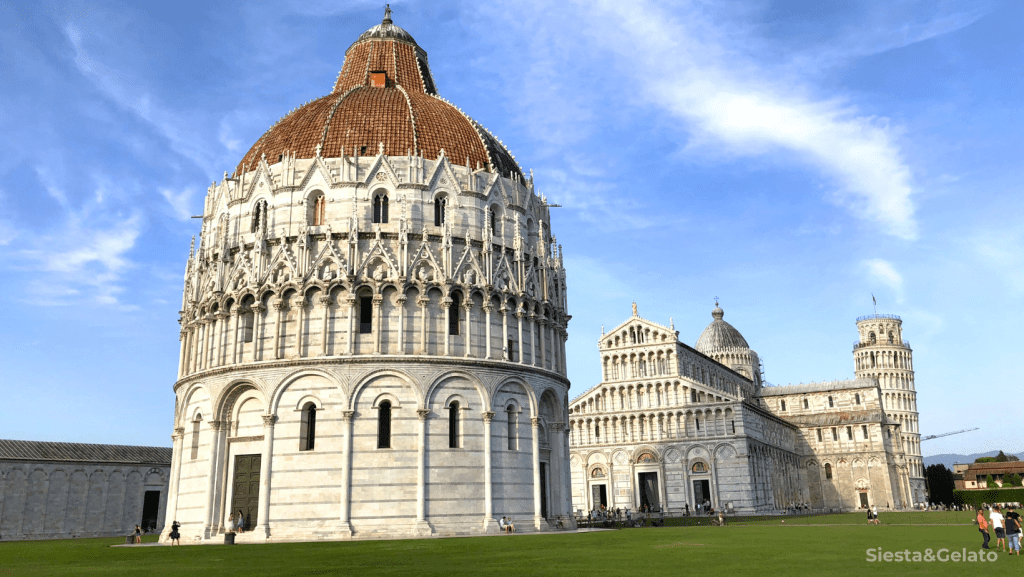
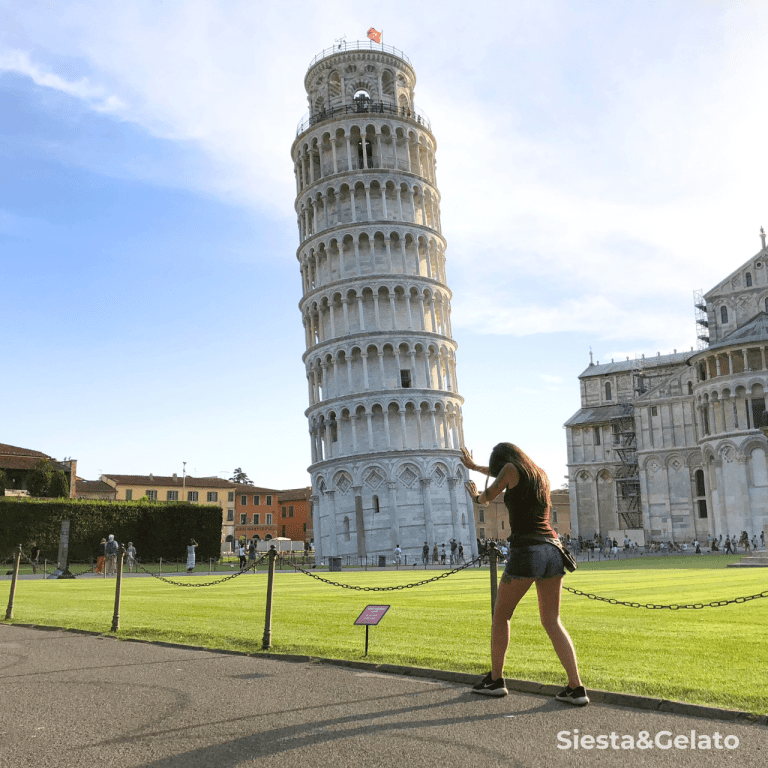
Piazza dei Miracoli is a UNESCO World Heritage site packed with iconic landmarks like the famous Leaning Tower, the stunning Cathedral (Duomo di Pisa), and the impressive St. John’s Baptistery, it’s easy to explore on foot, but a guided tour can give you cool insights and help you skip the crowds.
The cathedral is a Romanesque beauty with intricate marble details, while the baptistery has amazing acoustics and a mix of architectural styles.
Climb the Leaning Tower is a must for epic views of the city and countryside, also if you stick around at noon you’ll hear the bells ring!
The visit lasts around 30 minutes and involves a 251-step climb on foot, and it’s not recommended for those with cardiovascular or muscular conditions.
 Your ticket is only valid for the specified date and time, so be sure to arrive on time, late arrivals won’t be admitted or refunded.
Leaning tower Opening hours:
📅 Daily | 🕘 9:00 AM – 8:00 PM
🎟️Admission: 27 Euros
📌 Where to Buy: Buy your ticket online
🔍 Tip: Hours are usually consistent, but it’s always a good idea to check the official website for any for any updates before your visit! 😊
For that classic Pisa photo, arrive early in the morning or later in the evening to dodge the crowd, and if you need a break, grab a drink at the Museo dell’Opera café for a unique view.
how to get around
For our itinerary, we decided to rent a car as we considered it the most convenient way to fully explore Tuscany, especially the smaller towns. Exploring Val d’Orcia using public transport is challenging and time-consuming.
However, if you’re uncomfortable driving, you can use trains for major cities and book day tours for the countryside.
best time to visit
We suggest avoiding the Summer (July to mid-September).
The weather is hot and humid, and everywehre is very crowded, to visit the main attractions, be prepared for long queues.
March to June: This is the best period to visit Tuscany, with mid temperature, also the city is less crowded than in the summer, the gardens and parks are in full bloom, and outdoor attractions are enjoyable.
End of September to February: This is a good time to visit Tuscany, you’ll experience fewer tourists and lower prices. Cities are beautifully decorated for the holidays, and you can enjoy its museums and attractions with minimal waiting. It can be a bit chilly, and some attractions might have shorter opening hours.

Tips for your trip
Book Tickets in Advance: For major attractions like the Uffizi Gallery, Pisa’s Leaning Tower, Galleria dell’Accademia, and Palazzo Vecchio, book tickets online in advance to skip the wait.
Visit Early or Late: As Tuscany is a very popular destination we suggest you to arrive early at popular spots like the Duomo or Ponte Vecchio to avoid crowds, or enjoy a quieter experience later in the evening.
Get an E-sim card:
To plan the logistic of your trip while you are there and to deal with any unexpected event, we do suggest you to by an E-sim card
 Get your E-Sim
Tipping it’s not mandatory in italy.
What power plug do I need?: In Tuscany as in the rest of Italy, we use Type L power plugs, which have three round prongs and Type F (the standard European two-round-pin plug) he standard voltage is 230 V at a frequency of 50 Hz.