




Civita di Bagnoregio: How to Visit Italy’s Stunning "Dying Town"
Nestled on a plateau, Civita di Bagnoregio offers stunning views and a magical, timeless atmosphere, its location makes it perfect for a day trip, whether from Rome, Civitavecchia Port, or nearby Tuscany and Orvieto, walking through its ancient stone streets, with flower-filled balconies and steep staircases, feels like stepping into a fairytale, a true hidden gem.
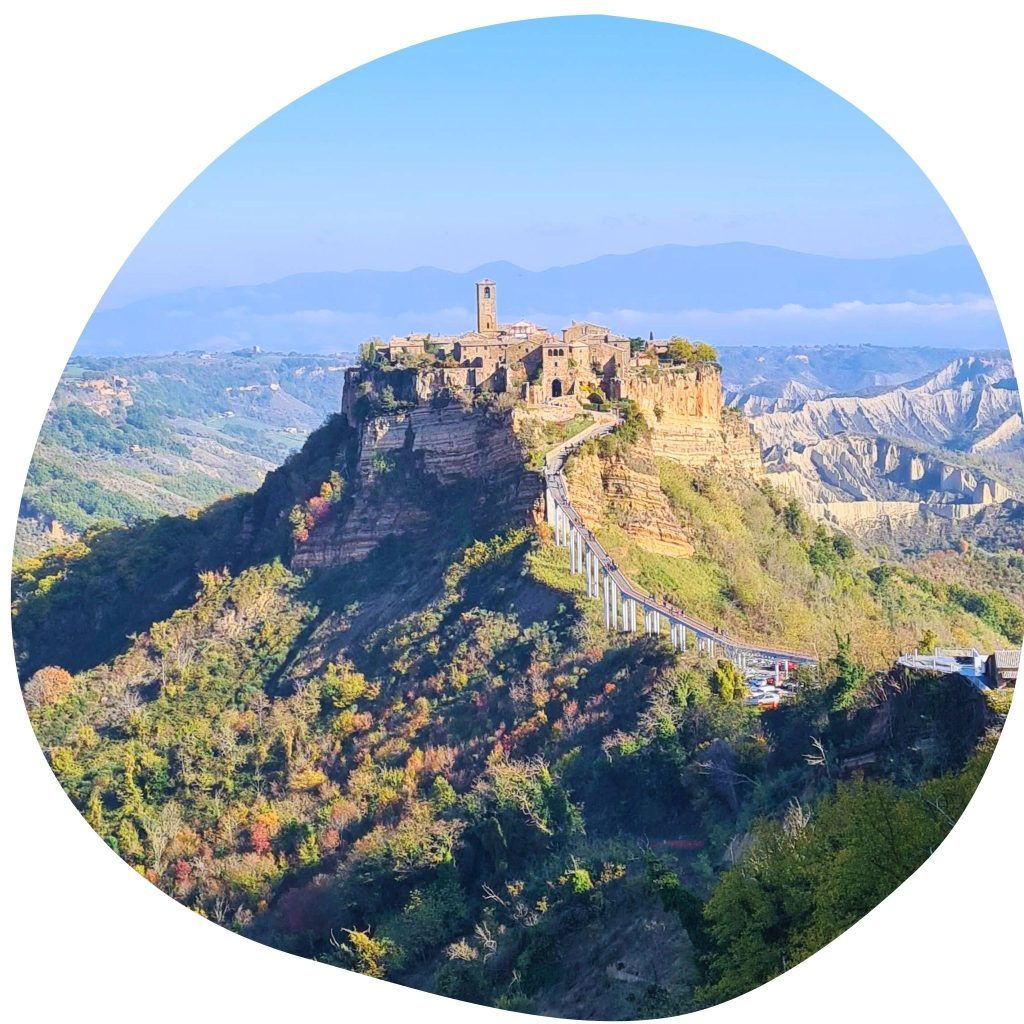
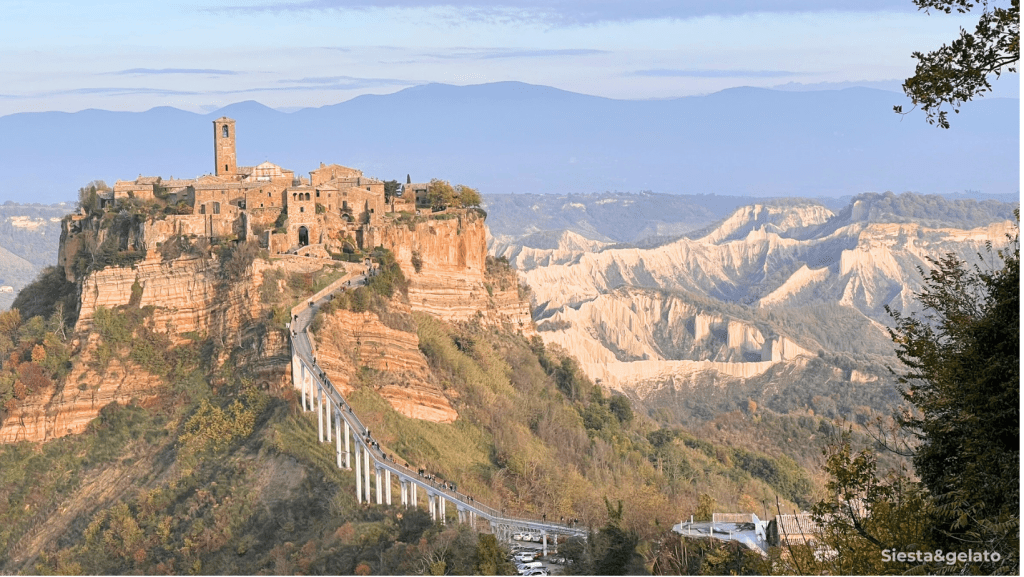
Civita di Bagnoregio, known as il paese che muore (the dying town), is a breathtaking medieval village perched atop a crumbling tufa cliff in northern Lazio’s Valle dei Calanchi. Accessible only by a 300-meter-long footbridge, it feels completely isolated from the modern world.
Civita is the actual village on top of the cliff, while Bagnoregio is the town in front of it.
Furthermore, its charming narrow streets, steep staircases, and flower-filled balconies create a fairytale-like atmosphere, embodying the essence of a classic Italian hillside village. Despite its fragile foundation, Civita stands resilient, offering visitors stunning views and a glimpse into its unique geological history.
Table of contents
how to get to Civita di bagnoregio
By car
The best way to reach Civita di Bagnoregio is by car, with a drive of approximately 2 hours from Florence and 1 hour 50 minutes from Rome.
Once you arrive, the nearest parking lots to the entrance of the pedestrian bridge are:
Parking Alberto Ricci
Parking Ex Cantina Didattica
Parking Via Mercatello
During summer months, parking is more challenging, and you may have to use Parcheggio Battaglini, which is about a 20-minute walk from the ticket Shop at the entrance of the bridge. Most parking areas are metered, and finding free parking is highly unlikely.
By Public Transport
There is no train station in Bagnoregio, so the best way to get there by public transport is to take a train to a nearby city, such as Orvieto or Viterbo, and then continue by bus.
If you’re arriving from northern Italy, the best option is to take a train to Orvieto, then a bus to Bagnoregio. You can take the bus to Bagnoreggio from outside the train station.
If you’re coming from the south, it’s better to take a train to Viterbo, then catch a bus to Bagnoregio. In this case you’ll need to walk 20 minutes from the train station to the bus stop.
From Bagnoregio bus stop, to the ticket office you can either walk 20-minute walk or take the shuttle.
Bus routes are operated by Cotral and run multiple times daily to Bagnoregio.
Visit Civita di bagnoregio
The best part of Civita di Bagnoregio is the town itself, once you cross the bridge, it feels like stepping into another world, with its old-school vibe, earthy colors, colorful gardens, and buildings covered in ivy, there are cozy restaurants and little shops scattered around, all with amazing views of the cliffs and valleys.

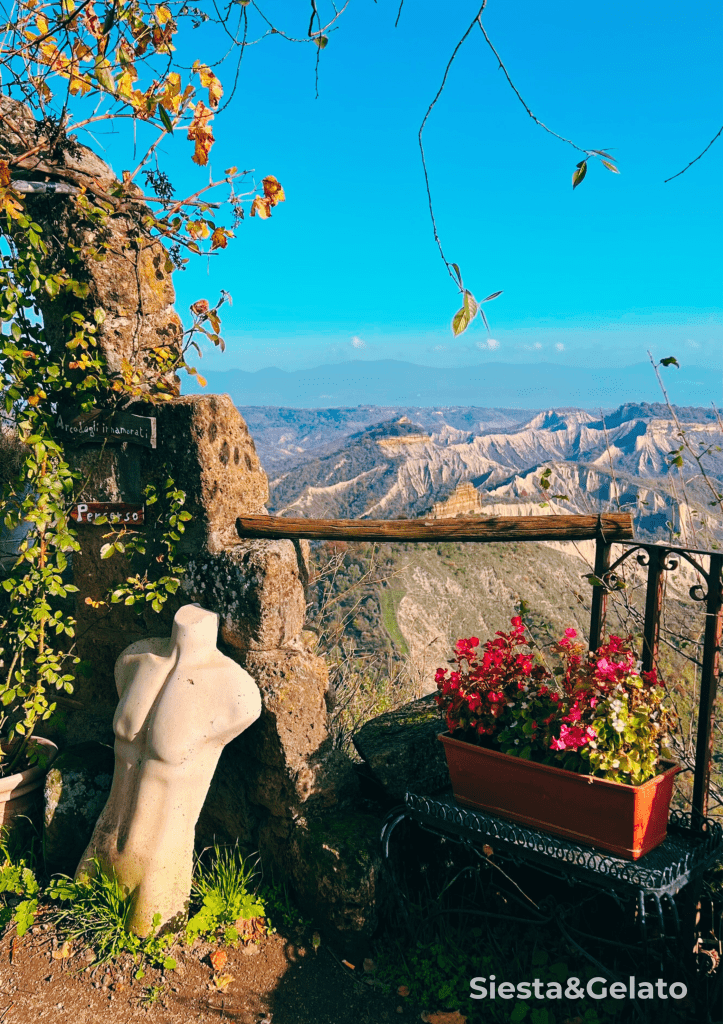
When you reach the end of the bridge, you’ll be greeted by Porta Santa Maria, the entrance to the historic village, once you step through, you’ll be amazed: a maze of cobblestone streets opens up, surrounded by ancient medieval houses and filled with vibrant flowers and decorations that give the place its charm.
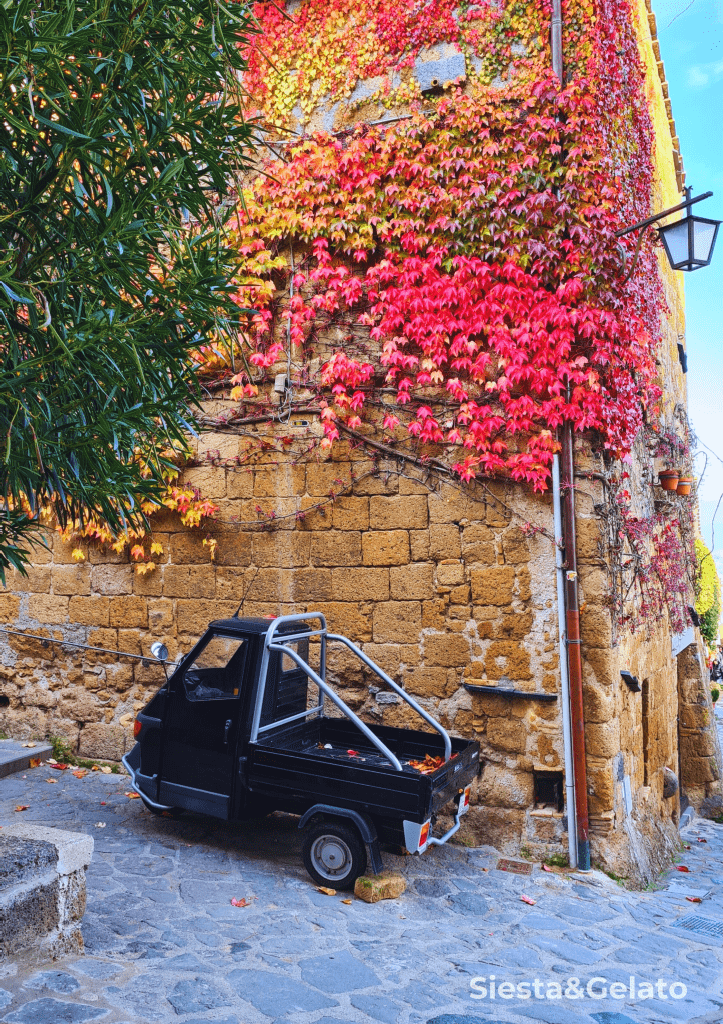
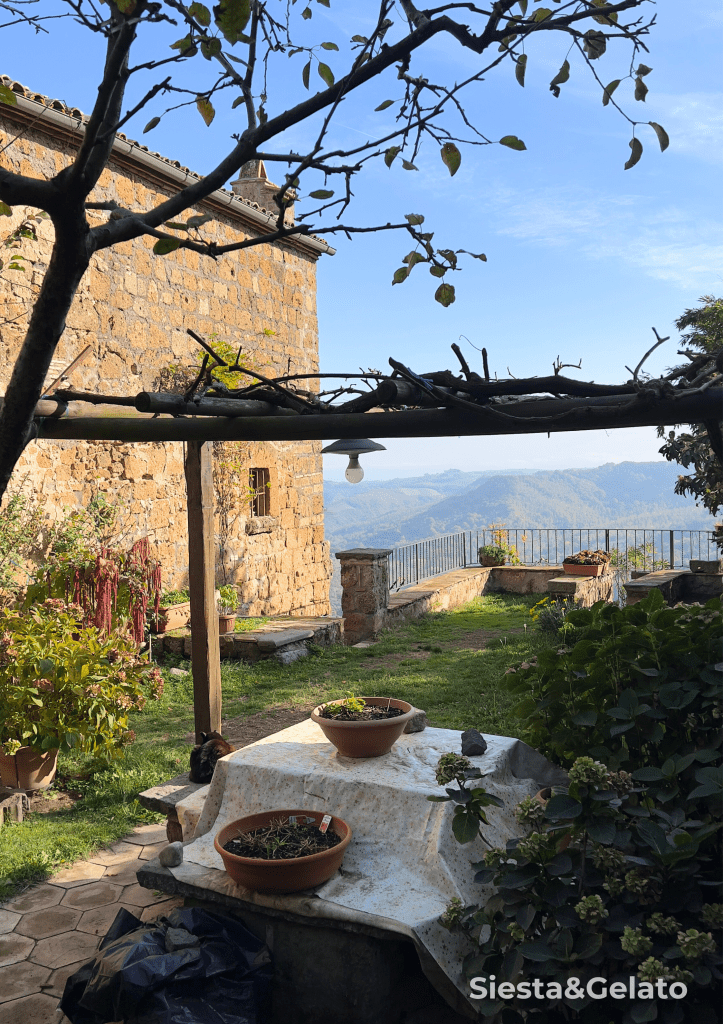
Head over to Piazza San Donato, the heart of the village, where you’ll find the Chiesa di San Donato, a beautiful Romanesque-Renaissance church it’s one of the most important buildings in Civita, with a history that dates back to the end of the Roman Empire.
The bell tower stands tall above the village, and inside you’ll find some stunning pieces of sacred art, including a 15th-century wooden crucifix that’s a big part of the Good Friday celebrations.
At the end of Civita, you’ll find the Giardino del Poeta (The Garden of the Poet), a tiny garden overlooking the Valley of the Calanchi, it gets its name from Geremia, a local villager who took it over, cleaned it up, and turned it into his personal vegetable garden. He also used it as a peaceful spot to find inspiration for his poetry.
To visit, leave a small donation or purchase local delicacies like honey, lentils, or homemade jams


To learn more about the city, visit the Museo Geologico e delle Frane, documenting the valley’s dramatic changes over centuries.
Entry ticket and opening hours
🕘Opening hours: Daily from 8am to 8pm
🎟️Entry ticket: 5€ entry ticket per person.
Free admission for children under 6, people with health conditions, tour guides, and guests of local accommodations.
📌 Where to Buy: You can buy tickets online or at the ticket office before the bridge.
🔍 Tip: To explore Civita at your own pace you can grab an audio guide at the booth for just €3.
 During peak season, expect long lines, so booking online in advance is recommended.
 During peak season, expect long lines, so booking online in advance is recommended.
How long to visit Civita di Bagnoregio?
Civita di Bagnoregio is small—walking across takes under 10 minutes! But don’t be fooled, there’s plenty to see and experience.
A half-day trip is perfect to explore its charming alleys, admire the views, grab a bite, and pick up a souvenir.
In 2–3 hours, you can experience the best of this fairytale village without feeling rushed, it’s an ideal stop on a day trip from Rome, Orvieto, or if you’re visiting Tuscany.
where to sleep in civita di bagnoregio
You have two options:
Speep in Civita:
Here, you’ll have a truly unique experience, allowing you to enjoy the village in peace once everyone else has left.
1- Piazza San Donato Casa Vacanze
2- Case di Civita
Sleep in Bagnoregio:
Staying outside Civita offers easy transport access, more amenities, and a lively town center with a pleasant evening atmosphere.
1- Palazzo Granaroli
2- Civita Home

Best time to visit
The best time to visit Civita di Bagnoregio is during spring (March–June) and autumn (September–November) when the weather is mild, and the crowds are smaller.
🌿Spring (March to May) brings blooming flowers and perfect sightseeing conditions,
🍂Autumn (September – November) offers beautiful fall colors and a more relaxed vibe.
☀️Summer (July–August): It can be very hot, especially in the middle of the day, and more crowded due to Italian holidaymakers and tourists.
❄️Winter (December–February): There are fewer visitors, which means a peaceful experience, but it can be cold and it usually gets foggy, with some businesses operating on reduced hours.
Related Articles