




Ultimate 10-Day Oman Itinerary: Best Places & Travel Tips

This Oman itinerary will bring you in a land of breathtaking landscapes, rich history, and warm hospitality.
From the bustling souks of Muscat to the crystal-clear waters of the Daymaniyat Islands, every corner offers something unique.
Explore stunning wadis, sleep under the stars in the Wahiba Sands, and witness sea turtles at Ras Al Jinz.
Planning an Oman itinerary can be overwhelming, but with the right stops, you’ll experience the country’s stunning landscapes and rich culture.

Table of contents

Day 1: Muscat

As soon as we landed, we could feel the blend of tradition and modernity in the air. Muscat is the first stop on this Oman itinerary!
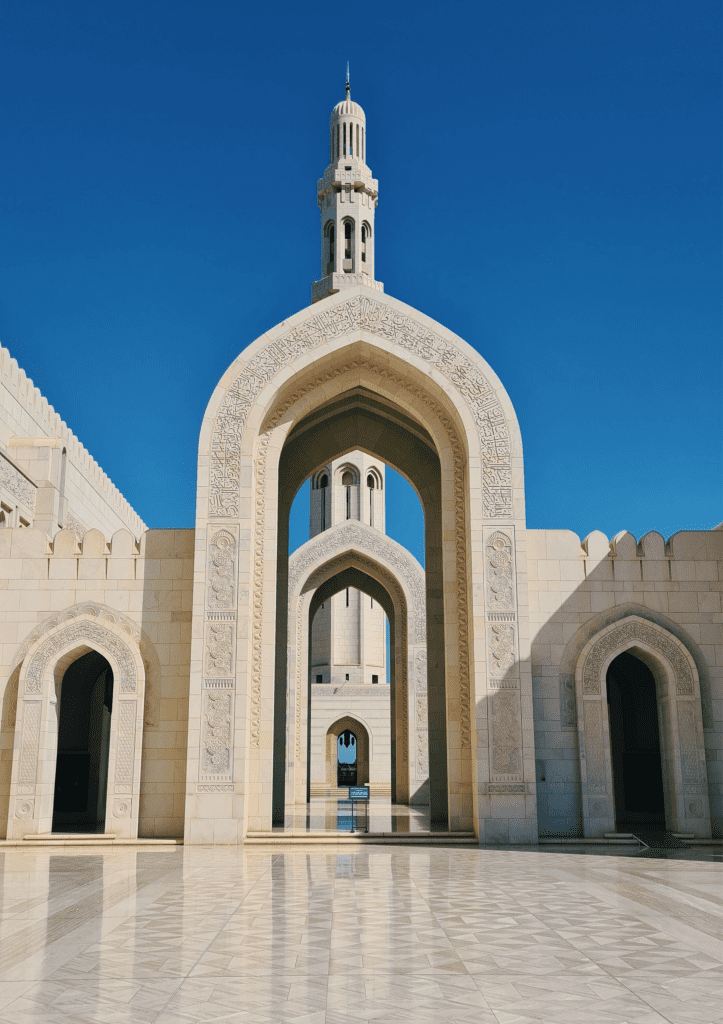
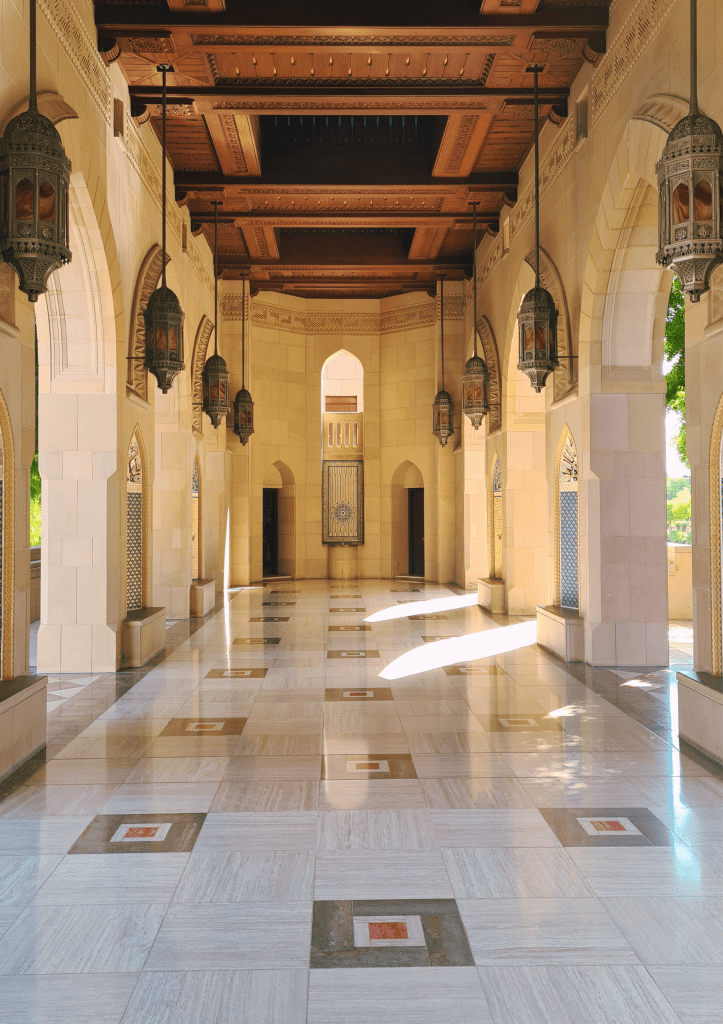
From the stunning architecture of the Sultan Qaboos Grand Mosque to the vibrant Mutrah Souq and the beautiful coastline with its pristine beaches, every corner is worth exploring.

Sultan Qaboos Grand Mosque

The Sultan Qaboos Grand Mosque, is as mosque with impressive numbers.

It stands as the largest in Oman, with one of its five minarets rising to a height of 90 meters, making it the tallest structure in the country.

The construction of the mosque took six years to complete, and it can accommodate up to 20,000 worshippers.ย  Inside the menโ€™s prayer hall, a magnificent chandelier plated with 24-karat gold and adorned with 600,000 Swarovski crystals takes center stage.

Equally remarkable is the hand-woven prayer carpet, which weighs an astounding 21 tons, It was crafted over four years by 600 Iranian artisans.ย The only larger prayer carpet is housed in the Sheikh Zayed Grand Mosque in Abu Dhabi, UAE.

๐Ÿ•˜ Opening Hours: on-Muslims can visit from 8 AM -11 AM from Saturday to Thursday.

The mosque is closed to Non-Muslim visitors on Fridays. Muslims can usually visit throughout the day.ย 

๐ŸŽŸ๏ธ Admission Fee (Individual):

Adults (19+): ยฅ600 (~โ‚ฌ3.60 / ~$4 USD)

Children (6โ€“18): ยฅ400 (~โ‚ฌ2.40 / ~$2.70 USD)

Dress code: Ladies must cover from head to toe, including wearing a headscarf (no need to cover the face).

Men are not required to wear head coverings but should wear long pants and long sleeves.

Sultan Qaboos mosque in this Omani itinerary

Mutra Souq

The market burst with colors, spices, and local treasuresโ€”an overwhelming feast for the sense.

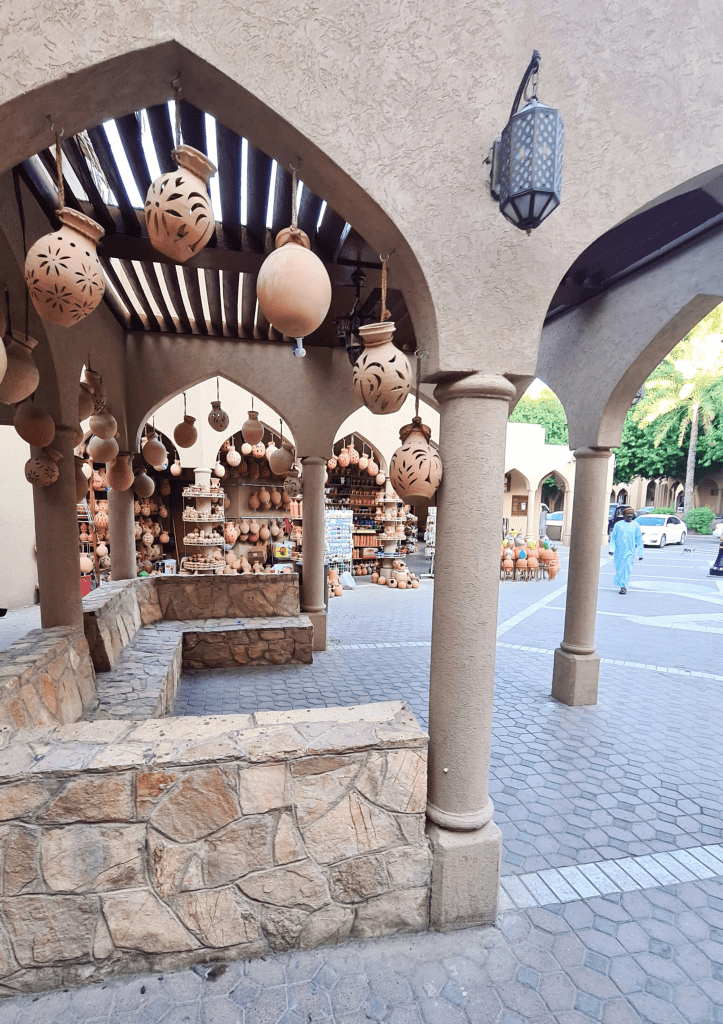
Mutrah Souq is a maze of stalls selling everything from souvenirs and handwoven carpets to kummas (traditional Omani hats), vibrant lanterns, silver khanjars, jewelry, and exotic perfumes. Even if you’re not shopping, just wandering through is an adventure.


We totally got lost in its charm!

๐Ÿ•˜ Opening hours:ย 9am – 1pm / 4pm – 9pm daily

Day 2: Bandar Khairan

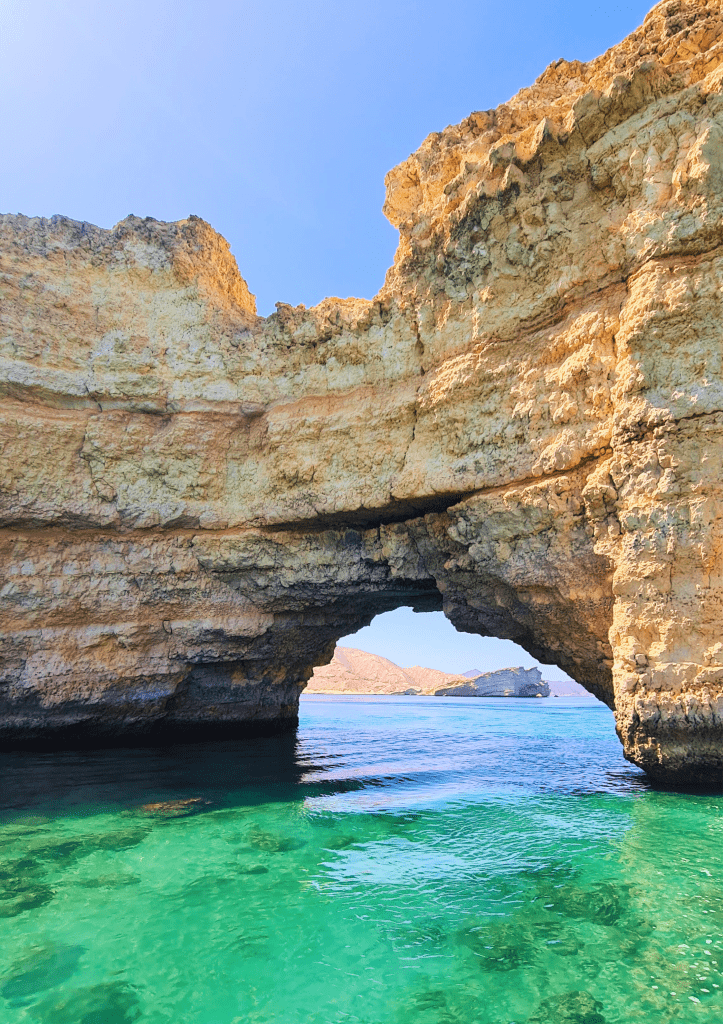
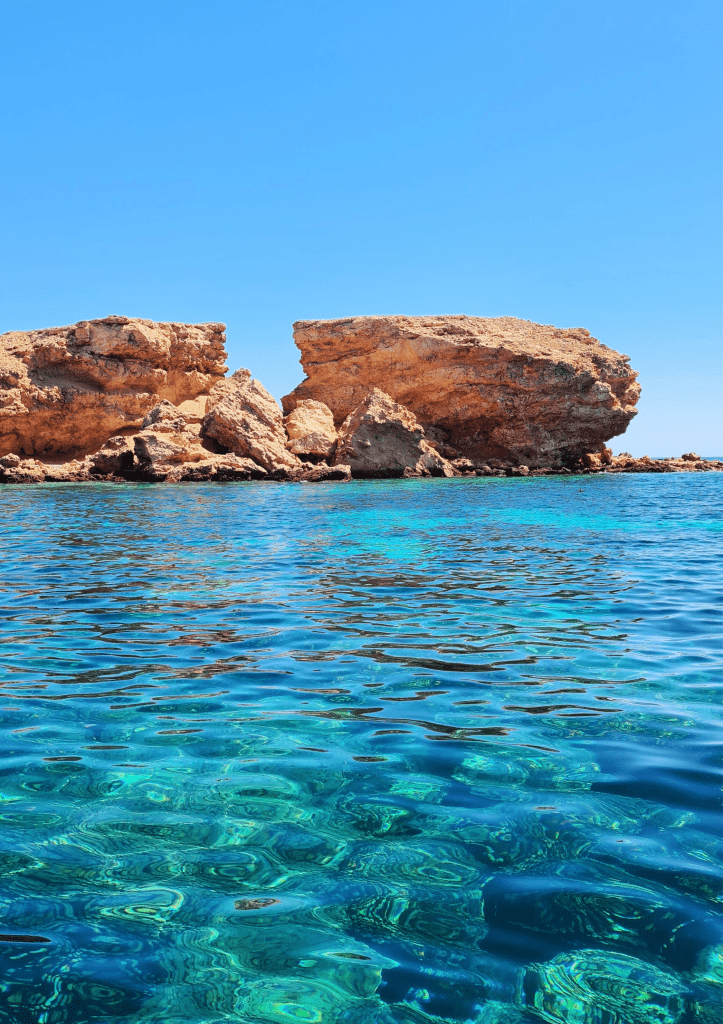
Bandar Khairan is a hidden gem along Oman’s coastline, known for its stunning turquoise waters and rugged cliffs.

We went on a day boat trip, starting with a dolphin-watching excursion, though we were initially skeptical about whether we’d actually see any. However, to our surprise and excitement, we encountered a pod of dolphins playfully jumping and swimming around our boat. There were so many that no matter which direction we turned, we could see them!

It was such an incredible sight!

After hanging out with the dolphins, we went snorkeling in Bandar Khairanโ€™s insanely clear waters. We saw beautiful coralsย and we even spotted turtles and tons of colorful fish, It felt like swimming in a giant aquarium!

Day 3: Daymaniyat Islands

To protect the marine ecosystem, the islands are closed to visitors from May to October.ย  During this priod you can only snorkle and dive arround them but you cant land.

Today we start the day with another boat trip, this to The Daymaniyat Islands!

The Daymaniyat Islands Nature Reserve, consisting of 9 untouched islands, is located 20 km off the coast of Barka, a northern coastal city near Muscat.

A special permit is required to access the Daymaniyat Islands, but the most convenient way to visit is by joining a guided day tour.

Tour operators take care of logistics, permits, and food, making the trip hassle-free. We did the Daymaniat Islands Snorkeling Tour with Refreshmentsย with Global Scuba, which offers both snorkeling and diving opportunities.

Although I don’t dive, Sandra does, so it was the perfect experience for both of us.

The water was so clear, and the coral reefs were alive with marine life.

We Snorkeled in Turtle bay, where we managed to see up to 10 turtles alongside many other colorful fishes.

It was like exploring an underwater world of vibrant colors.

Day 4: Wadi Shab

No Oman itinerary is complete without a visit to the breathtaking Wadi Shab, an oasis nestled between rugged mountains in Oman, known for its crystal-clear waters and lush greenery

Wadi shab has 4 pools, the first one is for no swimmer, The 3rd pool is the most beautiful out of all pools. To reach the emerald-green pools, youโ€™ll need to walk approximately 3 km through towering cliffs, and lush plants.

Wadi Shab is about 1 hour and 40 minutes from Muscat by car. To find out where to park, how to visit, and what to do, check out our guide below!

Day 5: Ras Al Jinz

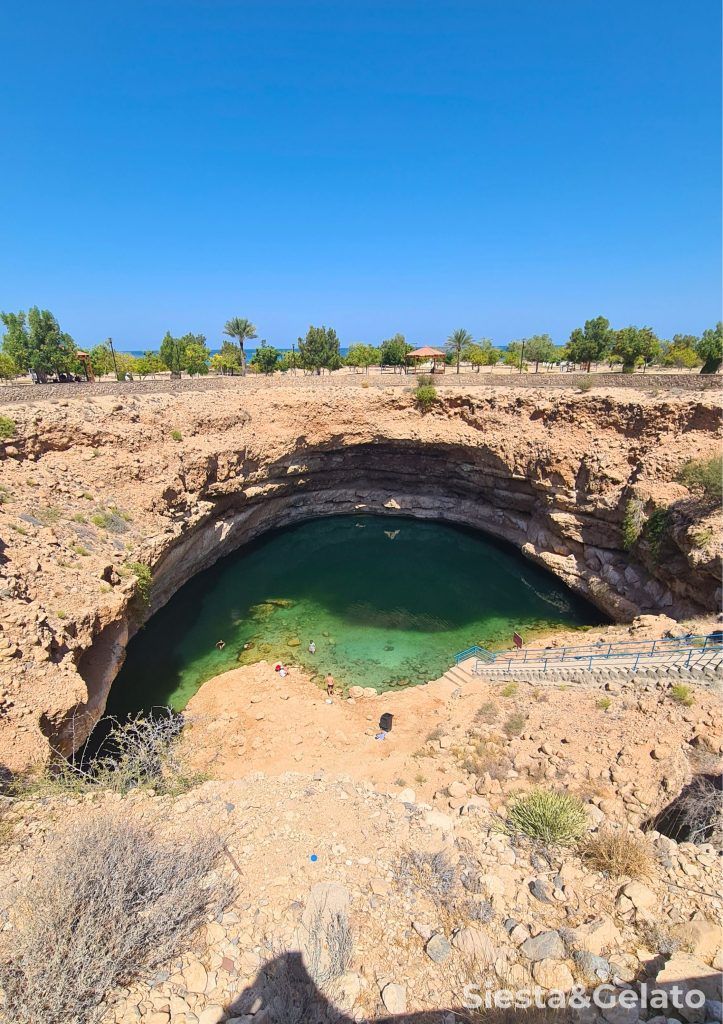
We started our day heading to Ras Al Jinz, but before getting there we decided to stop at the Bimmah Sinkhole.

Bimmah Sinkhole

Initially, we had doubts about including the Bimmah Sinkhole in our Oman itinerary, asย  it didnโ€™t seem particularly exciting from the photos, and the fact that it could get crowded didnโ€™t help. However since it was on the way to our main destination for the day we decided to make a quick stop and see what all the hype was about.

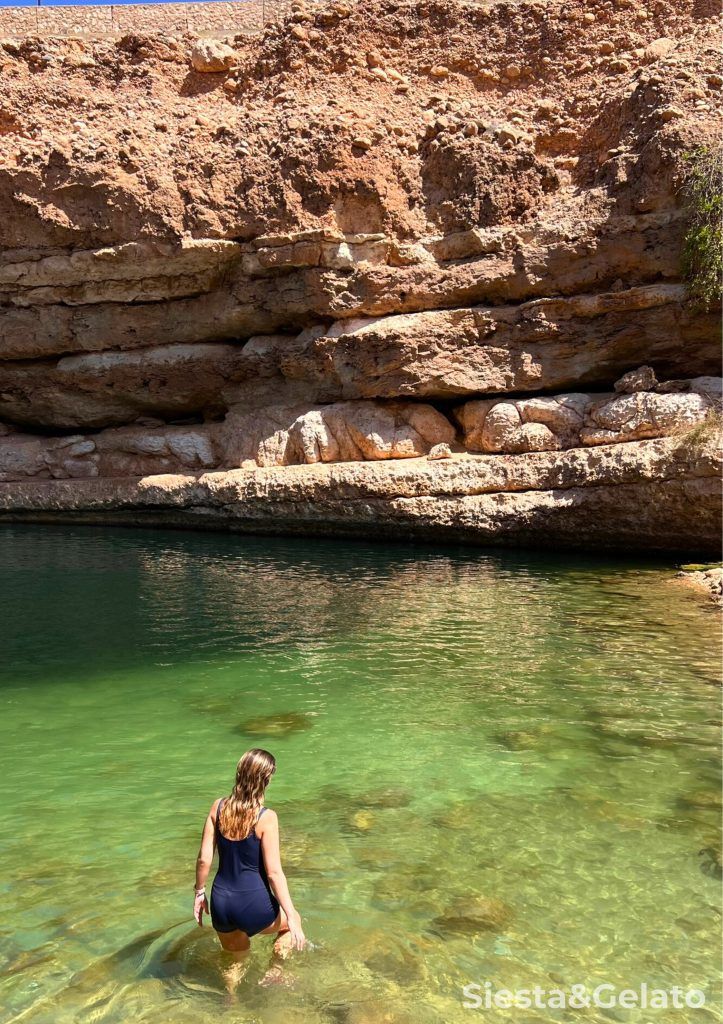
Despite being a bit busy, even on a Thursday morning, Bimmah Sinkhole turned out to be a delightful surprise. While it may not be the most photogenic spot, the experience itself is what makes it worth visiting.

Swimming in the cool, crystal-clear water on a hot day was refreshing and fun.

Additionally, you can enjoy a free โ€œpedicureโ€ from the tiny fish living in the water. Simply dip your feet and stay still, and soon youโ€™ll feel a tickling sensation as the fish nibble away at the dead skin on your feet

After a quick detour, we drove another 1 hour and 40 minutes until we reached our final destination, Ras Al Jinz, still unaware of the fantastic experience that awaited us.

Ras Al Jinz turtle reserve

Ras Al Jinz is a coastal village in Ras Al Hadd, on the eastern shores of the Arabian Peninsula. His beach, The Ras Al Jinz Beach s world-famous for being a key nesting site for endangered green turtles (Chelonia mydas), one of the most important in the Indian Ocean.

This is the only official spot where visitors can witness these incredible creatures nesting.

The best time to see turtles nesting is from May to September. They usually come out late at night or early in the morning and tend to avoid the beach during a full moon. However, we went to Oman in October and were lucky enough to see plenty of them.


Watching turtles lay their eggs on the sand was absolutely incredible. Definitely one of the highest points in our Oman itinerary. And just when we thought it couldnโ€™t get any better, we got to witness something even more magical. Tiny baby turtles hatching and instinctively scrambling toward the ocean. It was one of those moments that just leaves you speechless.

The whole experience was handled with a lot of care, with guides making sure everyone kept their distance and stayed quiet so the turtles werenโ€™t disturbed.

If you’re planning to stay overnight, youโ€™ve got two options: the Ras Al Jinz Turtle Reserve is the pricier choice, but it does include a free guided tour.

Alternatively, you can stay at the Turtle House, located 500 meters from the reserve, which is more affordable, though youโ€™ll need to pay a fee per person to join the tour.

To book your spot checkย  here.

How to visit Ras Al JInz Turtle reserve

Day 6: Wahiba Sands

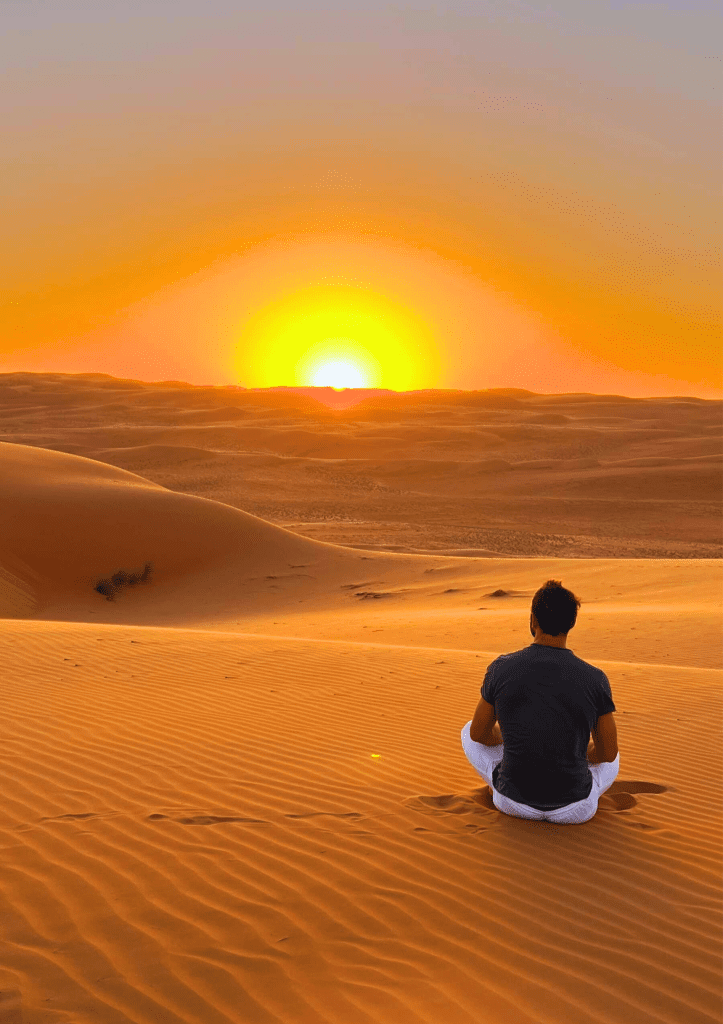
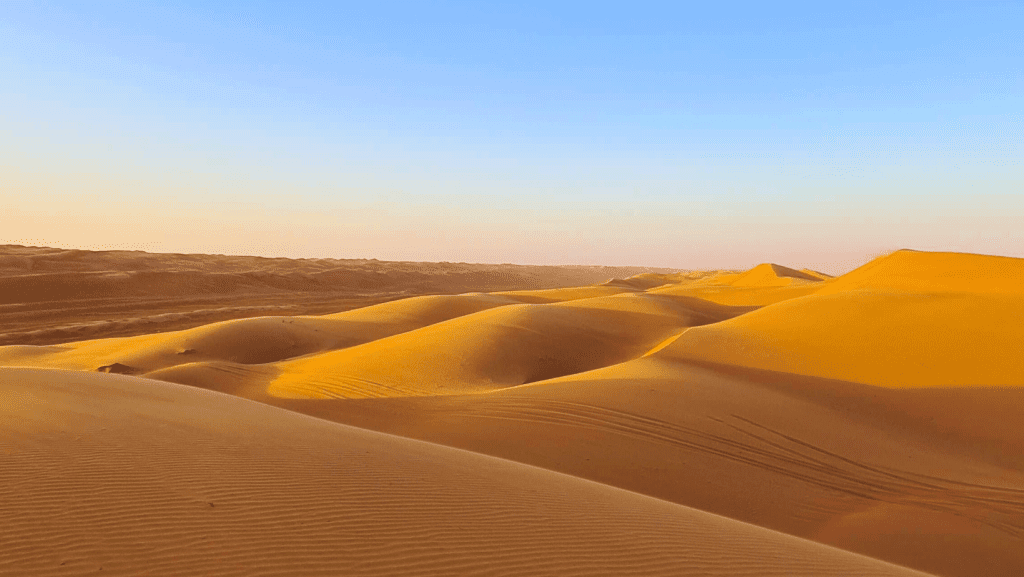
Picture endless waves of golden sand stretching as far as you can see, thatโ€™s Wahiba Sands, a real desert paradise in Oman!

To enter the desert, you must have a 4WD, however, we had to deflate our tires before entering to adapt to the loose sand. For that reason, the meeting point was in front of a garage.

To reach the meeting point, we had to drive about 2 hours from Ras Al Jinz.

If you donโ€™t have a 4WD, the Bedouins will drive you into the desert.

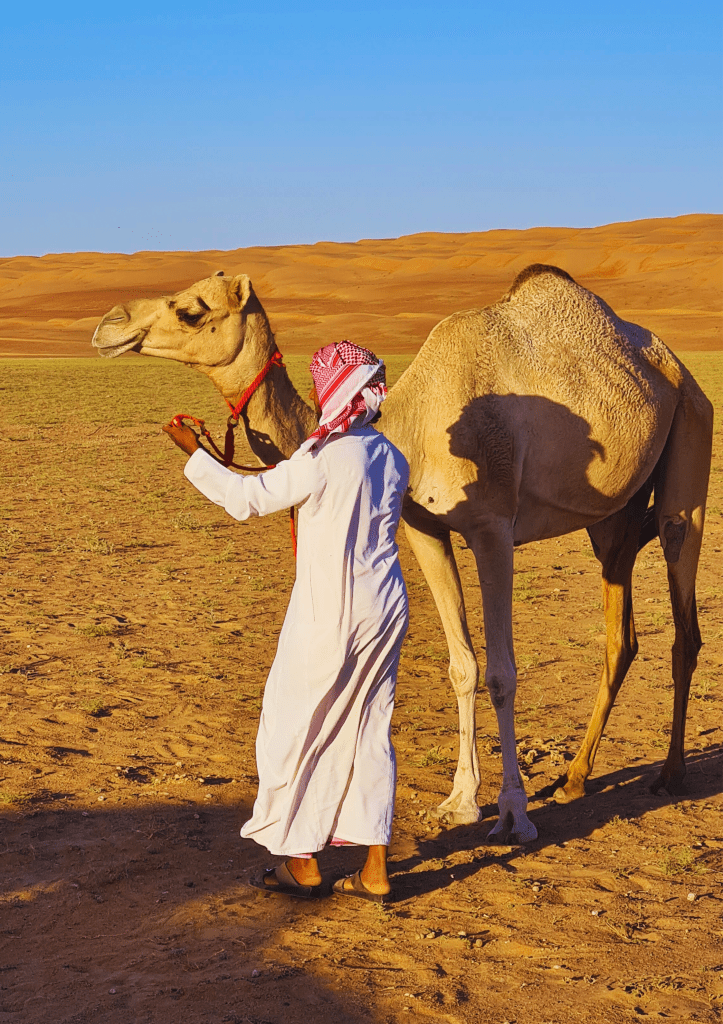
The landscape was amazing, with golden dunes stretching as far as the eye could see. Along the way, we saw many camels wandering through the desert.

In the evening, we dug into some delicious Omani food under the desert sky, learning about Bedouin culture and traditions.

Day 7: Misfat Al Abriyeen

We drove 2 hours and 50 minutes to reach Misfat Al Abriyeen.

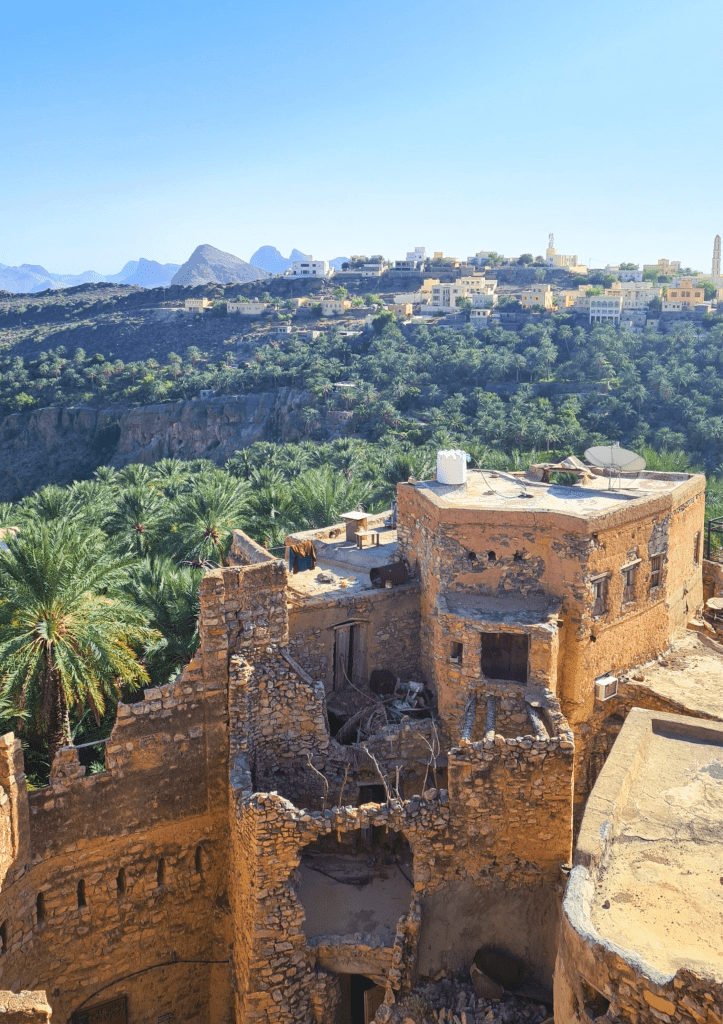
This picturesque village in the Omani mountains, known for its traditional mud-brick homes and terraced landscapes, is tucked away in the Hajar Mountains. Itโ€™s got amazing views and a real taste of authentic Omani heritage.

Since it’s a pedestrian-only village, you can leisurely wander through its shaded streets and discover its hidden corners.

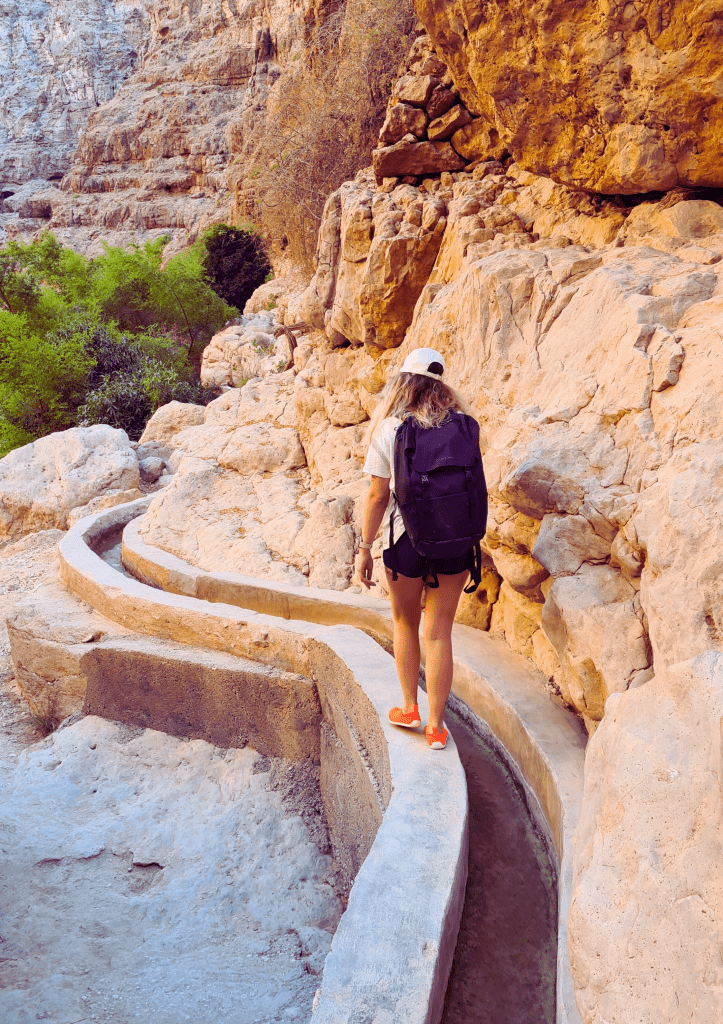
Follow the Falaj, the village’s ancient irrigation system, which brings life to the green terraces below. Youโ€™ll find walking routes marked by colorful flags, yellow, red, and white, guiding you through the terraces. Even if you donโ€™t stick strictly to the marked paths, the area is small enough that youโ€™ll easily find your way around and back to the village.

The tranquility of this place left us incredibly relaxed, an unmissable stop on any Oman itinerary!

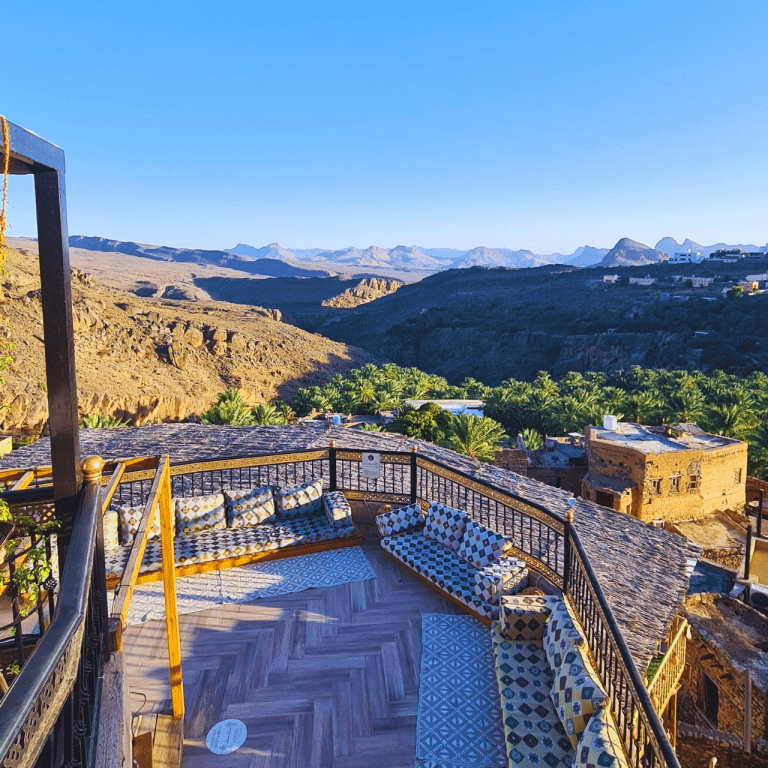
Grab a refreshing drink at one of the rooftop coffee shops overlooking the city, we recommend Halwa Coffee

Day 8 : Road to Nizwa

Today the plan was to go straight to nizwa and explore the city but before getting to Nizwa, we had two awesome historical stops on our route that we just couldnโ€™t miss.

Bahla Fort and Jibreen Castle.

Bahla Fort

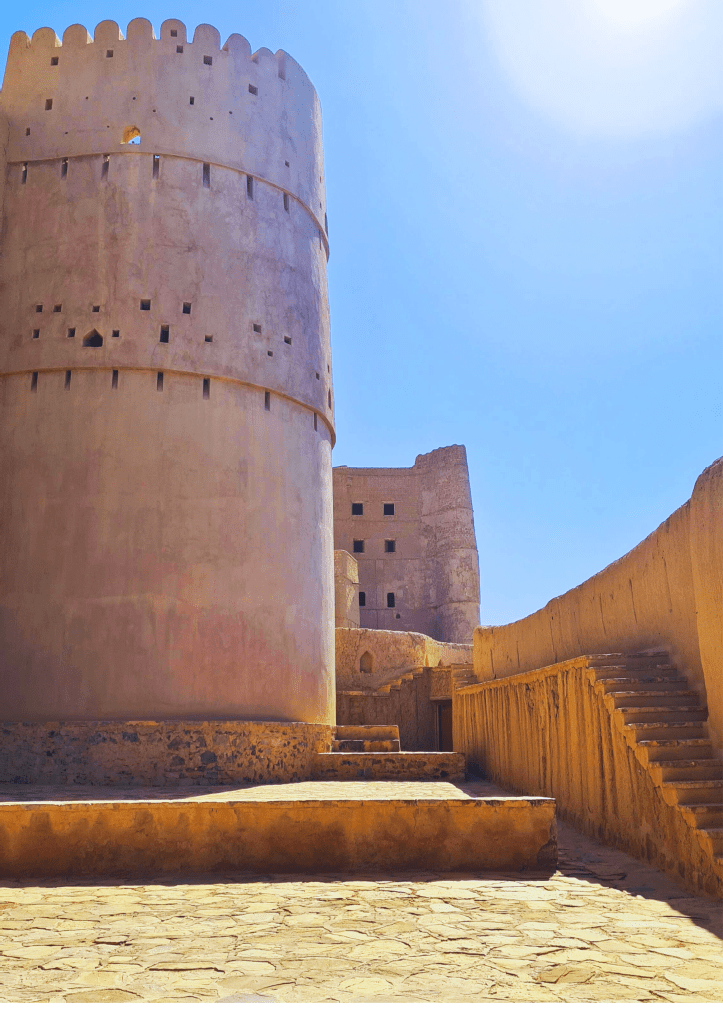
Located 30 min far from Misfat Al Abriyeen, Bahla Fort is this huge UNESCO World Heritage site that looks like itโ€™s straight out of another era, rising up from the desert.ย  With its winding paths, huge courtyards, and old watchtowers, you really get a feel for the regionโ€™s past.

It takes about 2 hours to explore and dive into its rich history.

๐Ÿ•˜ Opening hours:

Saturday to Thursday – 8:30 am to 4:00 pm

Friday – 8:00am to 11:00amย 

Jibreen Castle

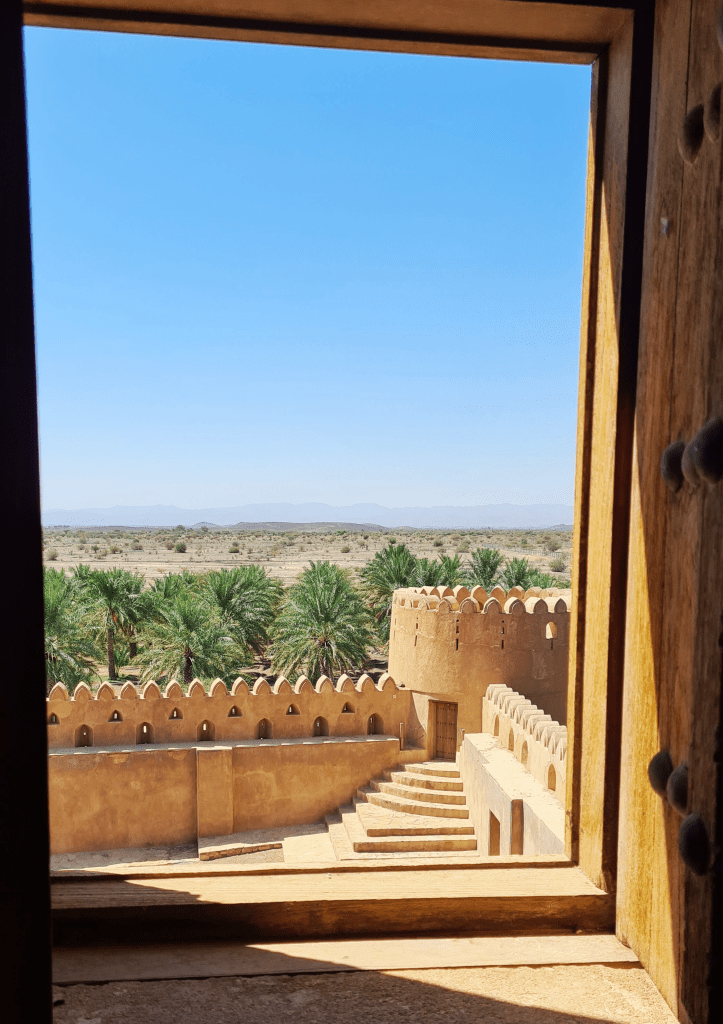
Just a short 15 minutes drive from Bahla, Jibreen Castle awaited us!

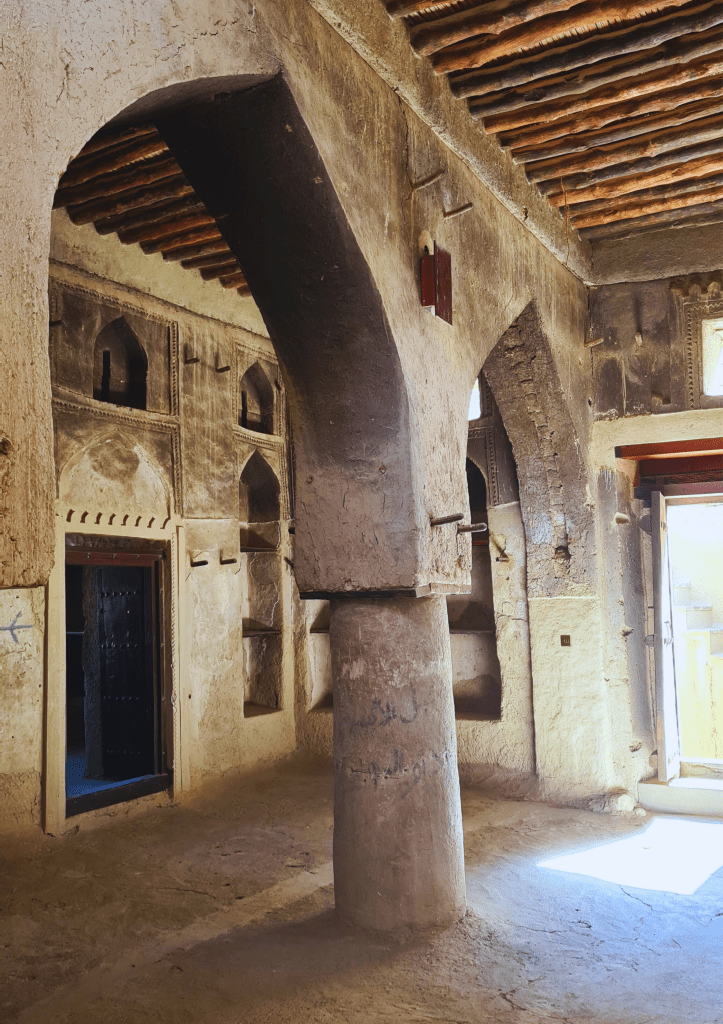
Though smaller and more intimate than Bahla Fort, Jibreen Castle has a distinct charm of its own. With its beautifully decorated ceilings and well-preserved rooms, it felt almost like stepping into a medieval Omani palace.

It takes around 20-30 minutes exploring the castle

Opening hours:

๐Ÿ“… Daily | ๐Ÿ•˜ 07:30 AM โ€“ 21:00 PM

๐ŸŽŸ๏ธAdmission:

Omani citizens (ย seniorย 1.500 OMR &ย children 0.500)

Resident ( senior 2 OMR & children 1 OMR)

Senior tourist 3 OMR & children 1 OMR

๐Ÿ“Œ Where to Buy: Tickets are available at the entrance

๐Ÿ” Tip: Hours are usually consistent, but itโ€™s always a good idea to check the official website for anyย for any updates before your visit! ๐Ÿ˜Š

After esploring those two gems, in the aftrnoon we fillaly arrived at Nizwa!

Nizwa fort

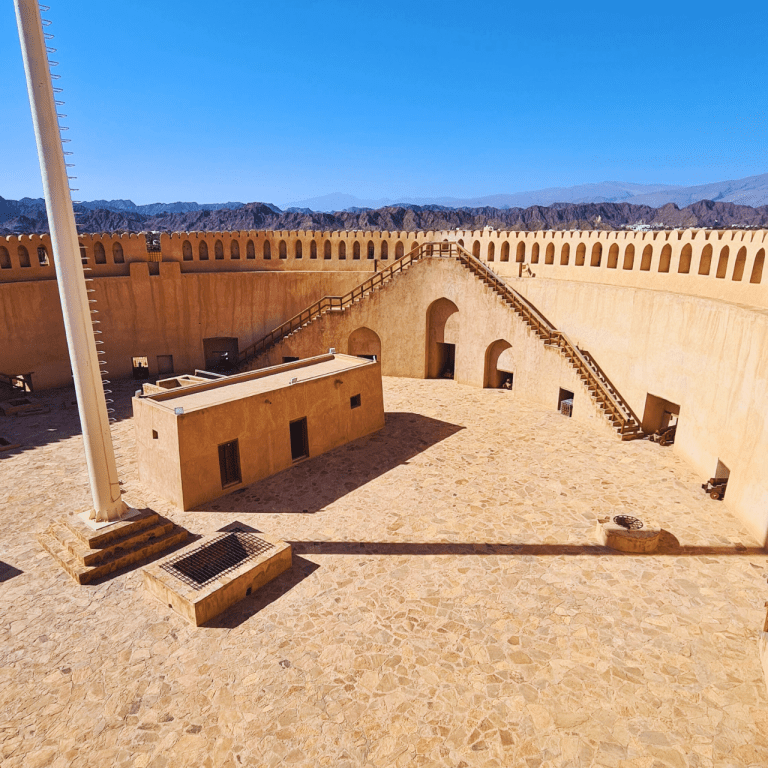
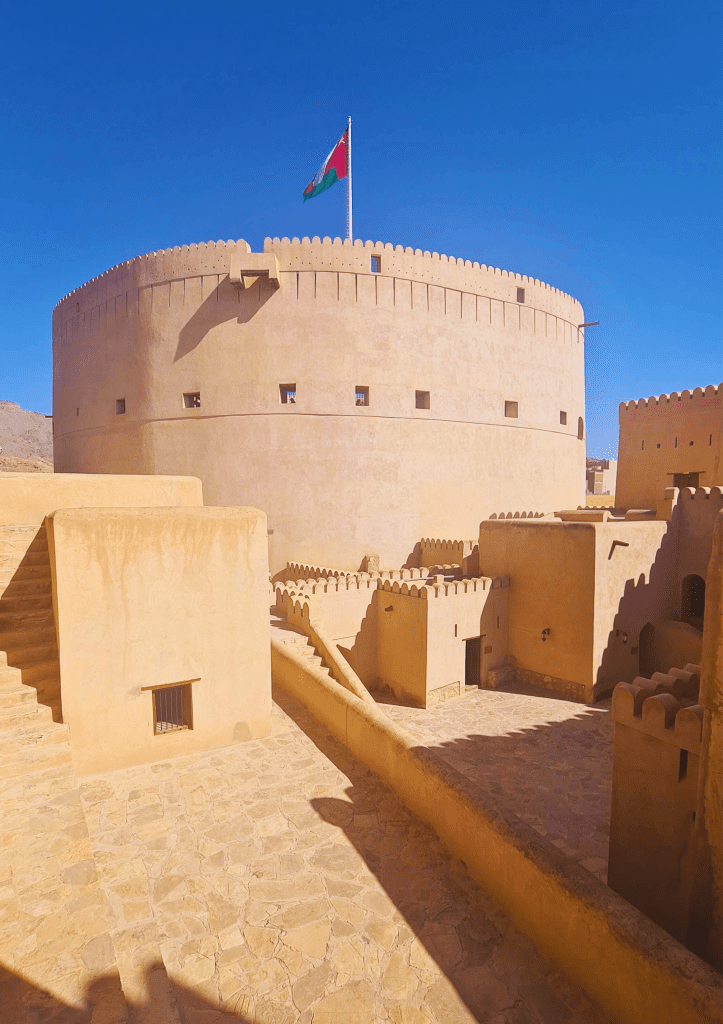
The Nizwa Fort, one of Omanโ€™s most famous landmarks, was an absolute highlight, plan to spend arround 1-2 hours visiting the Fort with its massive round tower offering panoramic views of the surrounding date palms and mountains, the fort is not just a historical site but also a feast for the eyes.

We spent a good amount of time exploring the fortโ€™s hidden chambers, learning about its role in Omani defense, and enjoying the stunning views from the top of the tower.

๐Ÿ•˜ Opening hours:

Nizwa Fort is open Saturday to Thursday from 8:00am to 8:00pm

Friday from 8:00am to 11:30am and 1:30pm to 8:00pm

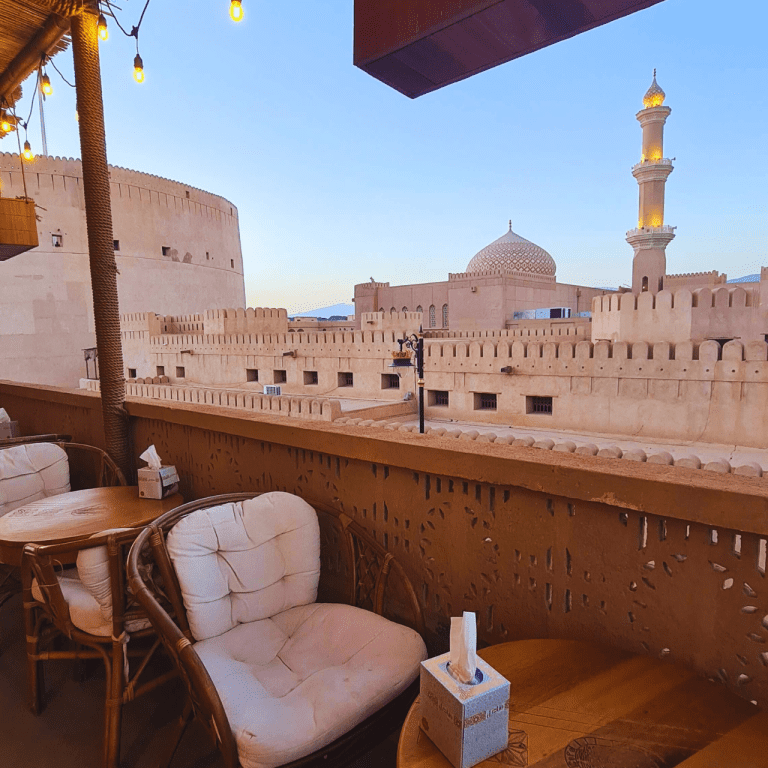
After the visit to the Fort we went to chill at Athar cafe, where you can enjoy delicious dessert and coffee while having an unique view of the fort.ย 

Day 9: Nizwa to Muscat

Before leaving Nizwa we took a relaxed stroll through Nizwa Souq, located right outside the fortโ€™s walls.

Nizwa Souq

The place was buzzing with life, packed with traditional handicrafts, antiques, and colorful textiles.

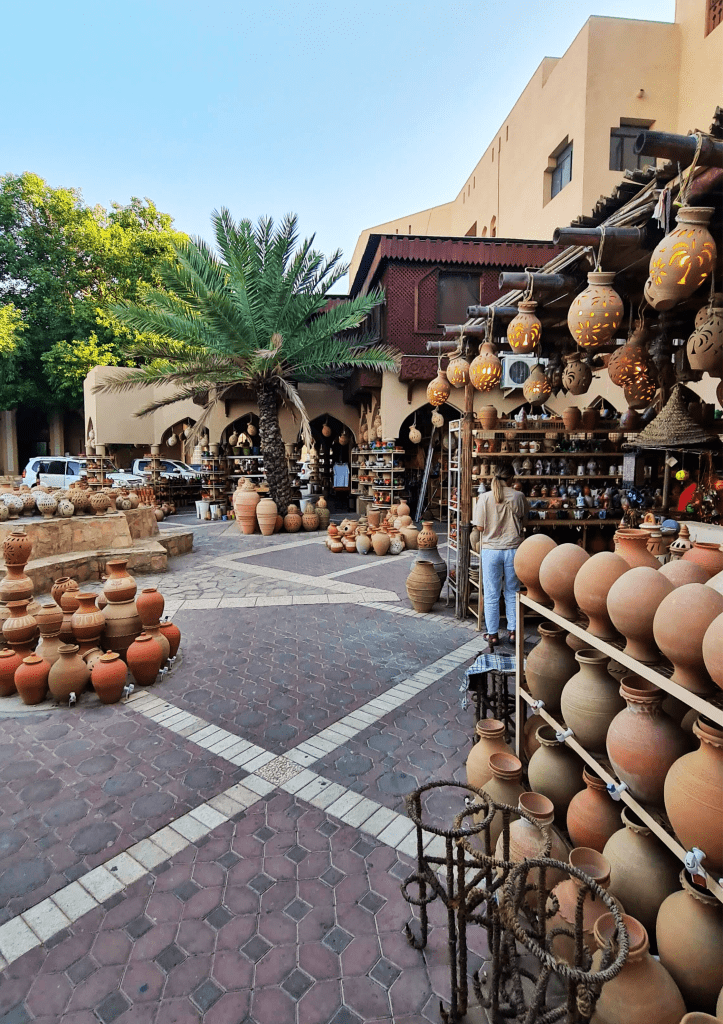
The beautifully crafted pottery, a local specialty, really caught our eye. Thereโ€™s also a whole section just for dates, with tons of varieties to taste and buy, and if youโ€™re there on a Friday, youโ€™ll see the lively livestock market, where goats are bought and sold just like they have been for centuries!

After getting lost in the charm of the souq, we drove back to Muscat, enjoying the last few glimpses of Omanโ€™s changing landscapes.

On your way back to Muscat, if you’re eager to see more of Oman’s remarkable forts, consider taking a detour to Nakhal Fort.

While itโ€™s not as well-known as Nizwa Fort, Nakhal is just as impressive, offering breathtaking views of the Al Batinah Plains from its ramparts. Plan to spend about an hour exploring the fort.

Day 10: Flight back home

Our 10-day Oman itinerary has come to an end. We have to say that Oman is the perfect blend of history, marine life, stunning architecture, and rich culture. From ancient forts and vibrant souqs to crystal-clear waters and endless desert dunes, every stop offered something unique.

Whether you’re into adventure, relaxation, or cultural exploration, Oman has it all!

Travel tips for your Oman itinerary

How to get around

The best way to explore Oman is by self-driving.

Youโ€™ll need a 4WD only if you’re driving up into the mountains, such as Jebel Shams and Jebel Akhdar.

To follow this itinerary, you wonโ€™t need a 4WD, as the only place where it’s required is the desert. However, the Bedouins can pick you up right before entering the desert.

๐Ÿ›ฃ๏ธ Highways & Main Roads: Well-paved, well-marked, and generally in excellent condition.

The main roads between Muscat, Nizwa, Sur, and Salalah are smooth and easy to drive on.

๐Ÿš— Traffic: Outside of Muscat, roads are often empty, making driving stress-free. Inside the capital it can get busy at times

Speed cameras are everywhere: Oman has strict speed limits and many radar cameras. The limit is usually 120 km/h on highways and 40-60 km/h in towns.

Public buses in Oman are limited, especially outside Muscat.

Best time to visit

The ideal time to visit Oman is between October and March, particularly for exploring the northern and eastern regions of the mainland, as well as the Musandam Peninsula.

In contrast, the best time to travel to Salalah in southern Oman is during the summer months of June through early September. This is when the region experiences a unique, milder climate with lush greenery and rain.

In this Oman itinerary we traveled in October and the weather has been perfect all along.

How to dress

In Oman when it comes to clothing there are no strict dress codes upon entry.

However, it is respectful to cover your upper body and shoulders and to wear shorts or skirts that go over your knees.

It’s also advisable to wear long sleeves and avoid clothing that is too revealing.

While Omanis are generally modern and accepting, itโ€™s best to dress modestly, especially when visiting religious sites.

Additionally, at public beaches, itโ€™s recommended not to wear a bikini.

how to dress for an Oman itinerary

Do I need a visa?

Visa-Free Entry (up to 14 days): Citizens from EU countries, the UK, USA, Canada, Australia, Japan, South Korea, and others can stay for up to 14 days without a visa, but must have a hotel booking, return ticket, and a passport valid from 6 month.

If you require an e-visa, you can apply here.

Drone in Oman

Bringing a drone into the country is prohibited, unless you have prior approval from the Civil Aviation Authority (CAA) of Oman.

On my trip to Oman, I brought my drone after reading on the CAA website that drones under 250g were allowed. Unfortunately, it was confiscated upon arrival, and I had to collect it on the day we were flying back, which required us to arrive at the airport earlier than planned.