





Best Things to See in Kyoto
Once was Japan’s capital and home to the emperor from 794 to 1868, with 1.5 million people, it’s one of Japan’s biggest cities but still keeps its historic charm, here, you’ll find the best things to see in Kyoto!
Tokyo is the cultural heart of Japan, known for its stunning temples, traditional tea houses, and historic streets. The city, is home to iconic sites like Fushimi Inari Shrine, Kinkaku-ji (Golden Pavilion), and the Arashiyama Bamboo Forest.
To really appreciate the city, we recommend spending at least 3 days in Kyoto.
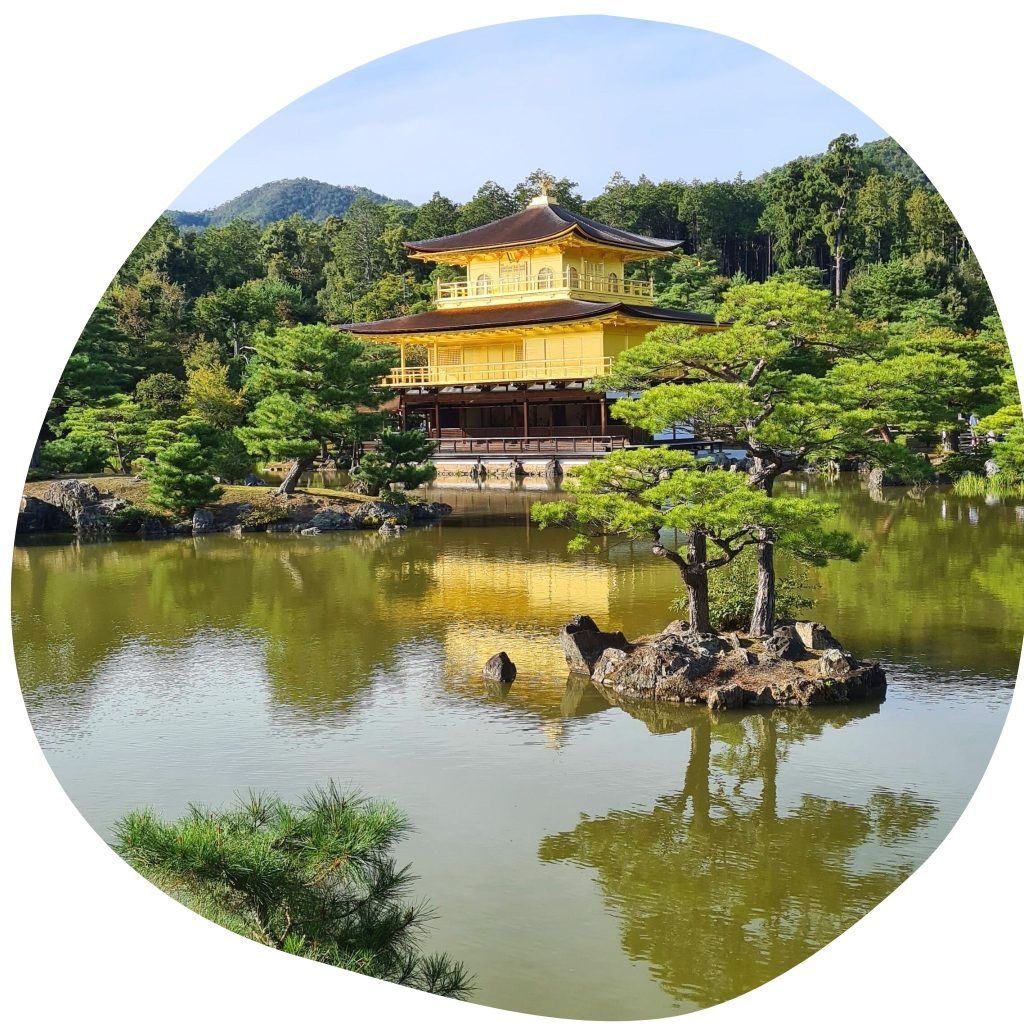

Table of contents

Nishiki Market
Nishiki Market is a covered pedestrian street in central Kyoto, known as “Kyoto’s kitchen.”
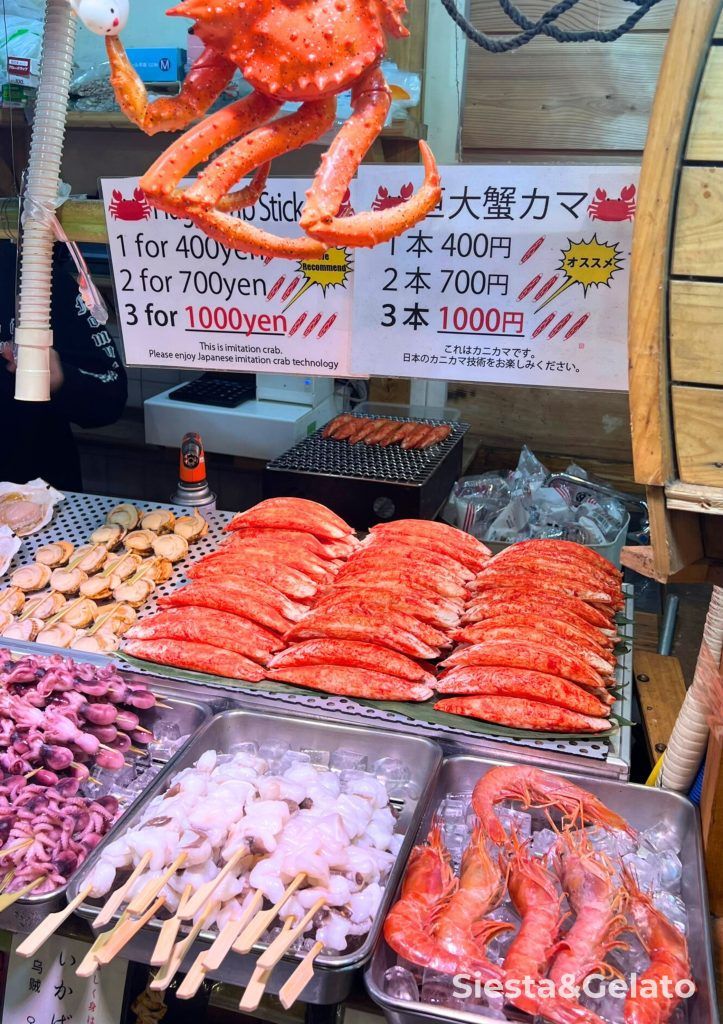
We were blown away by the vibrant colors, smells, and variety of products, no wonder locals shop here daily. You’ll find everything from fresh fish and meat to green tea, Japanese sweets, tofu, and tons of tasty snacks. The best part? You can try all kinds of delicious street food, like tempura, senbei, and more, at the stalls.
Our personal favorite was Tako Tamago – タコ卵 which consists on a baby octopus on a stick, with a boiled quail egg inside (I know, can be weird!) but we also tried crab legs, kobe meat skewers, dorayakis, thousands of sweets… Just take your pick when there!
 Remember, it’s considered impolite to eat while walking so find a quiet space, stop and eat your food. Use this opportunity to put all your senses in enjoying what you’re eating!
🕘Opening hours: Usually from 10:00 to 18:00, although some shops might open earlier or later
🚪 Closed: Typically on Wednesdays or Sundays but some stores might have different timetables.
🎟️ Admission: Free!

Gion
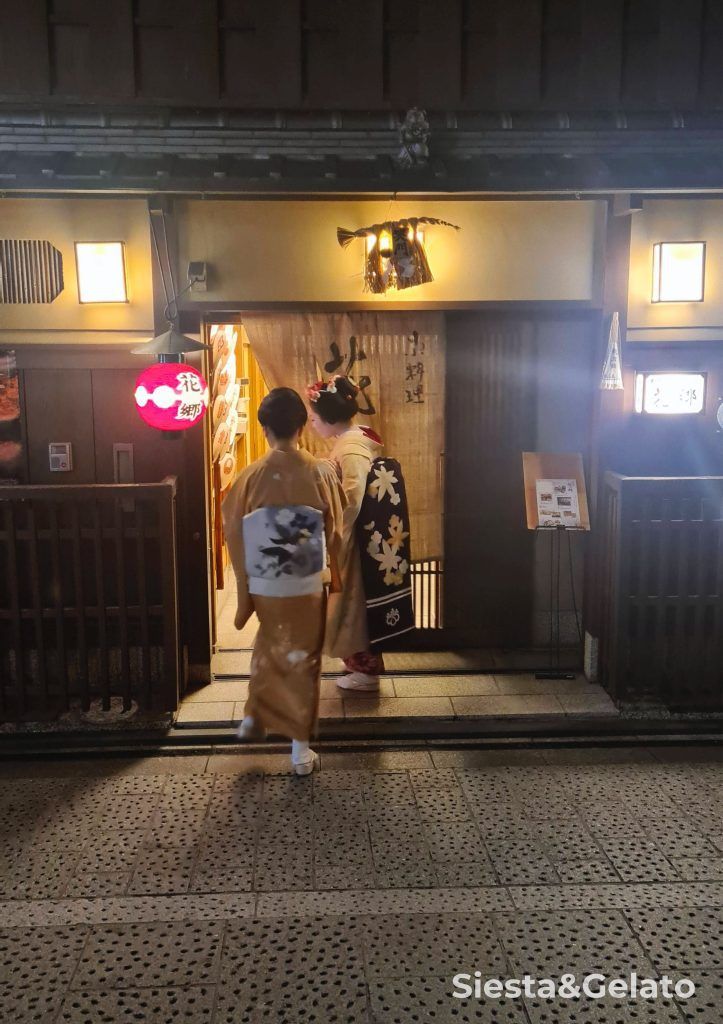
This is one of the most famous geisha districts in Japan and probably the most popular and touristy area in Kyoto.
Walking through Gion feels like stepping back in time, with its narrow, cobblestone streets lined with traditional wooden buildings, lanterns, and symbols like Shoki statues on rooftops or Gion Matsuri festival decorations.
Gion is actually made up of two different geisha districts: Gion Kobu (larger and more touristy) and Gion Higashi (smaller and quieter). The most popular area of Gion is Hanami-koji Street.
Lately, some tourists have been getting out of hand—chasing after geishas for a photo, disturbing locals, and honestly, just being really disrespectful. 😔 Kyoto has even put up signs with guidelines on how to behave, like not touching or bothering the geishas and not leaning on the neighborhood’s walls. So, please, please, please respect the local rules. If you’re lucky enough to spot a geisha while wandering around (like we did), amazing! But if not, don’t go “geisha hunting”—just enjoy Kyoto for what it is. ✨
Latest guidelines and behaviour rules in Kyoto can be found on Kyoto’s official website.

If you’re keen to dive deeper into geisha and maiko culture, here are some great experiences to check out:
🎭 Gion Corner Show
This one-hour performance is a fantastic way to experience seven traditional Japanese arts all in one place! You’ll get to see:
Chanoyu – The art of tea preparation
Koto music – Traditional Japanese string instrument
Ikebana – Elegant flower arranging
Bugaku dance – A graceful court dance
Kyogen comedy – Classic Japanese theatre
Kyomai dance – The refined dance of Kyoto’s geishas
🕕 Showtimes: Every day at 6:00 PM and 7:00 PM (each performance lasts about 50 minutes)
🎟️ Tickets can be bought here.
🚶♀️ Gion Walking Tour
If you want to experience Kyoto’s geisha culture beyond the surface, this guided evening walk through Gion is a must!
We are big fans of walking tours and often book one when we’re visiting a city.
🕰 Duration: ~2 hours
📍 Meeting Point: Gion District
🎟️Tickets & Info: Book here
Perfect for those who want an insider’s look into this mysterious and elegant world—without intruding on the geishas’ space! 😊
Kinkaku-ji
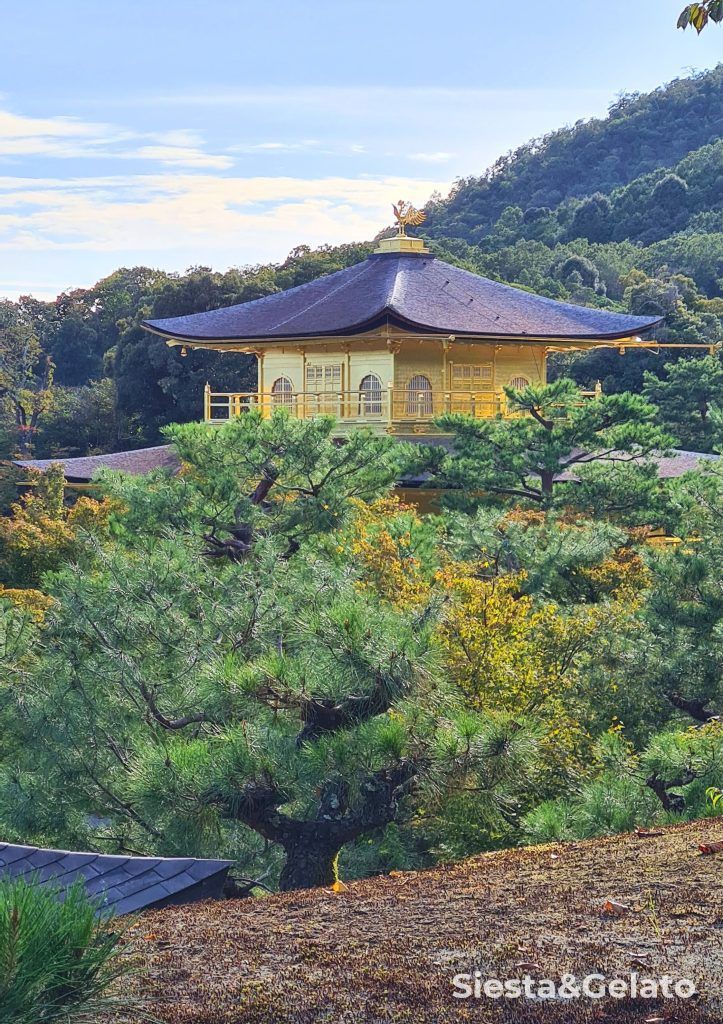
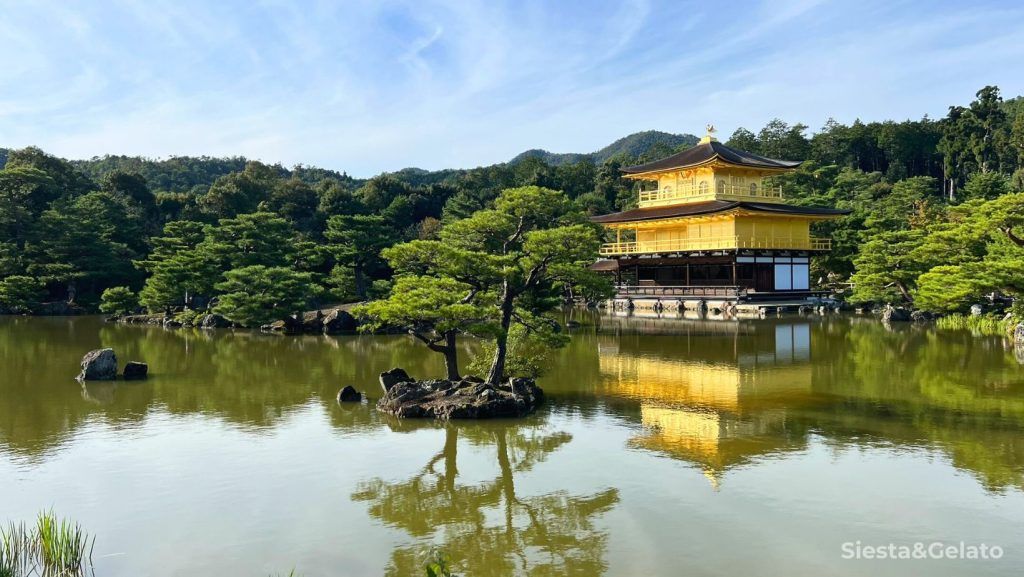
Kinkaku-ji, also known as the Golden Pavilion, is one of the most famous temples in Kyoto and a must-see for any tourist. Located in the north of the city, this Zen temple is stunning with its two top floors covered in gold leaf. It’s no surprise it’s a UNESCO World Heritage site since 1994!
Built in 1397 as a retreat villa for shogun Ashikaga Yoshimitsu, the temple became a Zen Buddhist temple after his death. Though much of the original villa was destroyed, the Golden Pavilion remains, along with the beautiful surrounding gardens. The current building is a reconstruction from 1955 after it was set on fire by a fanatic monk.
Fun fact: Yoshimitsu’s grandson was inspired by Kinkaku-ji to build the Ginkaku-ji (Silver Pavilion) at the other end of the city, though it was never completed as originally planned.
📅 Daily | 🕘 9:00 AM – 5:00 PM
🎟️Admission: ¥500 (approx. $3.30 / €3.00)
📌 Where to Buy: Tickets are available at the entrance—no online booking needed!
🔍 Tip: Hours are usually consistent, but it’s always a good idea to check the official website for any for any updates before your visit! 😊
When visiting Kinkaku-ji, follow the path that starts by the pond for the iconic view and ends at the tea house. It usually takes between 30 and 50 minutes to visit the complex.

Ginkaku-ji
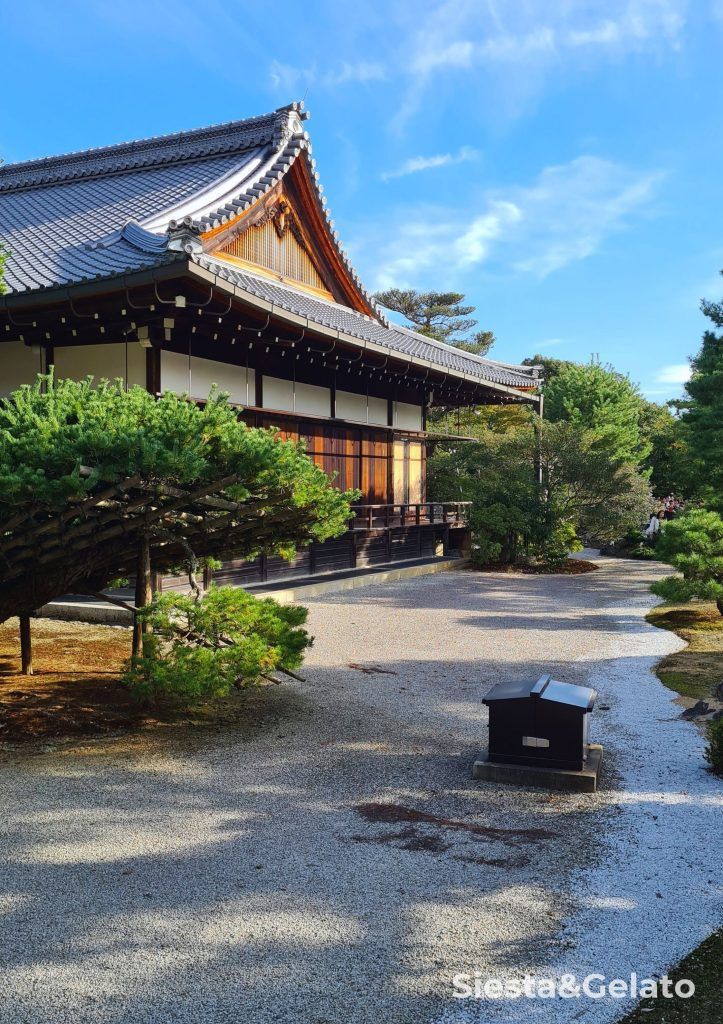
Ginkakuji (銀閣寺), or the Silver Pavilion, is a beautiful Zen Buddhist temple located on the eastern slopes of Kyoto in the Higashiyama district.
Built in 1474 as a retreat for shogun Ashikaga Yoshimasa, Ginkakuji was meant to mirror the golden Kinkakuji, built by his grandfather. However, due to financial constraints, it was never covered in silver as planned. Despite the name, it remains silver-less.
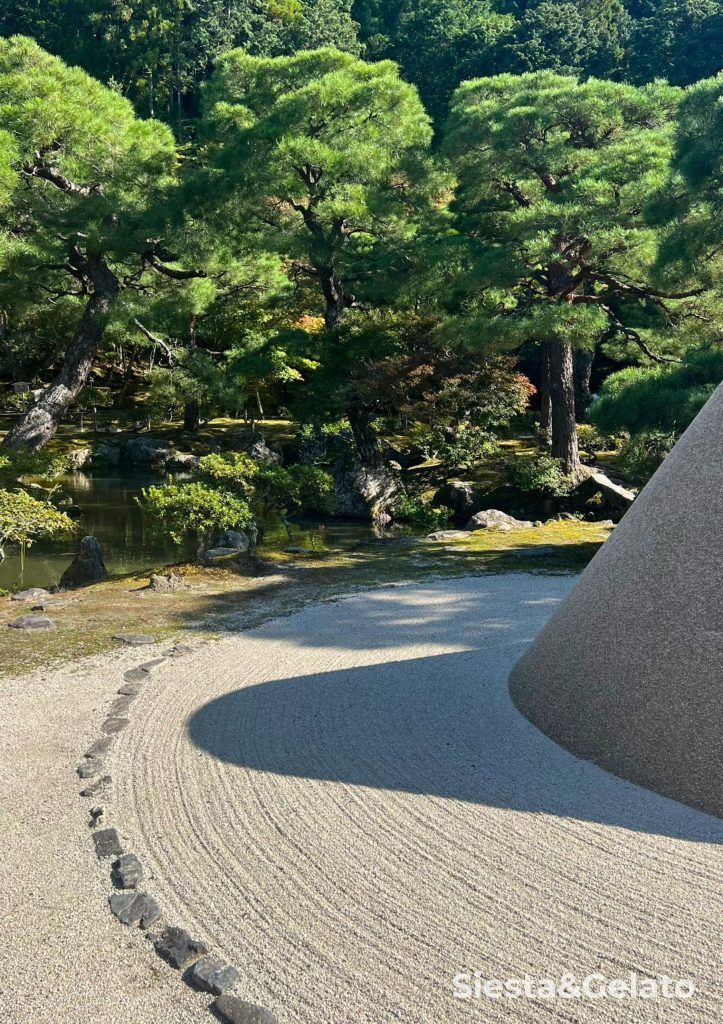
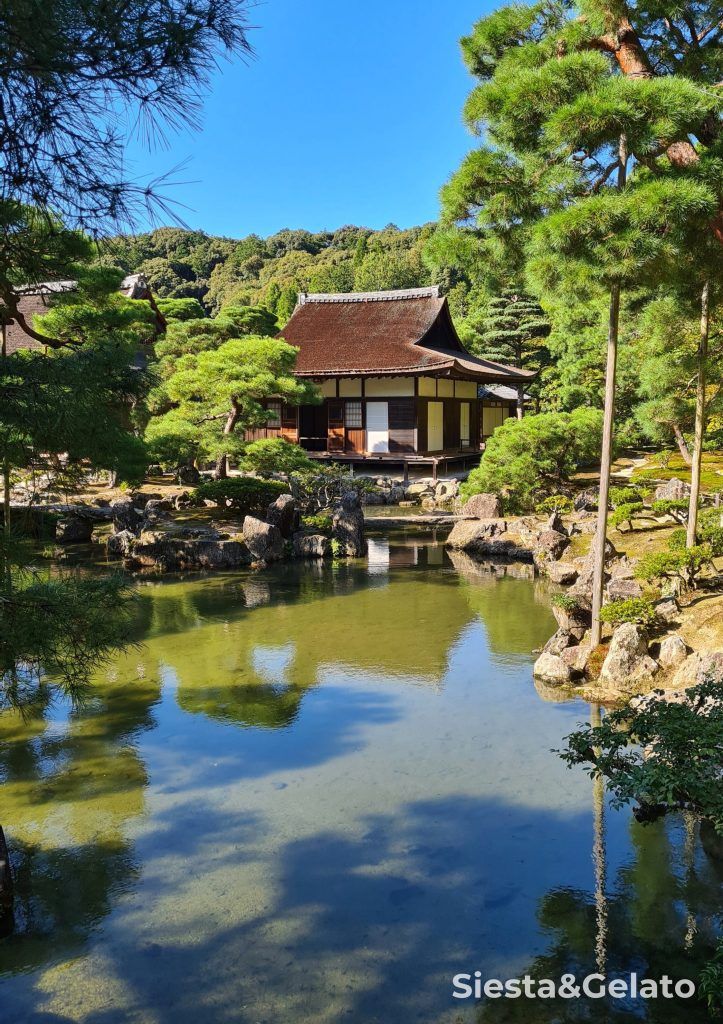
The temple is famous for its gorgeous white sand garden, called the “Sea of Silver Sand,” and the “Moon Viewing Platform.” It also has a stunning moss garden with cute little streams, ponds, and bridges. While it’s not as flashy as Kinkakuji, Ginkakuji’s calm and peaceful vibe is what earned it UNESCO World Heritage status as part of the Historic Monuments of Ancient Kyoto.
Opening hours:
🕘 Opening Hours:
☀️ Summer (March – November): 8:30 AM – 5:00 PM
❄️ Winter (December – February): 9:00 AM – 4:30 PM
🎟️Admission: ¥500 (approx. $3.30 / €3.00)
📌 Where to Buy: Tickets are available at the entrance—no online booking needed!
🔍 Tip: As we always warn, opening hours may change, so it’s always a good idea to check the official website before your visit! 😊
It usually takes between 45 and 60 minutes to visit the complex.

🔍 Tip: Instead of heading straight back, take a peaceful stroll along the Philosopher’s Path (哲学の道, Tetsugaku no Michi)—we absolutely loved this walk!
This scenic 2 km stone pathway follows a quiet canal lined with hundreds of cherry trees, making it especially stunning if you’re there for the cherry blossom 🌸 But honestly, it’s beautiful year-round! We got completely sidetracked exploring hidden side streets, charming temples, and cozy cafés along the way—so don’t rush it!
The path starts near Ginkakuji (Silver Pavilion) and ends in the Nanzenji neighborhood. Fun fact: it’s named after Nishida Kitaro, one of Japan’s most famous philosophers, who used to walk this route daily for meditation. 🧘♂️
If you have time, this is such a lovely, relaxing way to soak in Kyoto’s atmosphere!
Otagi Nenbutsu-ji
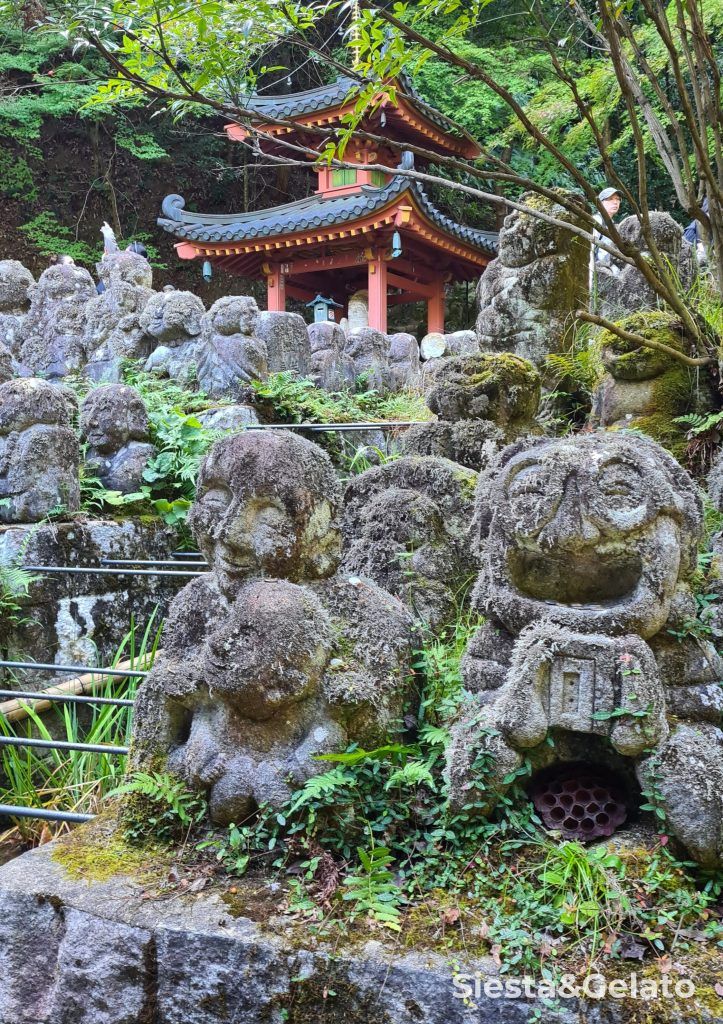
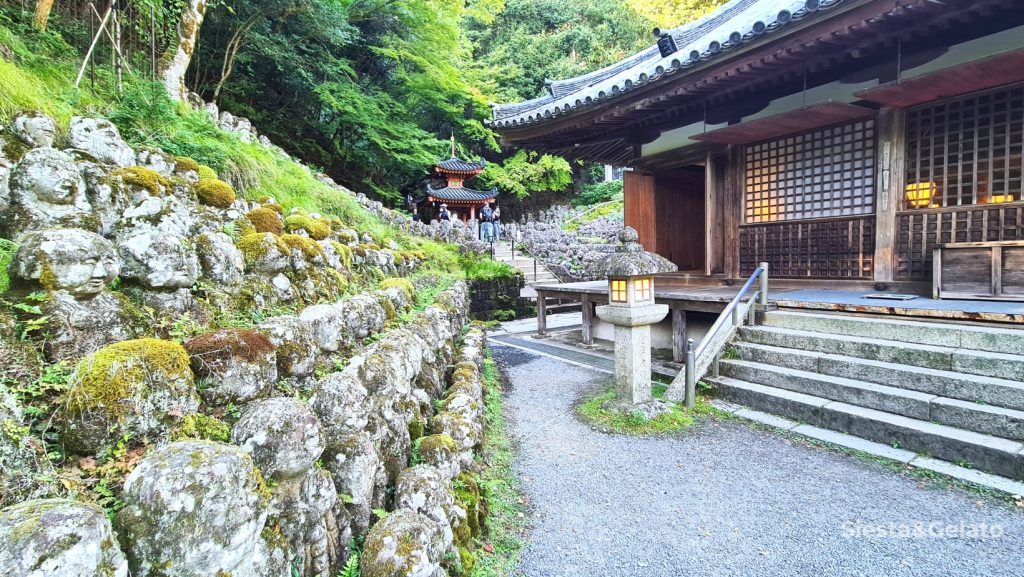
Otagi Nenbutsu-ji is a hidden gem in northern Arashiyama, Kyoto, and trust us—it’ll leave you speechless! Not only because it’s usually quiet and uncrowded, but also because of its 1,200 quirky stone statues of rakan (Buddha’s disciples) scattered around the temple grounds.
The fun part? Each one has a unique expression, some are deep in prayer, others are smiling, laughing, or even holding random objects that hint at the sculptor’s personality.
Walking through the temple, you can’t help but stop and admire their faces, some are serene, some hilarious, and more than a few will definitely make you smile!
🕘 Opening Hours:
📅 Daily: 9:00 AM – 4:15 PM
🚪 Closed on Wednesdays (but open if it’s a national holiday)
🎟️Admission: ¥500 (approx. $3.30 / €3.00)
📌 Where to Buy: Tickets are available at the entrance—no online booking needed!
Check the official website for the latest opening hours and ticket prices before you visit!

Fushimi Inari Taisha
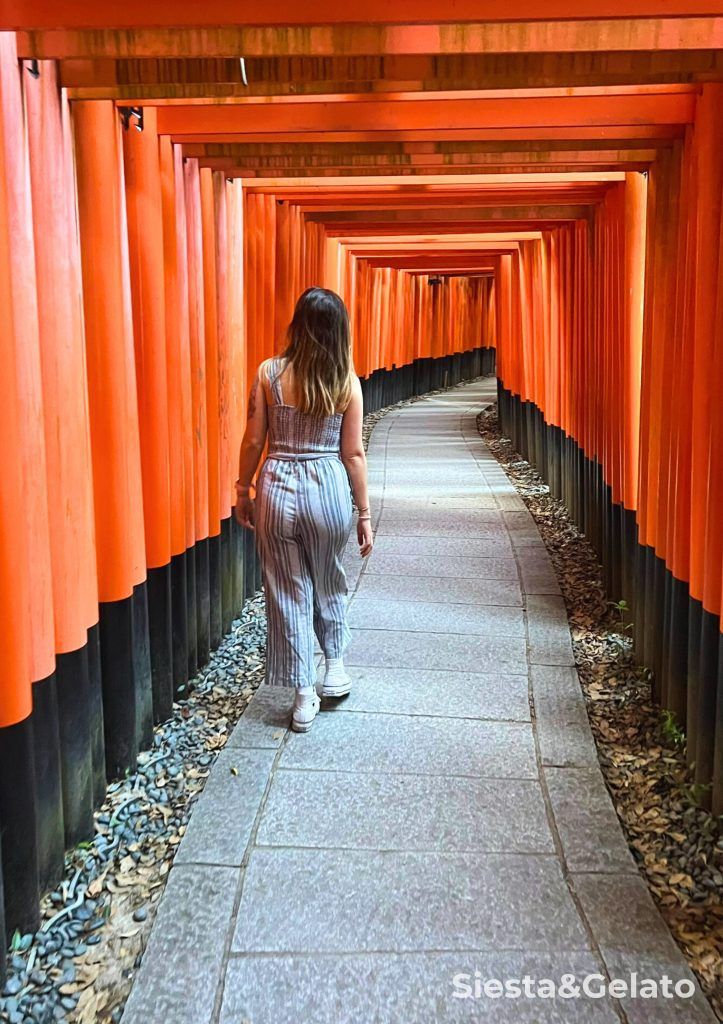
Fushimi Inari Taisha is one of Kyoto’s most iconic and ancient shrines, dating back to the 8th century. It’s dedicated to Inari, the Shinto god of rice and prosperity, and is famous for its thousands of vermilion torii gates that stretch for 4 km up Mount Inari. These gates, donated by merchants hoping for good fortune, create an almost endless tunnel through the forest.
Did you know? 🦊✨ In Japan, you’ll often see fox statues wearing red aprons, especially at Inari shrines. Foxes (kitsune) are believed to be the messengers of Inari, the deity of rice, prosperity, and good fortune. The red aprons are placed as offerings of gratitude for blessings, protection, or wishes that have come true.
The hike to the top takes around 2–3 hours, but you can explore as much or as little as you want. We had a coffee/tea midway on a really nice and cosy shop ran by a nice Japanese old lady and we really enjoyed it.
The temple it’s open 24/7 and the access is free.
 Visit Fushimi Inari early in the morning to avoid the crowds. Best before 08:00 AM or earlier and then take a siesta later in the day!


Arashiyama Bamboo Grove
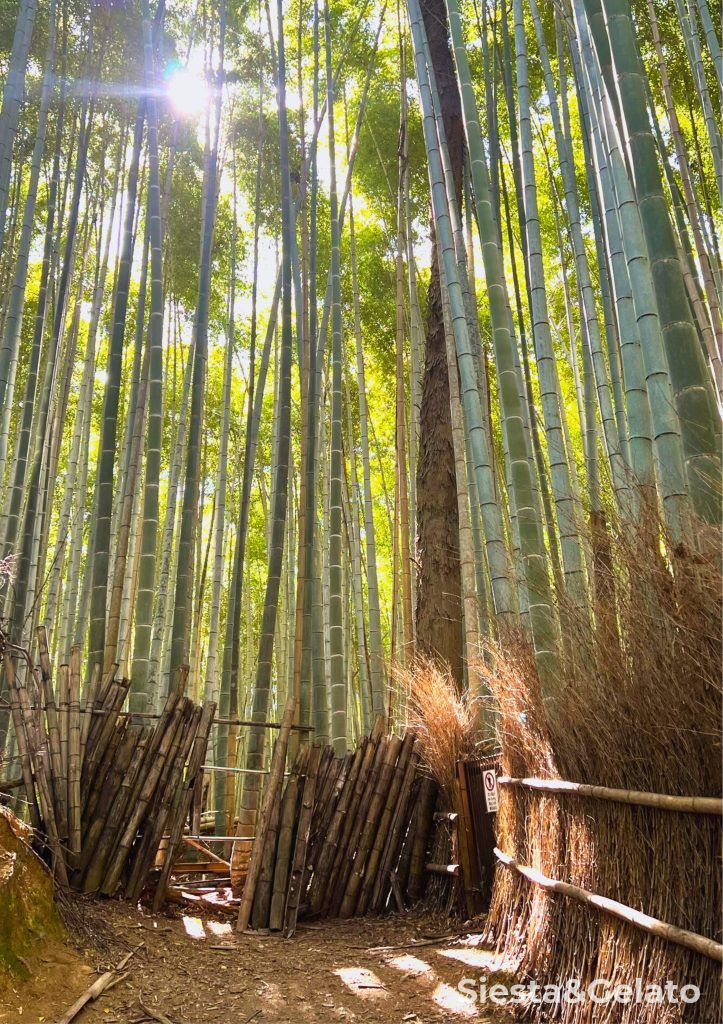
The Arashiyama Bamboo Grove is one of the most stunning spots in Kyoto, but enjoying a peaceful walk here depends on when you visit. This place gets super crowded, so if you want those dreamy, empty-path photos, you’ll have to go early. Outside peak seasons, 8 AM is usually fine, but during cherry blossom or autumn foliage season, you might need to show up at 6 AM to beat the crowds.
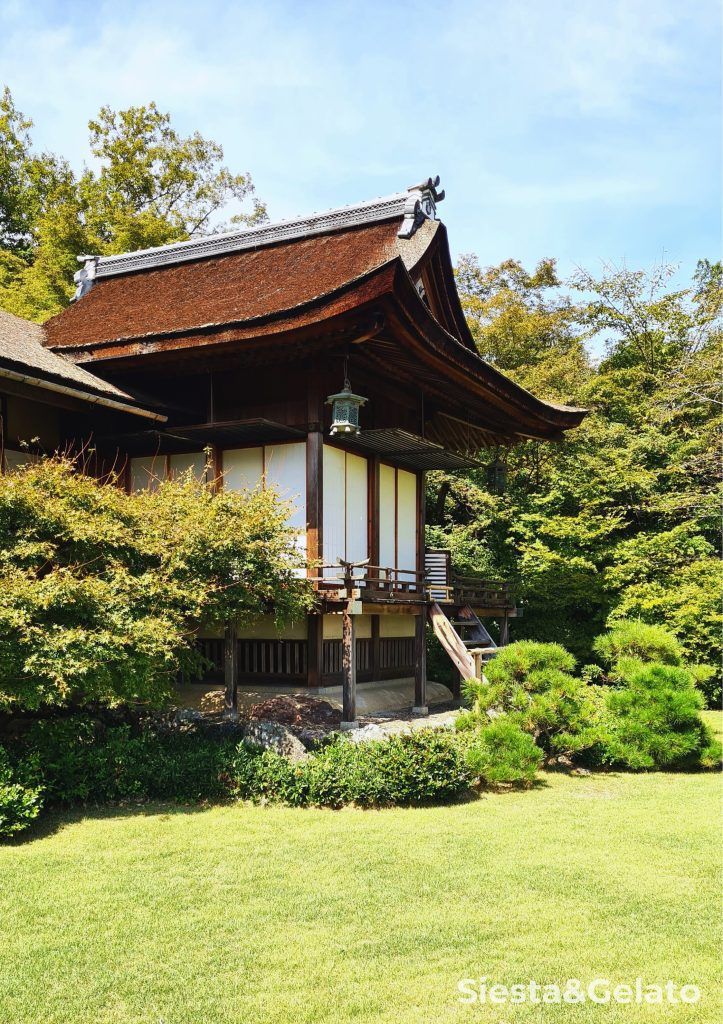
Right next to the bamboo grove, you’ll find Ōkōchi Sansō, a stunning hillside villa once home to samurai film star Denjirō Ōkōchi. If you feel like you need a break from the crowds, this place offers a peaceful retreat, with beautifully landscaped gardens, breathtaking views of Kyoto, and a traditional tea house where you can enjoy matcha and a sweet—included with admission.
If you’re looking for a quiet escape with a touch of old Kyoto charm, Ōkōchi Sansō is well worth a visit!
🕘Opening Hours: 9:00 AM – 5:00 PM
🎟️ Admission: ¥1,000 (~€6 / ~$7 USD, includes matcha & sweet)
Sannenzaka and Ninenzaka
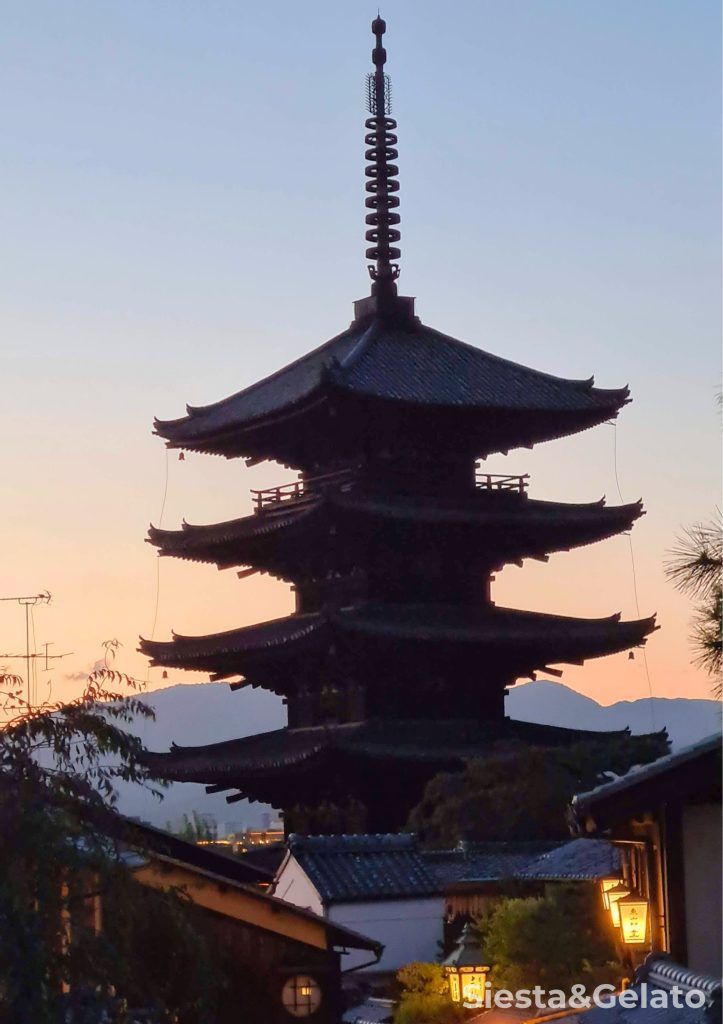
Sannenzaka and Ninenzaka are two charming, sloping streets in Kyoto’s Higashiyama district. If you’re visiting Kyoto, these streets are a must-see! it’s one of those places you simply have to stroll through at least once!
Walking down Sannenzaka and Ninenzaka is like stepping back in time. With their traditional wooden houses, small shops, and old-fashioned vibe, these streets offer a glimpse into the Kyoto of the past. The cobblestone paths, along with a few steps here and there, lead you through cozy cafes, souvenir stores, and spots where you can taste authentic Japanese snacks or green tea.
If you keep walking up Sannenzaka, you’ll reach the Yasaka Pagoda, the last remnant of the old Hokanji Temple—definitely a great backdrop for photos!
✨ Ghibli fans, take note! There is a Studio Ghibli shop nearby, packed with adorable Totoro plushies, Spirited Away collectibles, and more—a magical stop for any fan of Miyazaki’s world! You can find it at:
🏠 2 Chome-224 Kiyomizu, Higashiyama Ward, Kyoto, 605-0862, Kyoto Prefecture
Visit Sannenzaka and Ninenzaka early in the morning to avoid the crowds.

Eikandō Zenrin-ji
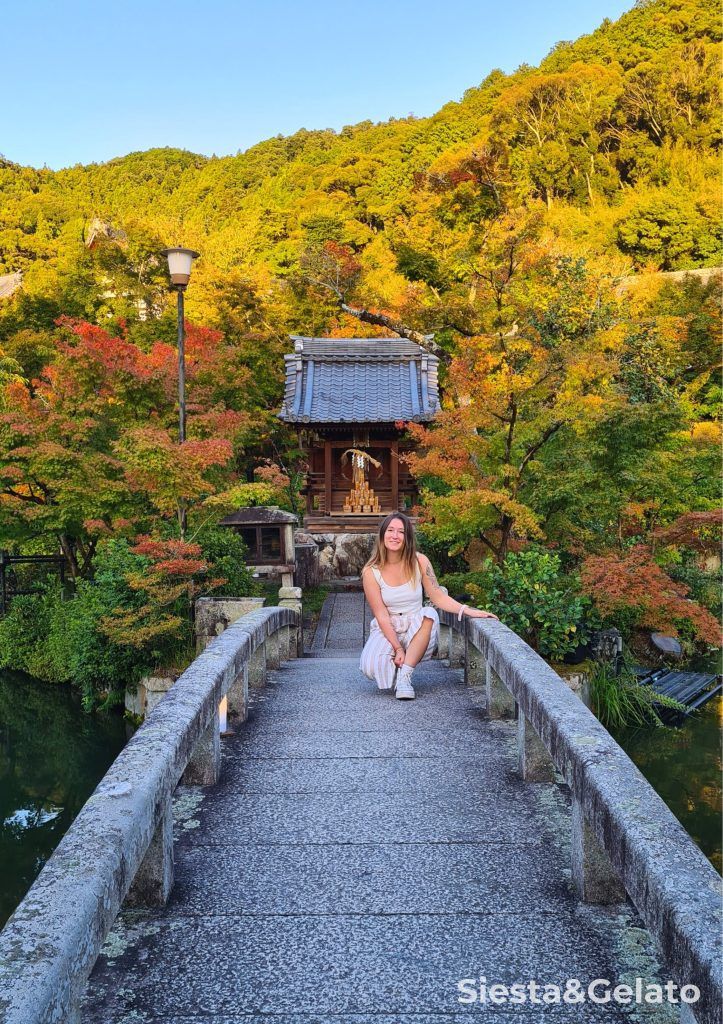
Eikandō Zenrin-ji is a stunning temple in Kyoto, sitting at the southern end of the Philosopher’s Path. While it’s famous for its incredible autumn colors, making it a favorite spot among Kyoto locals during momiji season, the temple is breathtaking all year round thanks to its hillside location in Higashiyama.
The temple was partially destroyed during the Ōnin War (1467–1477) but was later rebuilt into the impressive complex seen today. Visitors can explore its elegant halls, scenic pagoda, and tranquil gardens with ponds.

🕘 Opening Hours: 9:00 AM – 4:00 PM (Gates close at 5:00 PM)
🎟️ Admission Fee (Individual):
Adults (19+): ¥600 (~€3.60 / ~$4 USD)
Children (6–18): ¥400 (~€2.40 / ~$2.70 USD)
tea ceremony
The Japanese tea ceremony, or chanoyu (茶の湯), is a beautiful ritual where matcha is prepared and served in a peaceful setting, embracing nature and mindfulness. Rooted in Zen Buddhism, it’s not just about drinking tea—it’s an art that takes years to master, covering everything from kimono etiquette to floral arrangement.
Different schools have their own styles, and the ceremony changes depending on the season, formality, and occasion. Some Japanese universities even teach it to help students appreciate simplicity and live in tune with nature.
Being from Spain and Italy—two countries known for their coffee culture —we’re not so used to matcha. But after trying it, we felt like energizer bunnies! 🐰 We were so tired, and then the matcha completely revitalized us! Felt like five espressos in one but without the jitters! ⚡️

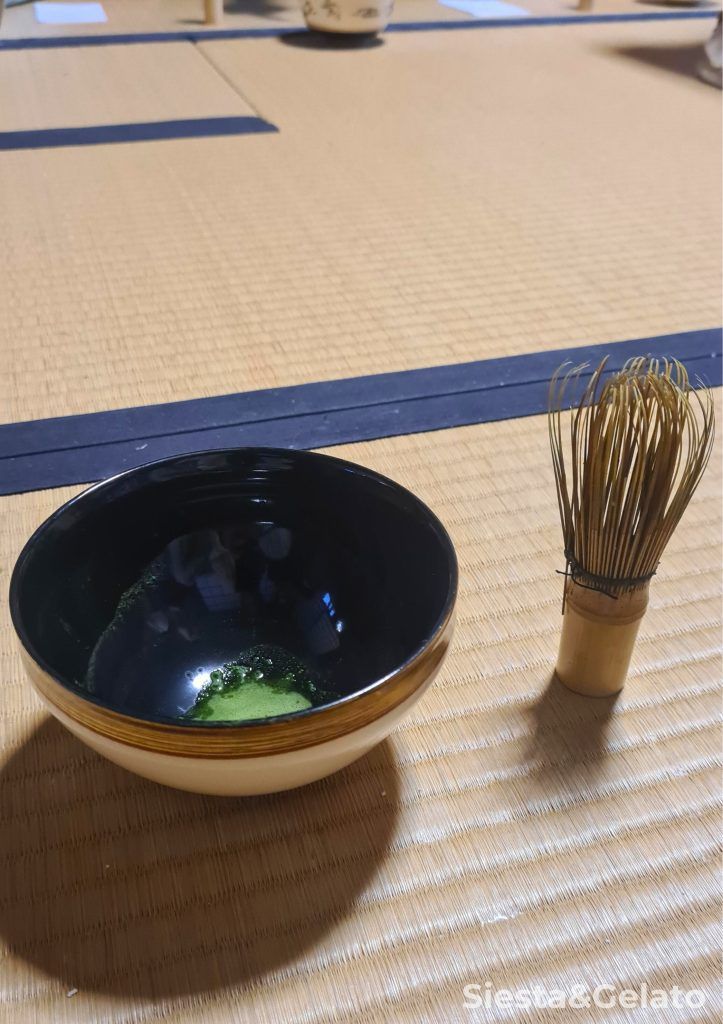
If you’re interested in trying a traditional Japanese tea ceremony, we highly recommend booking one in Kyoto or Tokyo for an unforgettable experience. Some great places that we would suggest are:
How to get around in Kyoto
Driving in Kyoto isn’t usually recommended due to narrow streets, heavy traffic, limited parking, and many one-way roads, making it challenging for visitors, also public transport is far more convenient.
🚇 Public transport in Kyoto can take you anywhere. The city has an extensive bus network, 2 subway lines, and 5 train companies that operate (and remember, Google Maps is your best friend!)
To get around, you have three main payment options:
💳 IC Cards (Suica or Pasmo) – The most convenient option! Just tap in and out at the gates. If you have already been in Tokyo and you have purchased your card, it’s valid in most cities :)
🎟️ Single Tickets – Can be bought at machines, but less practical than IC cards.
🗓️ Day Passes – Great for frequent subway users.
❗ Note: Day passes do not cover the JR Yamanote Line, so we strongly recommend getting a Suica or Pasmo card—with just a tap, you can move seamlessly across the entire city!
You can get your Suica and Pasmo at the main JR and metro stations and other stations. Check here where to purchase your Suica Card.
These cards are interoperable, meaning a Suica bought in Tokyo can be used in other cities like Kyoto or Osaka. Any area where you see the below sign including street vending machines can be used with your card.

🔍 Tip: If you have an iPhone, you can easily add Suica, Pasmo, or ICOCA directly to your Wallet app. However, for Android users, it works a bit differently. Only Android phones purchased in Japan support these cards digitally. If you have an Android phone that wasn’t bought in Japan, you’ll need to use a physical card.