




Visit Mutianyu: Best Great Wall Experience Near Beijing
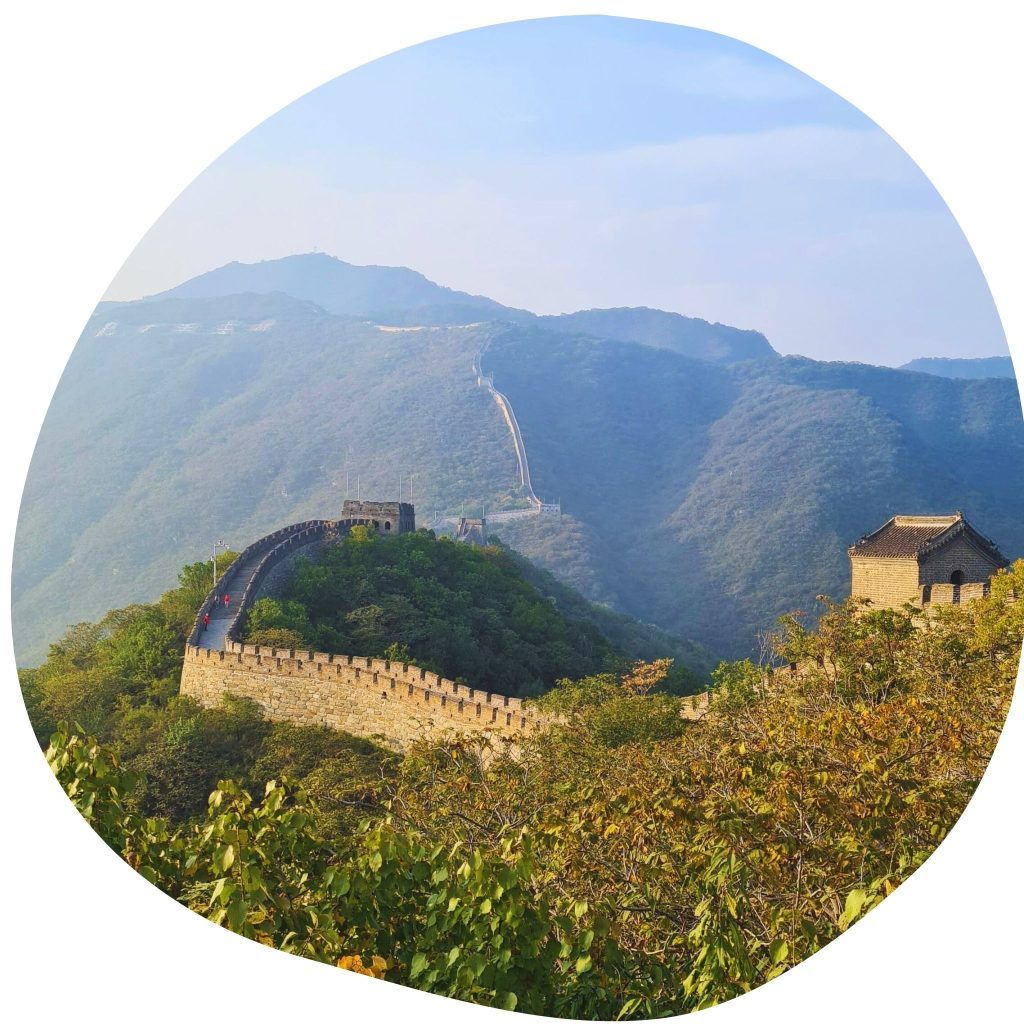
Mutianyu is another well-restored section of the Great Wall that strikes a balance between accessibility and crowd levels.
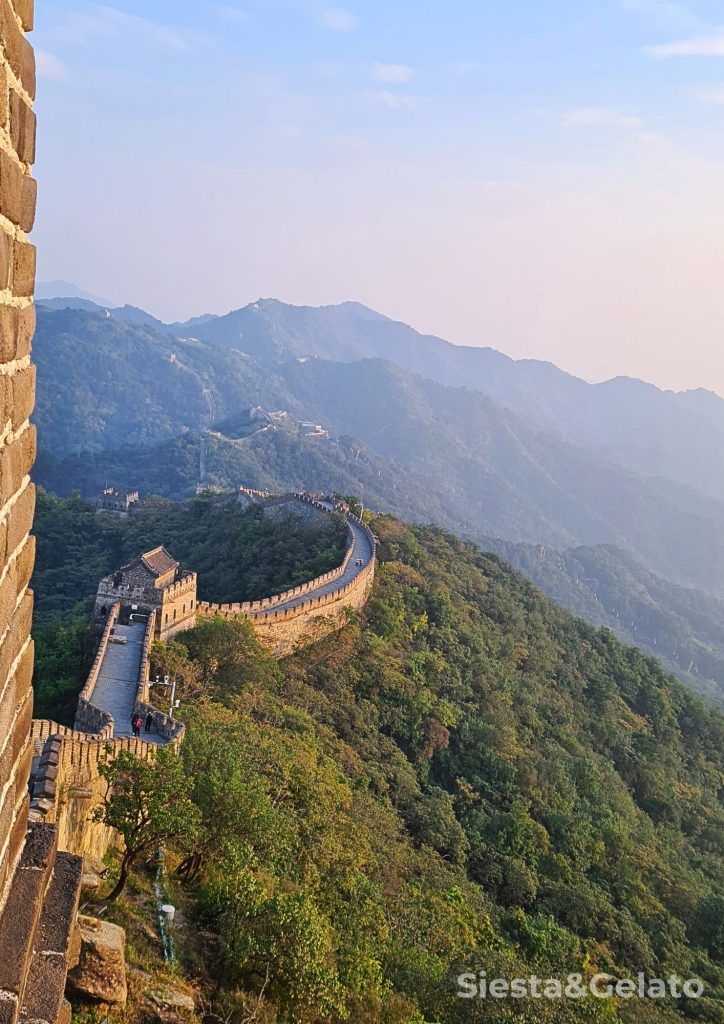
While it is popular among tourists, it is generally less crowded than Badaling and Juyongguan. The restoration efforts have made it a comfortable and enjoyable visit, with stunning views and several watchtowers to explore.
Mutianyu is a great option for those who want to experience the Great Wall in a more relaxed setting.

Visiting the Great Wall had been on our bucket list for many years, but we didn’t expect our first visit to happen this way.
When we booked our trip to Japan, we had a 22-hour layover in Beijing. So, we decided to make the most of this time, and what better way to do it than by visiting the Great Wall?
Which Section of the Great Wall to Visit Near Beijing?
The Great Wall has many sections, with at least 12 visitable ones, each unique.
Since our plan was to go directly from the airport, we narrowed our search down to sections closest to Beijing International Airport, and this is what we found.
Juyongguan: approximately 58 km from the airport (about 1 hour by car).
This was the closest section to the airport. Here, the Wall encloses an area resembling a “circle,” where temples and ancient buildings are preserved. Rather than just a section of the Wall, it functions more like an ancient town protected by its fortifications.
It is less crowded than Badaling, but shorter in length.
Badaling: approximately 65 km from the airport (about or 1 hour by car).
It is the most famous and heavily visited section of the Great Wall it has been extensively restored, making it accessible for tourists of all ages. However, due to its popularity, it tends to be crowded, especially during peak tourist seasons.
You’ll get amazing views and smooth paths, but be ready for plenty of other travelers around.
Mutianyu: approximately 70 km from the airport (about 1.5 hours by car).
One of the most scenic sections, and less crowded than Badaling, it offers a cable car to reach the Wall and a fun toboggan ride to get back. It’s ideal for first-time visitors and a more relaxed experience.
Huanghuacheng: approximately 75 km from the airport (about 1.5 hours by car).
Known as the “Water Great Wall” due to its proximity to a nearby reservoir, this section offers a mix of restored and wild areas. It’s less touristy compared to Badaling and great for moderate hiking. experience.
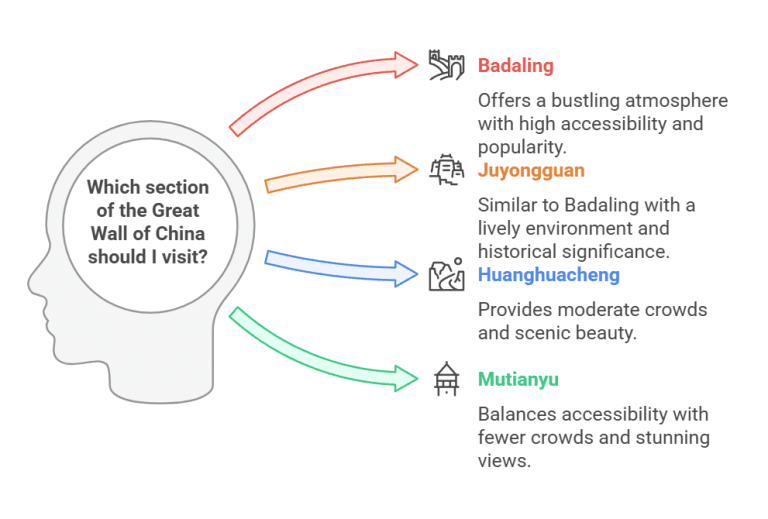
As you can imagine, we decided to visit the section of the Great Wall called Mutianyu.
How to get to mutianyu
To reach Mutianyu greart wall you have diffrent options:
Public Bus:
You can reach Mutianyu Great Wall by public bus, but it’s not the best option as it takes a long time and can be challenging for Western travelers who don’t speak Chinese.
There’s only one tourist bus from central Beijing (Qianmen/Dongzhimen) to Mutianyu, so you’d first need to take the metro from the airport to the city.
This route can take over 4 hours.
Taxi:
many travelers opt for a taxi, which takes around 1.5 hours without traffic and costs approximately CNY 200 one way.
Be prepared for long taxi queues at the airport, as most drivers don’t speak English, it’s helpful to show them a written message , “请带我去慕田峪长城” (Please take me to Mutianyu Great Wall).
Private Transfer:
The easiest and most comfortable option. Booking a private car with a local service ensures a smooth ride, an English-speaking driver, and a hassle-free experience right from the airport. It costs more but is worth it for convenience.
Since we didn’t have much time, we chose to book a private transfer. Another reason was that they offered to store our luggage while we visited the Great Wall.
 There are many scams around, so make sure to book with a serious, certified company, you can find them on TripAdvisor, where they usually provide a WhatsApp number for direct contact.
At first, we where a bit sceptical booking a taxi through a WhatsApp conversation as it seemed sketchy, but many other travelers did it, and it worked well for us.
We contacted different companies to compare prices and get the best deal, and we spent 800 RMB
The taxi driver will wait for you for a maximum of 2 hours after your flight lands.
Even though 2 hours may seem like plenty of time to exit the airport, the security checks are very thorough and can take a long time.
Between the security check and obtaining the transit visa, it took us around 1 hour and 50 minutes before meeting our driver.
WhatsApp is banned in China, so if you want to contact your driver while in the queue, you’ll need to use a VPN.
 You can get a 72-hour transit visa upon arrival at the airport. You’ll need to show proof of a hotel booking for your stay.

Buy a ticket
The taxi will drop you off at the main entrance, where you can buy all your tickets.
You can go up to the wall either by cable car, which fits up to six people, or by chairlift, which holds two people.
And for the way down, you have a third option—you can take the toboggan! Yes, it’s true! This is a super fun and unique way to descend the Great Wall!
Toboggan opening hours: March 16 – November 15: Monday – Friday: 07:30 – 18:00; Weekends: 07:30 – 18:30; November 16 to March 15: 08:00 – 17:30
A ride takes around 5 minutes, and you can take it beetwen tower 5 and tower 6, next to the chairlift station.
The cable car takes you to Tower 14
You can purchase entry to the wall along with combo tickets for the chairlift (to go up) and the toboggan (to come down) buying them together saves you from queuing again at the top.
A round-trip (chairlift up, toboggan down) costs CNY 140. It as the same price of a round trip with the cable car.
You can find all the prices here

Visit Mutianyu great wall
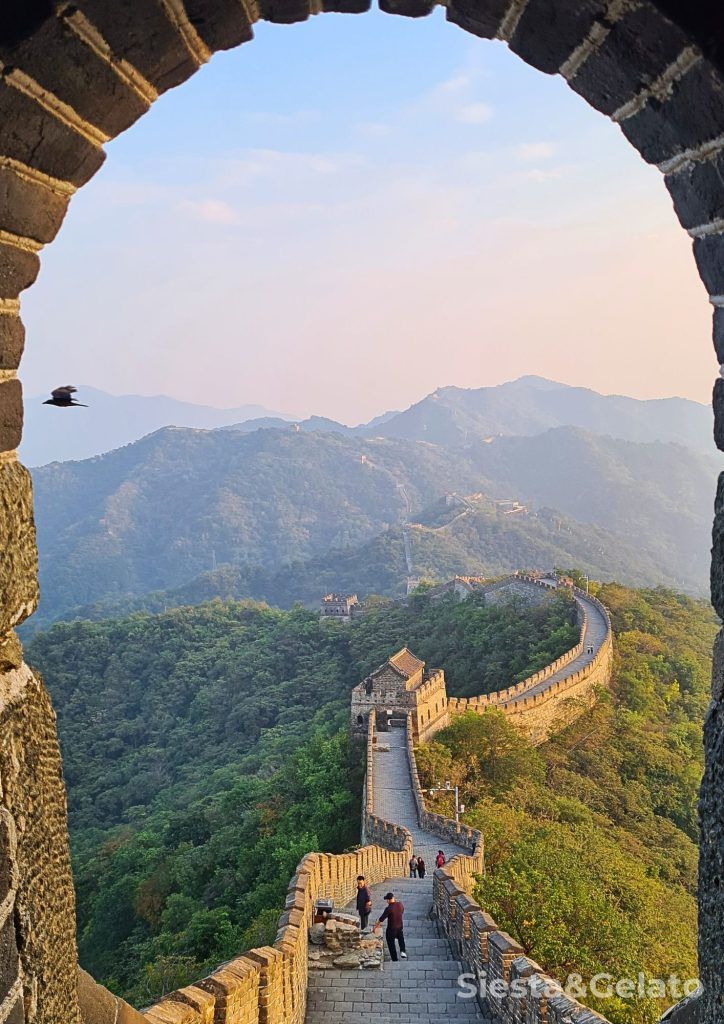
As soon as we started to go up with the cable car, we spotted the Great Wall snaking through the mountains in the distance.
Seeing it in real life after dreaming about it for so long was a surreal moment, it finally hit us that we were about to walk on one of the most iconic landmarks in the world!
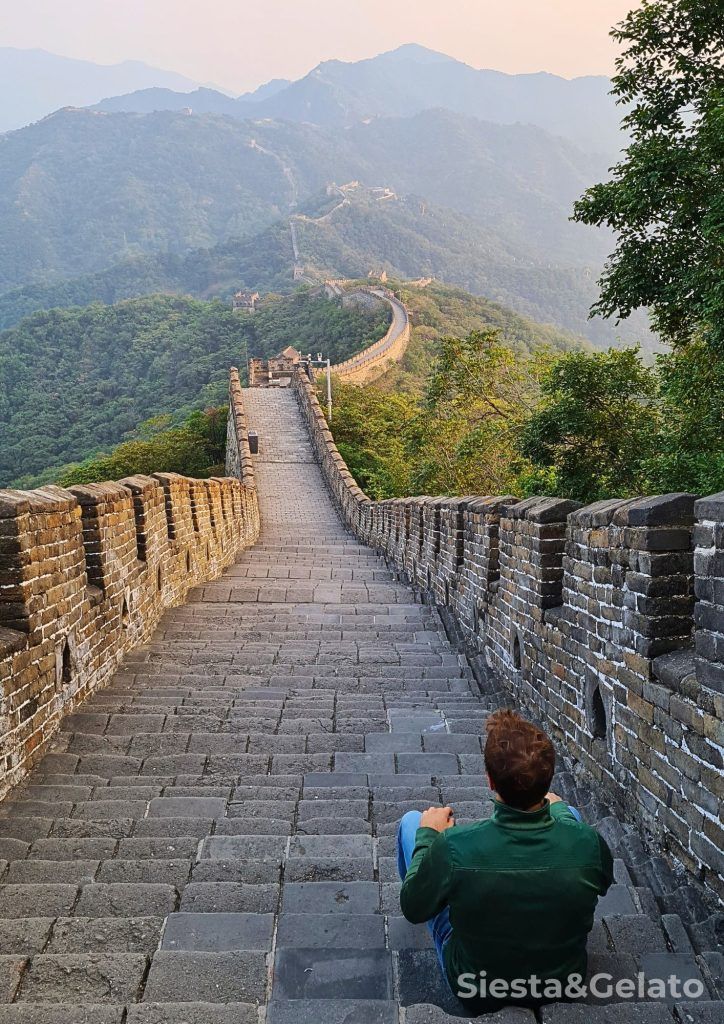
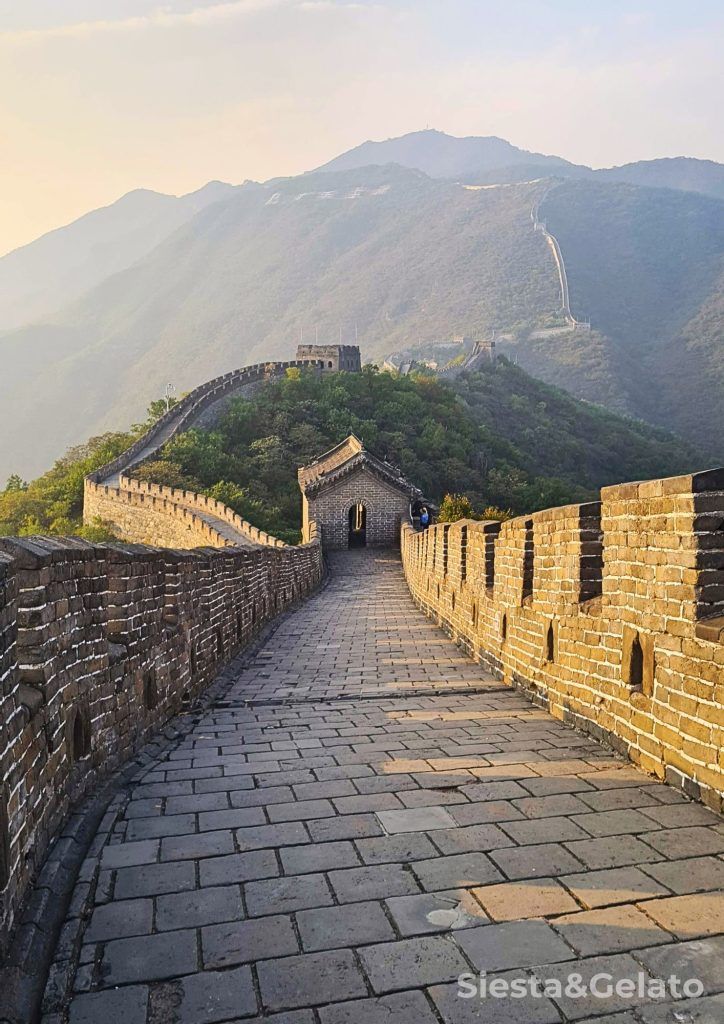
Stepping onto the Wall itself was magical, it felt like stepping back in time, with the massive stone pathway stretching endlessly in both directions.
Most people headed left, but we decided to go right, and wow! best decision ever. It was so much quieter, and at times, we had entire sections all to ourselves.
The Wall here is a mix of well-preserved original stones and restored sections, and it was incredible to imagine the history behind every step we took.
The Mutianyu section of the Great Wall dates back to the 6th century, making it one of the oldest parts, even predating the well-known Badaling section.
The structure seen today was built on those ancient foundations during the Ming Dynasty around 1404 and underwent further reconstruction in 1569.
Unlike other sections that faced heavy damage from both human activity and harsh weather, Mutianyu has remained well-preserved. Because of this, many consider it one of the most impressive and well-maintained parts of the Wall.
Best time to vist

When to Avoid:
🔥 Summer (July–August): While the wall is accessible, it can be extremely hot and humid, with temperatures reaching 30°C+ (86°F+). It’s also peak tourist season, meaning larger crowds.
❄️ Winter (December–February): While the wall covered in snow can be magical, temperatures can drop below -10°C (14°F), making the visit quite challenging due to icy paths. However, it’s the least crowded season.
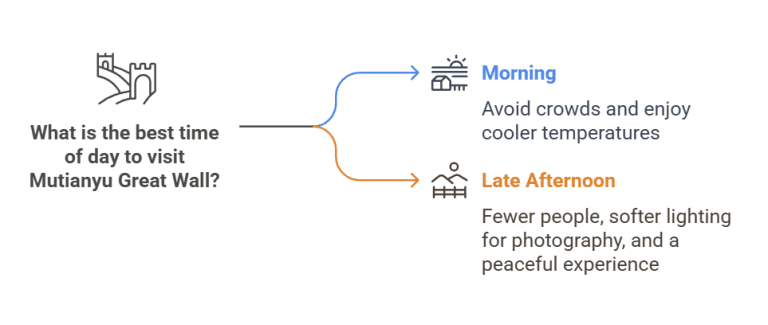
Best time of the day